<?xml version="1.0" encoding="utf-8"?><feed xmlns="http://www.w3.org/2005/Atom" ><generator uri="https://jekyllrb.com/" version="3.10.0">Jekyll</generator><link href="https://rune.school/feed.xml" rel="self" type="application/atom+xml" /><link href="https://rune.school/" rel="alternate" type="text/html" /><updated>2025-05-12T17:36:26+00:00</updated><id>https://rune.school/feed.xml</id><title type="html">ᚱᚣᚹᚾ᛫ᛋᛣᚣᚹᛚ</title><subtitle>Learn to write Modern English with the Anglo Saxon Futhorc Runes</subtitle><entry><title type="html">An Improved Shavian</title><link href="https://rune.school/better-shavian/" rel="alternate" type="text/html" title="An Improved Shavian" /><published>2025-01-27T00:00:00+00:00</published><updated>2025-01-27T00:00:00+00:00</updated><id>https://rune.school/better-shavian</id><content type="html" xml:base="https://rune.school/better-shavian/"><![CDATA[<p>There was <a href="https://www.reddit.com/r/shavian/comments/1i85a5k/kingsley_reads_design_choices/">another reddit thread</a> about the design choices that Kingsley Read made for Shavian.</p>

<p>There are many genius choices that Read made. We can see them explained in that thread. There are also baffling choices (𐑙𐑣, 𐑘𐑢, 𐑕𐑟, 𐑺𐑻) on which we can only speculate.</p>

<p>Nonetheless, that thread inspired me to revisit my own attempt at creating a better Shavian that I have not yet publicized.</p>

<p>The second row is me freehand writing with a mouse the new script:</p>

<p><img src="/assets/images/New/sampleText2.png" alt="Sample writing" /></p>

<p>In 2022, a gentleman created the <a href="https://sites.google.com/view/brevian">Brevian</a> (and subsequent Anglovian) scripts. There are some great ideas in there (particularly the vowels). I am being clear that I have taken some ideas from this and used it as a jumping off point.</p>

<p>Now here are my goals:</p>

<ol>
  <li>Consistency with design rules (such as voiced/unvoiced, etc) so that the design feels transparent to the user</li>
  <li>Stronger logic of the vowels (taking influence from <a href="https://www.youtube.com/watch?v=gtnlGH055TA">Geoff Lindsey</a> and others)</li>
  <li>More connection to the history and development of the English language itself (in letter design but also in phonological relations)</li>
  <li>More flexibility (multiple meanings)</li>
</ol>

<p>Ultimately, what I seek to do could be illustrated with the following example from a Git workflow.</p>

<p><img src="/assets/images/New/forkAndMerge.png" alt="Shavian and Brevian forks merging back into Latin" /></p>

<h1 id="vowels">Vowels</h1>

<p>Here are the vowels:</p>

<p><img src="/assets/images/New/stretchedLongVowels.png" alt="Vowels" /></p>

<p>I’ve kept these largely the same as Brevian.</p>

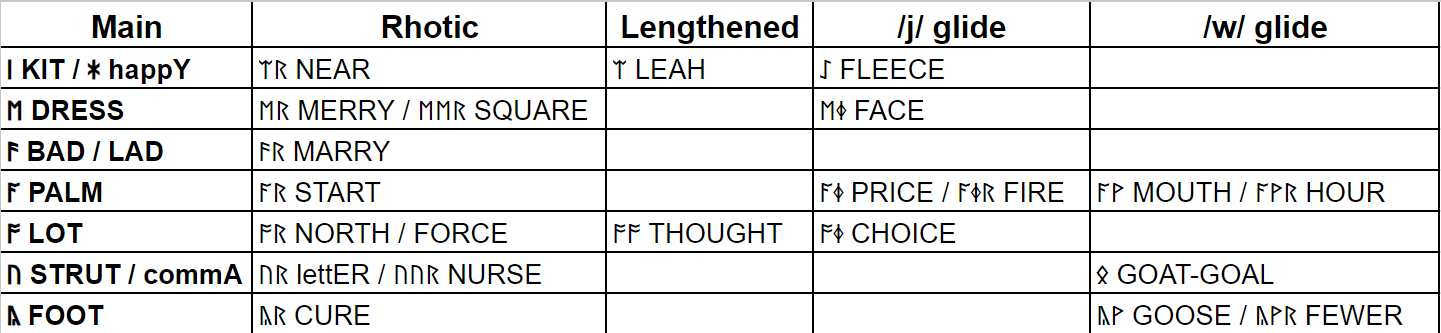
<p>Right away, you’ll see a layout that has columns and rows. Each row represents a distinct vowel category. Each column represents a consistent change applied to that category. This means that FACE and CHOICE have something in common as well as LOT and CHOICE having something in common. The relations are transparent in that way.</p>

<p>The 2nd column is stretched horizontally which can give a very aesthetically satisfying “push and pull” to a text which better matches the prosody of how it is pronounced out loud. It provides breathing room and some breaking up of large chunks of letters.</p>

<p>The 3rd column is the addition of the KIT vowel.</p>

<p>The 4th column is the addition of the FOOT vowel.</p>

<h1 id="consonants">Consonants</h1>

<p>Here are the consonants in the system:</p>

<p><img src="/assets/images/New/consonants.png" alt="Consonants" /></p>

<p>I have kept these the same as Shavian and only changed what I deemed necessary to change.</p>

<p>In order, you can see the changes:</p>

<p><code class="language-plaintext highlighter-rouge">/s z θ ð f v n ŋ m r l h y w ʍ/</code></p>

<p><img src="/assets/images/New/consonantsDiffFromShavian.png" alt="Consonants different from Shavian" /></p>

<h2 id="r-and-l">R and L</h2>

<p>R and L are a sort of pair, just like in Shavian. The difference is that I made the shapes inspired by latin in order to avoid confusion with the new vowel shapes (LOT and DRESS).</p>

<p>The bonus for R is that it can still easily be attached on the ends of vowels just like in Shavian.</p>

<h2 id="n-and-m">N and M</h2>

<p>I knew right away that I wanted to connect /n/ with /ŋ/. This required a change in the design of N. I dug into the history of the latin letters and discovered the gorgeous N and M letters from <a href="https://en.wikipedia.org/wiki/Old_Italic_scripts">Old Italic</a>. A connection to history is always satisfying.</p>

<h2 id="y-and-w-and-friends">Y and W and friends</h2>

<p>Connecting /j/ with the KIT vowel and /w/ with the FOOT vowel was another stroke of genius from Brevian.</p>

<p>Since I freed /h/ from being a pair with /ŋ/, I was able to simply adopt the lowercase latin h which fit quite well. It also created a beautiful combination letter for the famous /hw~ʍ/ sound in older English accents.</p>

<h2 id="historic-allophones">Historic Allophones</h2>

<p>Historically, the following sounds are allophones in English: <code class="language-plaintext highlighter-rouge">/sz θð fv/</code></p>

<p>You’ll notice that S and Z and the TH sounds look exactly the same except ascending and descending. Technically speaking, all of these consonant pairs are correctly rotated 180 degrees just like all the other non-allophonic pairs. So there is consistency in that regard. It just so happens that the design of the letters make SZ and the TH sounds look pretty much the same either way around!</p>

<p>This is intentional. S and Z still remain very close allophones even in the modern day (think of “dogs” vs “cats”, etc), as do θ and ð (think of “the” or “with”).</p>

<p>The letters for /f/ and /v/ are inspired by the Greek <a href="https://en.wikipedia.org/wiki/Phi">phi</a>. Now you might say “But F and V were historic allophones just like those others! Why do these letters look more different when rotated?”</p>

<p>That is because F and V split to become distinct phonemes much earlier than the others.</p>

<p>As I understand it, the order of strongest allophone pair to weakest today is /θð/, then /sz/, then /fv/.</p>

<p>/n/ can also be an allophone pair with /ŋ/, which is why I wanted them to look more similar. But they’re not exactly a pair in the same way that the others are.</p>

<h1 id="future-potential">Future Potential</h1>

<p>Here are some areas for consideration regarding future development. I am open to collaboration and feedback.</p>

<h2 id="descenders-on-certain-vowels">Descenders on certain vowels</h2>

<p>I considered adding descenders on both the 3rd and 4th columns of the vowel chart. This would more explicitly show the addition / combination of /j/ and /w/ onto the initial vowel rather than KIT and FOOT. This could be a dialectal preference or useful in another way.</p>

<h2 id="dotted-vowels">Dotted vowels</h2>

<p>In addition to the the 2nd column in the vowel chart being stretched lengthwise, I also considered a layout that used a dotted motif instead.</p>

<p><img src="/assets/images/New/dottedLongVowels.png" alt="Dotted vowels" /></p>

<p>This is pretty much up to your subjective taste. On one hand, I like the aesthetic of the variable width of vowels that more accurately match the (sometimes) variable length of vowels when spoken. On the other hand, the overdots could serve to bring the script more “up”, balancing out the plentiful descenders.</p>

<p>One option is to save either the stretched or the dotted column for an extra column that would only be needed in certain scenarios. For example, if a speaker distinguishes BAD from LAD, they could use this extra “column” as the motif for their vowel.</p>

<h2 id="etymological-spelling">Etymological spelling?</h2>

<p>This is a big, big question. Recently, I had been discussing with some colleagues the idea of an etymological spelling as opposed to a phonemic spelling. This would of course be against the explicit goals of George Bernard Shaw (Shavian), but the benefit is that it would absolutely ensure unity among <em>all</em> English dialects / accents in a way that a phonemic script could not.</p>

<p>This is where I realized that some of these extra ideas I had for vowels could come in handy. I will leave the below image without explanation as a sort of “if you know, you know” thing.</p>

<p><img src="/assets/images/New/etymologicalSpelling.png" alt="Etymological vowels?" /></p>

<p>I’m not sure if this is worth pursuing or not, but I can sleep at night knowing that the system has the potential to at least make it <em>possible</em>.</p>

<h1 id="fin">Fin</h1>

<p>Come stop by the <a href="https://discord.gg/BThW4fxAwN">Rune School discord</a> if you would like to discuss this post.</p>]]></content><author><name></name></author><category term="blog" /><category term="shavian" /><category term="brevian" /><category term="neography" /><summary type="html"><![CDATA[My take on a way to fix Shavian]]></summary></entry><entry><title type="html">Modern Futhorc Systems Comparison</title><link href="https://rune.school/other-systems/" rel="alternate" type="text/html" title="Modern Futhorc Systems Comparison" /><published>2024-06-16T00:00:00+00:00</published><updated>2024-06-16T00:00:00+00:00</updated><id>https://rune.school/other-systems</id><content type="html" xml:base="https://rune.school/other-systems/"><![CDATA[<p>In this blog, I am going to compare 5 different systems for writing Modern English with the Anglo-Saxon Futhorc. The goal for doing so is to increase collaboration and communication across these projects and increase the possiblity of working together in the future.</p>

<ol>
  <li><a href="https://anglisc.miraheze.org/wiki/Younger_Futhorc">Younger Futhorc</a></li>
  <li><a href="https://americanfutharch.com/">American Futharch</a></li>
  <li><a href="http://futhorc.com/about.htm">Futhorc.com</a></li>
  <li><a href="https://runerevival.online/">Rune Revival</a></li>
  <li>Rune School (here)</li>
</ol>

<p>I will include a first pass at a compromise as I outline each.</p>

<h1 id="consonants">Consonants</h1>

<table>
  <thead>
    <tr>
      <th>sound</th>
      <th>Younger Futhorc</th>
      <th>American Futharch</th>
      <th>Futhorc .com</th>
      <th>Rune Revival</th>
      <th>Rune School</th>
      <th>Compromise?</th>
    </tr>
  </thead>
  <tbody>
    <tr>
      <td>/f/</td>
      <td>ᚠ</td>
      <td>ᚠ</td>
      <td>ᚠ</td>
      <td>ᚠ</td>
      <td>ᚠ</td>
      <td>ᚠ</td>
    </tr>
    <tr>
      <td>/v/</td>
      <td>ᚠ</td>
      <td>ᛡ</td>
      <td>ᚡ</td>
      <td>ᚠ‍ᚠ</td>
      <td>ᚠ‍ᚠ</td>
      <td>ᚠ‍ᚠ</td>
    </tr>
    <tr>
      <td>/θ/</td>
      <td>ᚦ</td>
      <td>ᚦ</td>
      <td>ᚦ</td>
      <td>ᚦ</td>
      <td>ᚦ</td>
      <td>ᚦ</td>
    </tr>
    <tr>
      <td>/ð/</td>
      <td>ᚦ</td>
      <td>ᛨ</td>
      <td>ᚧ</td>
      <td>ᚦ</td>
      <td>ᚦ</td>
      <td>ᚦᚦ?</td>
    </tr>
    <tr>
      <td>/r/</td>
      <td>ᚱ</td>
      <td>ᚱ</td>
      <td>ᚱ</td>
      <td>ᚱ</td>
      <td>ᚱ</td>
      <td>ᚱ</td>
    </tr>
    <tr>
      <td>/tʃ/</td>
      <td>ᚳ</td>
      <td>ᚳ</td>
      <td>ᛏᚳ</td>
      <td>ᚳ</td>
      <td>ᚳ</td>
      <td>ᚳ</td>
    </tr>
    <tr>
      <td>/j/</td>
      <td>ᚷ ᛡ</td>
      <td>ᛄ</td>
      <td>ᛃ</td>
      <td>ᛄ</td>
      <td>ᛡ</td>
      <td>ᚷ</td>
    </tr>
    <tr>
      <td>/x/</td>
      <td>ᛇ</td>
      <td> </td>
      <td> </td>
      <td>ᛇ</td>
      <td>ᚻ</td>
      <td>ᚻ</td>
    </tr>
    <tr>
      <td>/w/</td>
      <td>ᚹ</td>
      <td>ᚹ</td>
      <td>ᚹ</td>
      <td>ᚹ</td>
      <td>ᚹ</td>
      <td>ᚹ</td>
    </tr>
    <tr>
      <td>/h/</td>
      <td>ᚻ</td>
      <td>ᚻ</td>
      <td>ᚻ</td>
      <td>ᚻ</td>
      <td>ᚻ</td>
      <td>ᚻ</td>
    </tr>
    <tr>
      <td>/n/</td>
      <td>ᚾ</td>
      <td>ᚾ</td>
      <td>ᚾ</td>
      <td>ᚾ</td>
      <td>ᚾ</td>
      <td>ᚾ</td>
    </tr>
    <tr>
      <td>/p/</td>
      <td>ᛈ</td>
      <td>ᛈ</td>
      <td>ᛈ</td>
      <td>ᛈ</td>
      <td>ᛈ</td>
      <td>ᛈ</td>
    </tr>
    <tr>
      <td>/ks~gz/</td>
      <td>ᛉ</td>
      <td>ᚴᛋ</td>
      <td>ᚴᛋ</td>
      <td>ᛣᛋ</td>
      <td>ᛣᛋ</td>
      <td>ᛣᛋ</td>
    </tr>
    <tr>
      <td>/s/</td>
      <td>ᛋ</td>
      <td>ᛋ</td>
      <td>ᛋ</td>
      <td>ᛋ</td>
      <td>ᛋ</td>
      <td>ᛋ ᚴ</td>
    </tr>
    <tr>
      <td>/z/</td>
      <td>ᛋ</td>
      <td>ᛉ</td>
      <td>ᛋ</td>
      <td>ᛉ</td>
      <td>ᛉ</td>
      <td>ᛉ</td>
    </tr>
    <tr>
      <td>/t/</td>
      <td>ᛏ</td>
      <td>ᛏ</td>
      <td>ᛏ</td>
      <td>ᛏ</td>
      <td>ᛏ</td>
      <td>ᛏ</td>
    </tr>
    <tr>
      <td>/b/</td>
      <td>ᛒ</td>
      <td>ᛒ</td>
      <td>ᛒ</td>
      <td>ᛒ</td>
      <td>ᛒ</td>
      <td>ᛒ</td>
    </tr>
    <tr>
      <td>/m/</td>
      <td>ᛗ</td>
      <td>ᛗ</td>
      <td>ᛗ</td>
      <td>ᛗ</td>
      <td>ᛗ</td>
      <td>ᛗ</td>
    </tr>
    <tr>
      <td>/l/</td>
      <td>ᛚ</td>
      <td>ᛚ</td>
      <td>ᛚ</td>
      <td>ᛚ</td>
      <td>ᛚ</td>
      <td>ᛚ</td>
    </tr>
    <tr>
      <td>/ŋ/</td>
      <td>ᛝ</td>
      <td>ᛝ</td>
      <td>ᛝ</td>
      <td>ᛝ</td>
      <td>ᛝ</td>
      <td>ᛝ</td>
    </tr>
    <tr>
      <td>/ŋg/</td>
      <td>ᛝ</td>
      <td>ᛝᚷ</td>
      <td>ᛝᚸ</td>
      <td>ᛝ</td>
      <td>ᛝᚸ</td>
      <td>ᛝ</td>
    </tr>
    <tr>
      <td>/d/</td>
      <td>ᛞ</td>
      <td>ᛞ</td>
      <td>ᛞ</td>
      <td>ᛞ</td>
      <td>ᛞ</td>
      <td>ᛞ</td>
    </tr>
    <tr>
      <td>/k/</td>
      <td>ᛣ</td>
      <td>ᚴ</td>
      <td>ᚴ</td>
      <td>ᛣ</td>
      <td>ᛣ</td>
      <td>ᛣ</td>
    </tr>
    <tr>
      <td>/g/</td>
      <td>ᚸ</td>
      <td>ᚷ</td>
      <td>ᚸ</td>
      <td>ᚸ</td>
      <td>ᚸ</td>
      <td>ᚸ</td>
    </tr>
    <tr>
      <td>/dʒ/</td>
      <td>ᚳᚷ</td>
      <td>ᛥ</td>
      <td>ᛞᛄ</td>
      <td>ᚷ</td>
      <td>ᚷ</td>
      <td>ᚷᚳ</td>
    </tr>
    <tr>
      <td>/ʒ/</td>
      <td>ᚳᚷ</td>
      <td>ᛯ</td>
      <td>ᛄ</td>
      <td>ᛉᚳ</td>
      <td>ᛉᚳ</td>
      <td>ᚷᚳ</td>
    </tr>
    <tr>
      <td>/ʃ/</td>
      <td>ᛋᚳ</td>
      <td>ᛊ</td>
      <td>ᚳ</td>
      <td>ᛋᚳ</td>
      <td>ᛋᚳ</td>
      <td>ᛋᚳ</td>
    </tr>
    <tr>
      <td>/ʍ/</td>
      <td>ᚻᚹ</td>
      <td> </td>
      <td> </td>
      <td>ᚻᚹ</td>
      <td>ᚻᚹ</td>
      <td>ᚻᚹ</td>
    </tr>
  </tbody>
</table>

<h1 id="vowels">Vowels</h1>

<table>
  <thead>
    <tr>
      <th>Lexical Set</th>
      <th>Younger Futhorc</th>
      <th>American Futharch</th>
      <th>Futhorc .com</th>
      <th>Rune Revival</th>
      <th>Rune School</th>
      <th>Compromise?</th>
    </tr>
  </thead>
  <tbody>
    <tr>
      <td>KIT</td>
      <td>ᛁ</td>
      <td>ᛁ</td>
      <td>ᛁ</td>
      <td>ᛁ</td>
      <td>ᛁ</td>
      <td>ᛁ</td>
    </tr>
    <tr>
      <td>happY</td>
      <td>ᛠ</td>
      <td>ᛇ</td>
      <td>ᛁ</td>
      <td>ᛇ</td>
      <td>ᛄ</td>
      <td>ᛁ</td>
    </tr>
    <tr>
      <td>FLEECE</td>
      <td>ᛠ</td>
      <td>ᛇ</td>
      <td>ᛁ</td>
      <td>ᛨ</td>
      <td>ᛇ ᛁᛡ</td>
      <td>ᛁᚷ (ᛡ)</td>
    </tr>
    <tr>
      <td>FACE</td>
      <td>ᛖᚷ</td>
      <td>ᛖᛁ</td>
      <td>ᛖ</td>
      <td>ᛖᛡ</td>
      <td>ᛖᛡ</td>
      <td>ᛖᛖ ᛖᚷ</td>
    </tr>
    <tr>
      <td>DRESS</td>
      <td>ᛖ</td>
      <td>ᛖ</td>
      <td>ᛖ</td>
      <td>ᛖ</td>
      <td>ᛖ</td>
      <td>ᛖ</td>
    </tr>
    <tr>
      <td>TRAP</td>
      <td>ᚫ</td>
      <td>ᚫ</td>
      <td>ᚫ</td>
      <td>ᚫ</td>
      <td>ᚫ</td>
      <td>ᛇ</td>
    </tr>
    <tr>
      <td>fAther</td>
      <td>ᚪ</td>
      <td>ᚩ</td>
      <td>ᚪ</td>
      <td>ᚪᚪ</td>
      <td>ᚪ</td>
      <td>ᚫ</td>
    </tr>
    <tr>
      <td>LOT</td>
      <td>ᚪ</td>
      <td>ᚩ</td>
      <td>ᚪ</td>
      <td>ᚩ</td>
      <td>ᚩ</td>
      <td>ᚪ</td>
    </tr>
    <tr>
      <td>THOUGHT</td>
      <td>ᚪᚢ</td>
      <td>ᛟ</td>
      <td>ᚩ</td>
      <td>ᚩᚩ</td>
      <td>ᚩᚩ</td>
      <td>ᚩ</td>
    </tr>
    <tr>
      <td>GOAT</td>
      <td>ᚩ</td>
      <td>ᛟᚣ</td>
      <td>ᚩ</td>
      <td>ᚩᚢ</td>
      <td>ᚩᚹ</td>
      <td>ᚩᚹ</td>
    </tr>
    <tr>
      <td>GOOSE</td>
      <td>ᚢ</td>
      <td>ᚢ</td>
      <td>ᚢ</td>
      <td>ᚢᚢ</td>
      <td>ᚣᚹ</td>
      <td>ᚢᚢ ᚢᚹ</td>
    </tr>
    <tr>
      <td>FOOT</td>
      <td>ᚢ</td>
      <td>ᚣ</td>
      <td>ᚢ</td>
      <td>ᚢ</td>
      <td>ᚣ</td>
      <td>ᚢ</td>
    </tr>
    <tr>
      <td>STRUT</td>
      <td>ᛟ</td>
      <td>ᛠ</td>
      <td> </td>
      <td>ᚪ</td>
      <td>ᚢ</td>
      <td>ᚣ</td>
    </tr>
    <tr>
      <td>commA</td>
      <td> </td>
      <td>ᛠ</td>
      <td>ᚣ</td>
      <td>ᛟ</td>
      <td>ᛟ</td>
      <td>ᛟ</td>
    </tr>
    <tr>
      <td>PRICE</td>
      <td>ᚫᚷ</td>
      <td>ᚫᛁ</td>
      <td> </td>
      <td>ᚫᛡ</td>
      <td>ᚫᛡ</td>
      <td>ᚫᚷ</td>
    </tr>
    <tr>
      <td>MOUTH</td>
      <td>ᚫᚢ</td>
      <td>ᚫᚣ</td>
      <td> </td>
      <td>ᚣ</td>
      <td>ᚫᚹ</td>
      <td>ᚫᚹ</td>
    </tr>
    <tr>
      <td>CHOICE</td>
      <td> </td>
      <td>ᛟᛁ</td>
      <td> </td>
      <td>ᚩᛡ</td>
      <td>ᚩᛡ</td>
      <td>ᚩᚷ</td>
    </tr>
    <tr>
      <td>lettER</td>
      <td> </td>
      <td>ᛠᚱ</td>
      <td>ᚣᚱ</td>
      <td>ᛟᚱ</td>
      <td>ᛟᚱ</td>
      <td>ᛟᚱ</td>
    </tr>
    <tr>
      <td>NURSE</td>
      <td>ᛖᚱ</td>
      <td>ᛠᚱ</td>
      <td> </td>
      <td>ᛟᚱ</td>
      <td>ᚢᚱ</td>
      <td>ᛠᚱ</td>
    </tr>
    <tr>
      <td>START</td>
      <td> </td>
      <td>ᚩᚱ</td>
      <td> </td>
      <td>ᚪᚱ</td>
      <td>ᚪᚱ</td>
      <td>ᚫᚱ</td>
    </tr>
    <tr>
      <td>NORTH</td>
      <td> </td>
      <td>ᛟᚱ</td>
      <td> </td>
      <td>ᚩᚱ</td>
      <td>ᚩᚱ</td>
      <td>ᚪᚱ</td>
    </tr>
    <tr>
      <td>FORCE</td>
      <td> </td>
      <td>ᛟᚱ</td>
      <td> </td>
      <td>ᚩᚢᚱ</td>
      <td>ᚩᚹᚱ</td>
      <td>ᚩᚱ</td>
    </tr>
    <tr>
      <td>mErry</td>
      <td> </td>
      <td>ᛖᚱ</td>
      <td> </td>
      <td>ᛖᚱ</td>
      <td>ᛖᚱ</td>
      <td>ᛖᚱ</td>
    </tr>
    <tr>
      <td>mArry</td>
      <td> </td>
      <td>ᛖᚱ</td>
      <td> </td>
      <td>ᚫᚱ</td>
      <td>ᚫᚱ</td>
      <td>ᛇᚱ</td>
    </tr>
    <tr>
      <td>SQUARE</td>
      <td> </td>
      <td>ᛖᚱ</td>
      <td> </td>
      <td>ᛖᚱ</td>
      <td>ᛖᛖᚱ</td>
      <td>ᛖᛖᚱ</td>
    </tr>
    <tr>
      <td>NEAR</td>
      <td>ᛁᚱ</td>
      <td>ᛁᚱ</td>
      <td> </td>
      <td>ᛠᚱ</td>
      <td>ᛠᚱ ᛁᛁᚱ</td>
      <td>ᛁᛁᚱ</td>
    </tr>
  </tbody>
</table>

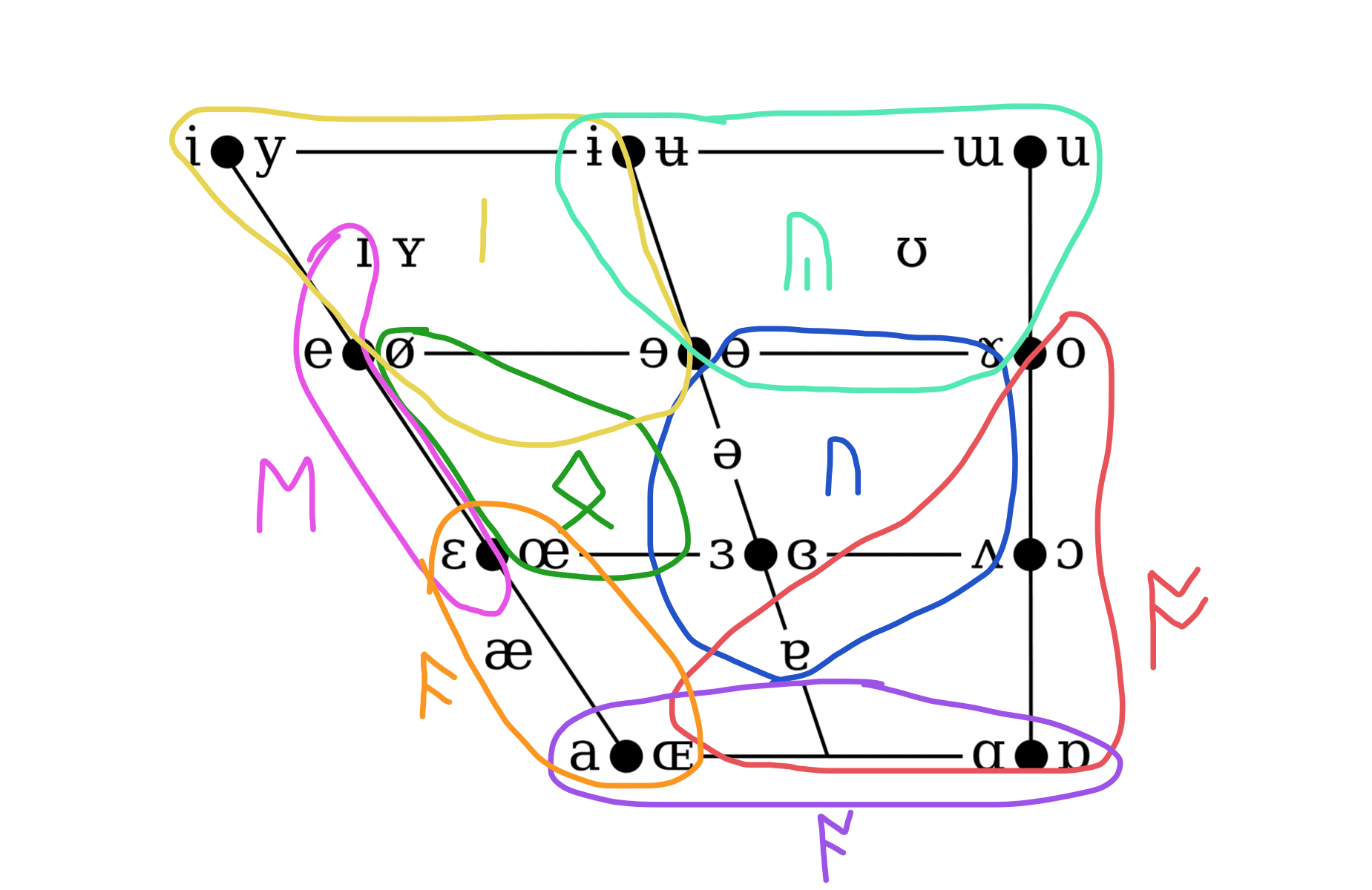
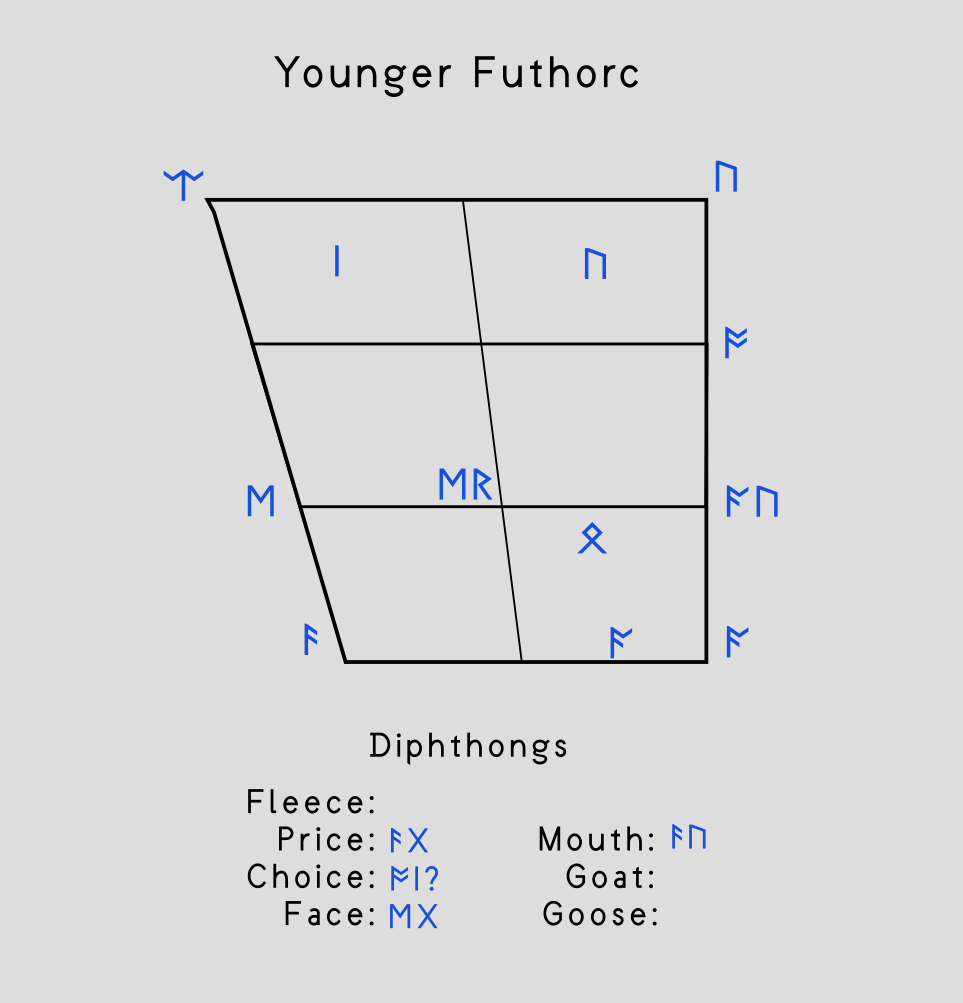
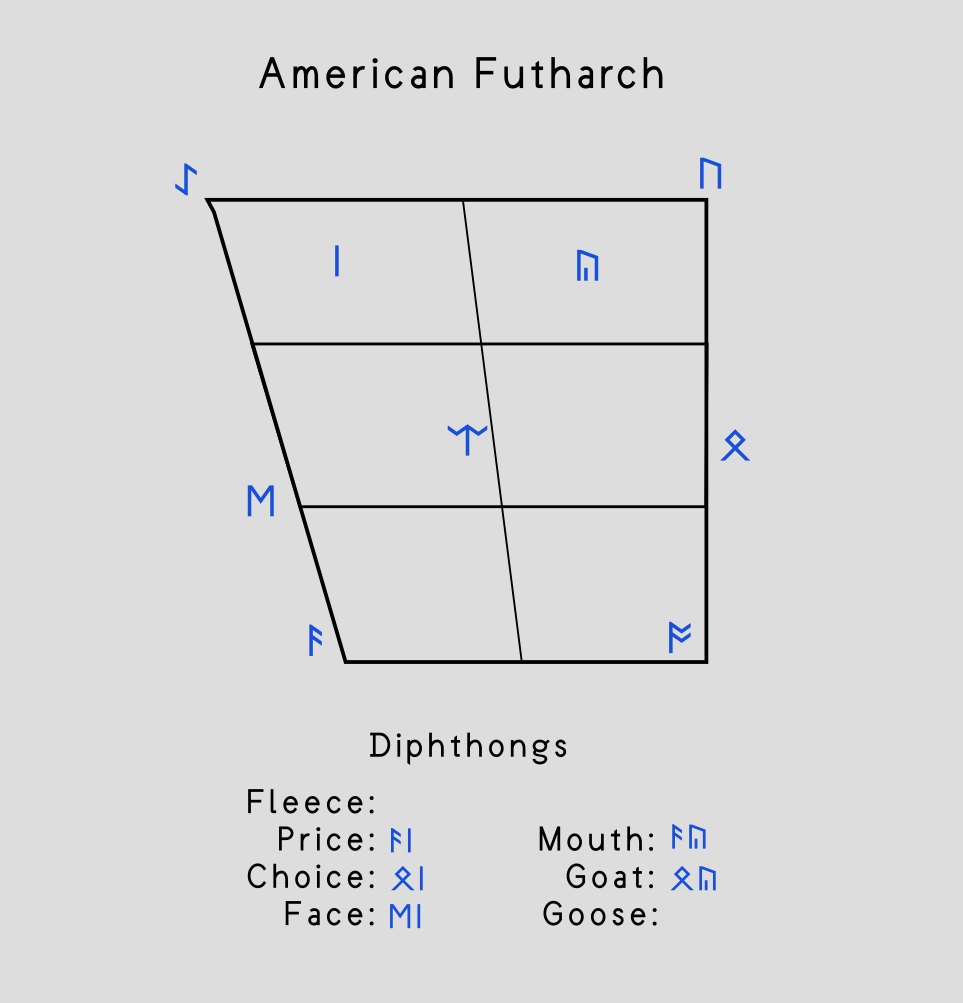
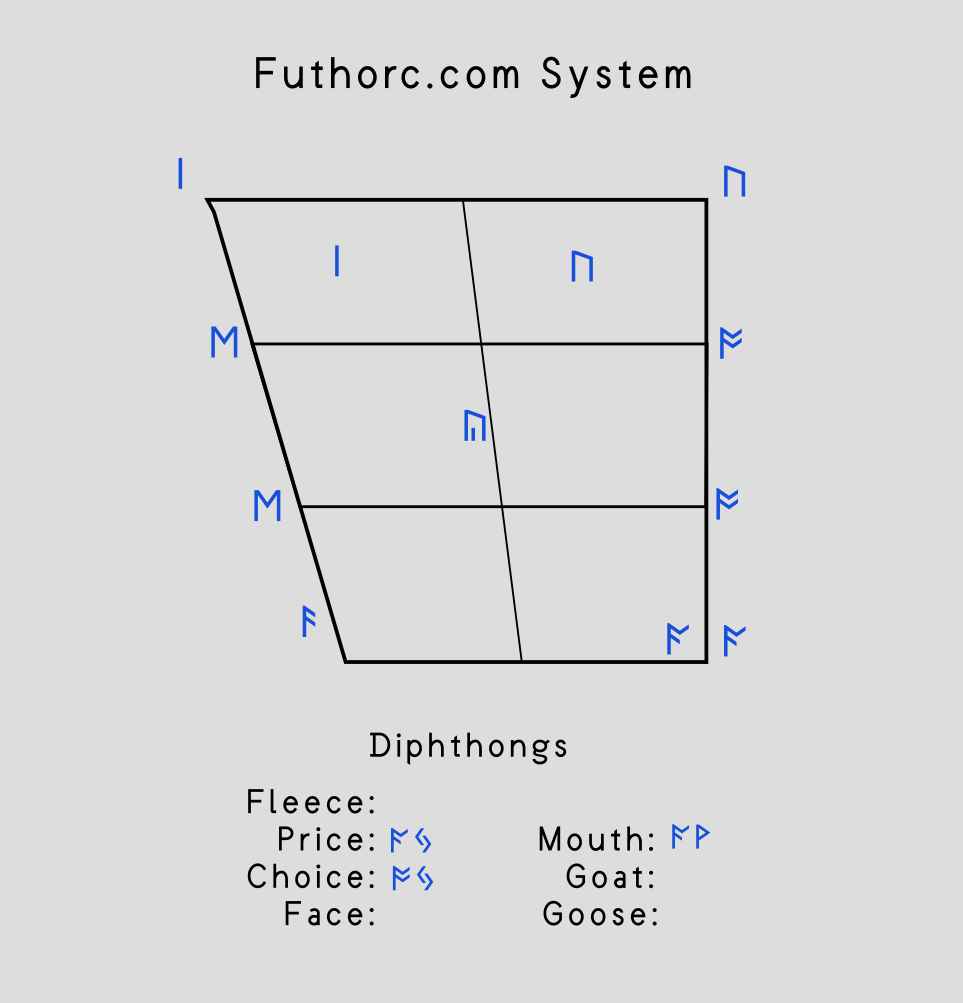
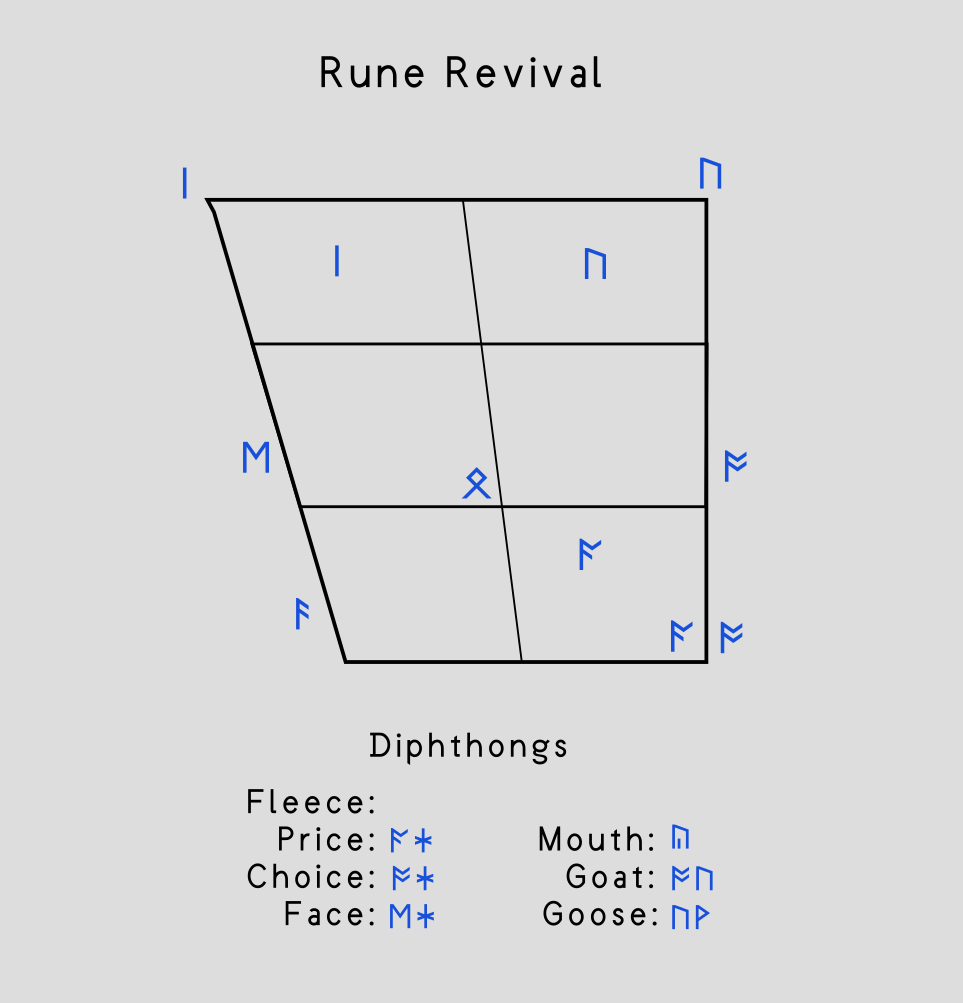
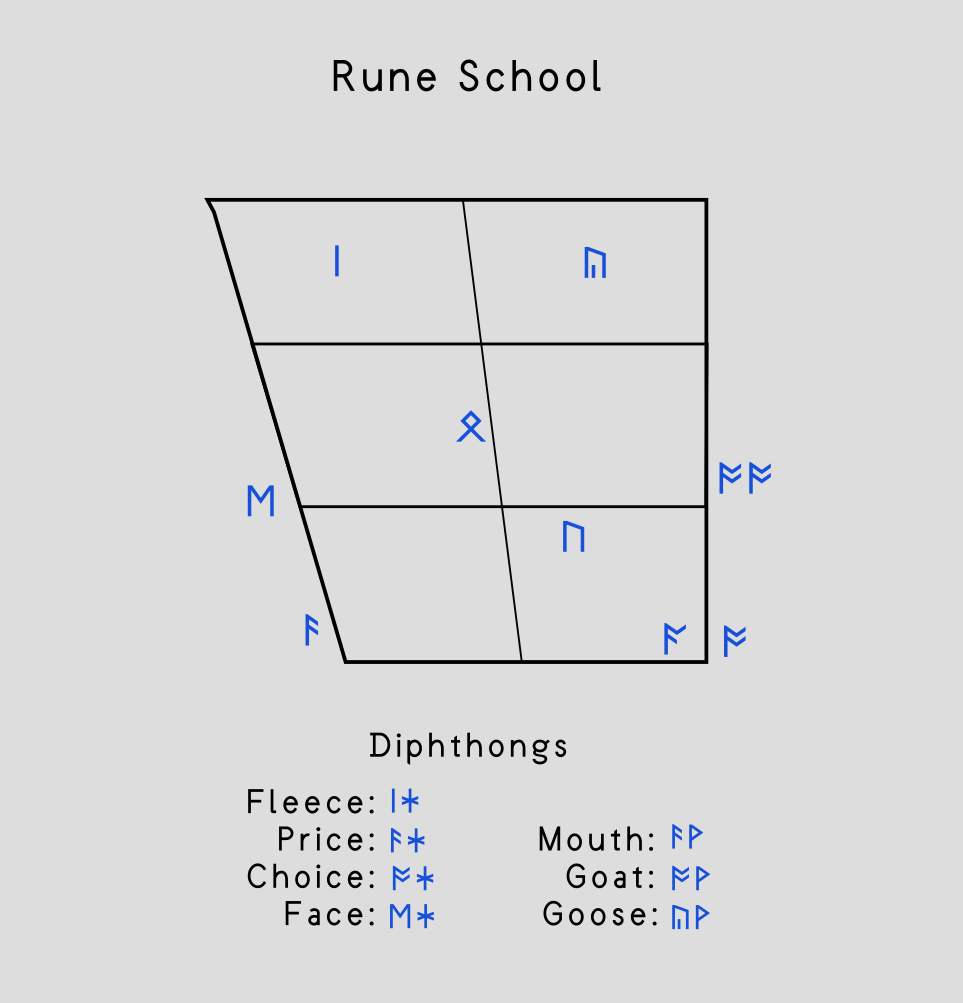
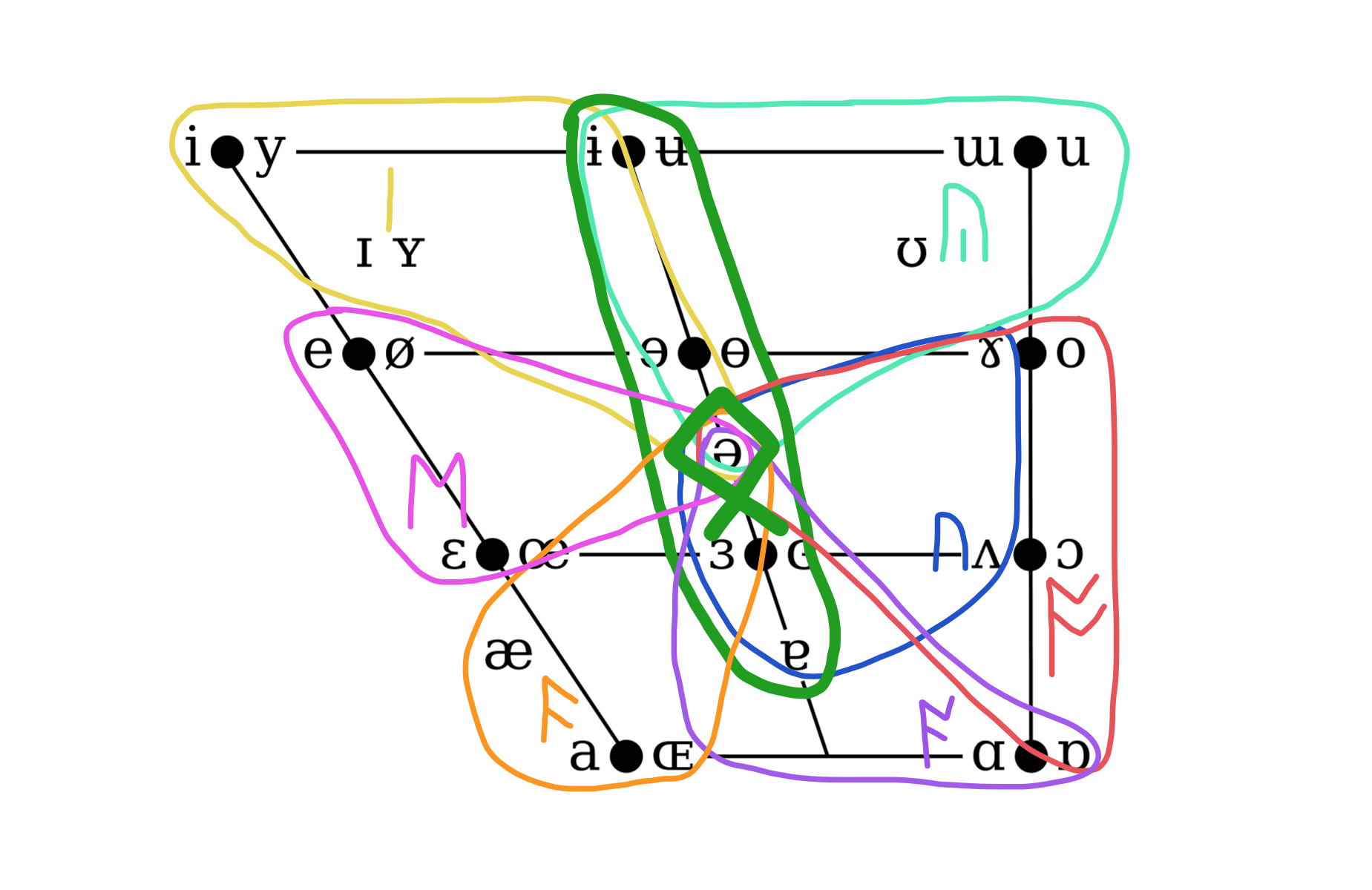
<p>Now let’s look at how the vowel runes land on the IPA vowel chart for a stronger visual comparison.</p>

<p>Younger Futhorc:</p>

<p><img src="/assets/images/YoungerFuthorcIPAchart.png" alt="Younger Futhorc IPA vowel chart" /></p>

<p>American Futharch:</p>

<p><img src="/assets/images/AmericanFutharchIPAchart.png" alt="American Futharch IPA vowel chart" /></p>

<p>Futhorc.com:</p>

<p><img src="/assets/images/FuthorcdotcomIPAchart.png" alt="Futhorc.com IPA vowel chart" /></p>

<p>Rune Revival:</p>

<p><img src="/assets/images/RuneRevivalIPAchart.png" alt="Rune Revival IPA vowel chart" /></p>

<p>Rune School:</p>

<p><img src="/assets/images/RuneSchoolIPAchart.png" alt="Rune School IPA vowel chart" /></p>

<p>Want to try your hand at a layout? Give it a shot!</p>

<p><img src="/assets/images/BlankComparisonIPAchart.png" alt="" /></p>

<h1 id="analysis">Analysis</h1>

<p>Now just comparing sound assignments doesn’t fully explain the reasons <em>why</em> the creators of these systems made the choices they did. Each sound assignment has ripple effects that will change the sound assignments for other runes.</p>

<p>In order to really compare these choices, we need to talk about the underlying values and philosophy. For example, are we going for authenticity? Are we going for clarity of design?</p>

<p>I would say that American Futharch aims to be more opinionated, as a work of art. Younger Futhorc and Rune Revival aim to be more authentic. Futhorc.com and Rune School seem to aim for authenticity while also wanting something more systematic. For example, Futhorc.com and Rune School both shared the vowel+semivowel digraph for the diphthongs. And Futhorc.com even goes further and uses t+sh for the “ch” sound (very analytical).</p>

<p>One of the biggest decisions is whether or not to represent the commA sound (schwa). Younger Futhorc opts to not represent it. The tradeoff then is you need to be comfortable with 5 ways of writing a schwa and 3 ways of writing the NURSE vowel. It’s not terrible, but you still completely lose the sound-spelling connection.</p>

<h1 id="shared-values">Shared values</h1>

<p>My primary goals for a good modern rune system would be:</p>

<ol>
  <li>Authenticity to the original Futhorc</li>
</ol>

<p>I like one principle that Rune Revival adheres to. They are willing to draw from the Elder Futhark, but they won’t draw from any traditions later than the Anglo Futhorc. I find that to be an authentic compromise when thinking outside the box is needed. Another aspect of authenticity is the most common runes still being the most common in a modern system (if possible).</p>

<ol>
  <li>Usable for all English accents</li>
</ol>

<p>A couple of these systems are fairly obviously designed for American English. I think a good system would work for the entire English speaking world. Because the Futhorc is the “birthright” of English everywhere.</p>

<ol>
  <li>Systematically satisfying</li>
</ol>

<p>Regarding Systematics, I am speaking mostly about phonemic mergers and splits as well as historical development of sounds. Things like the FOOT-STRUT split, the COT-CAUGHT merger, etc. A good system should take these into account.</p>

<h1 id="compromise">Compromise</h1>

<p>Now what would a compromise between all of these systems look like? The authenticity of the Younger Futhorc but with an added element of a more robust… system?</p>

<p>After using and teaching the Rune School system, I can say that it really does feel <em>intuitive</em>, simple, and functional. This is because time was spent thinking about how to phonemically analyze English as a complete system. There are <a href="/rune-school-spelling-system#vowels">7 base vowels</a>, from which all other vowel sounds come.</p>

<p>What I am looking for in improvements to the Rune School system:</p>

<ol>
  <li>
    <p>Being more functional for people with different accents</p>
  </li>
  <li>
    <p>More authentic to the original Futhorc</p>
  </li>
</ol>

<p>Let’s try something as a way to start the conversation:</p>

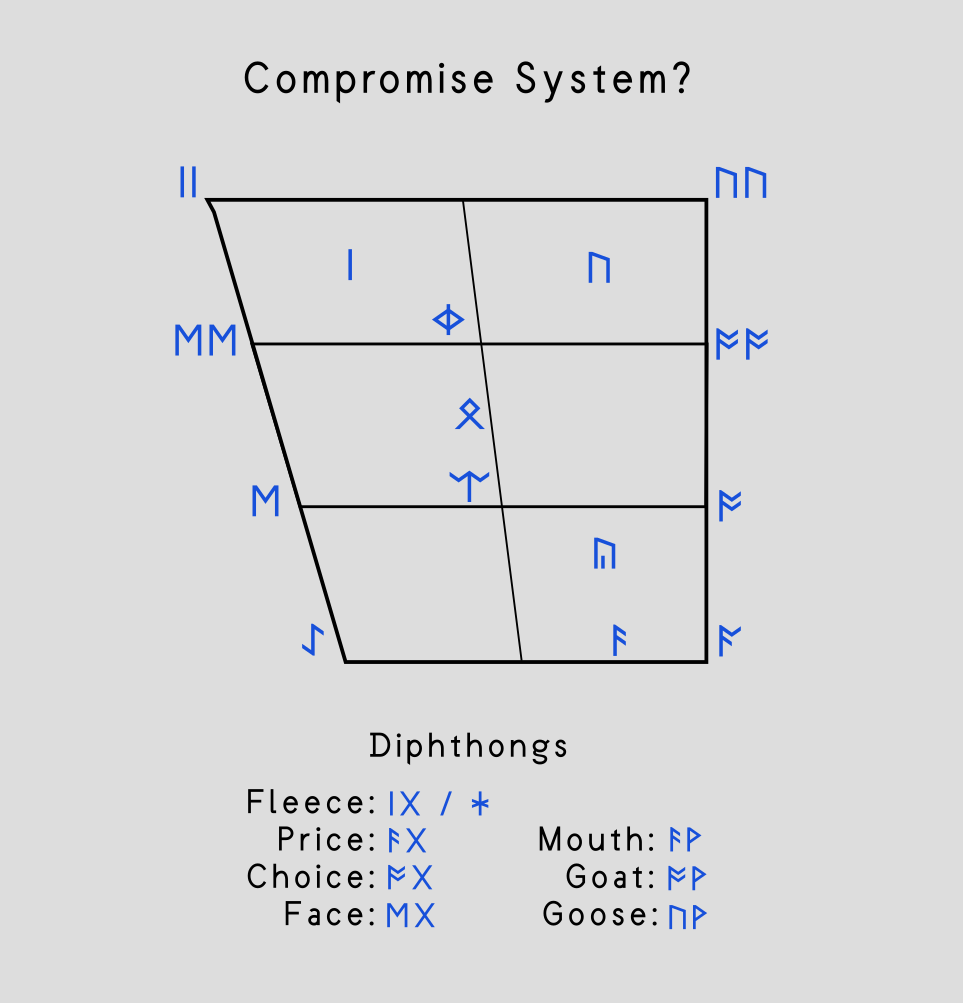
<p><img src="/assets/images/RuneSystemCompromise.png" alt="" /></p>

<p>This draws on the Elder Futhark for the assignment of ᛇ. This gives us an immense benefit to representing <a href="https://youtu.be/sALAE6iqLWk?si=YNuboGC4OHwRBfQZ">“hell’s corner”</a> with all similar looking runes. It also lets us distinguish TOE from TOW, PAIN from PANE, and potentially rosEs and happY. The only thing that is lost is potentially a cleanness of the system as a whole. For example, lettER is no longer grouped with commA and contrasted with NURSE-STRUT. The 7 base vowels of Rune School would be upped to 9 base vowels. And such a system has not taken into account the <a href="rune-frequency">frequency of phonemes</a>, either. In the original Futhorc corpus, ᚢ was extremely common, which may lead one to use ᚢ as a commA (schwa) phoneme instead. Or even merge FOOT with commA (there are no minimal pairs between these two, so it’s possible, technically).</p>

<p>If you designed one of these systems, or if you have your own that I have not included, please join the <a href="https://discord.gg/BThW4fxAwN">Rune School Discord server</a> and we can discuss in a sort of “peer review” working group. I’ll see you there!</p>]]></content><author><name></name></author><category term="blog" /><category term="theory" /><summary type="html"><![CDATA[A comparison between 4 different ways of writing modern English with Anglo-Saxon Futhorc runes]]></summary></entry><entry><title type="html">Jerzy Kuryłowicz and Runic Evolution</title><link href="https://rune.school/rune-evolution/" rel="alternate" type="text/html" title="Jerzy Kuryłowicz and Runic Evolution" /><published>2024-05-26T00:00:00+00:00</published><updated>2024-05-26T00:00:00+00:00</updated><id>https://rune.school/rune-evolution</id><content type="html" xml:base="https://rune.school/rune-evolution/"><![CDATA[<p>Runes, especially as used by the Anglo-Saxons, had <a href="https://www.youtube.com/watch?v=ll_TGiO--68">a lot of evolution take place over time</a>.</p>

<ul>
  <li>ᚫ turned into ᚫ ᚪ ᚩ</li>
  <li>ᚷ turned into ᚷ ᚸ</li>
  <li>ᚳ turned into ᚳ ᛣ</li>
</ul>

<p>One rune will split into multiple different forms when that one rune begins to take on new sounds. When new distinctions within the sound become more apparent and meaningful, a new rune will be made. At such a point, you have two (or more) runes in the “set”.</p>

<p>The most interesting thing about this is that the <em>oldest, original</em> rune in the set doesn’t keep the <em>oldest, original</em> <strong>sound</strong>.</p>

<h1 id="g-and-j">/g/ and /j/</h1>

<p>An example of this is when the ᚷ rune used to primarily make a “g” sound like in the word “gift”. Secondarily, it made a “y” sound like in the word “yell” or “yule”.</p>

<p>So over time, we had a scenario like the above where one rune took on new sounds and the two sounds became more and more distinct. Some rune masters (whoever they were), then made a new ᚸ rune for <strong>one</strong> of these sounds.</p>

<p>Now any person would naturally assume that a <em>new</em> rune would get assigned the <em>new</em> sound (the “y” sound in this case). But no, the <em>new</em> rune got the <em>old</em>er sound (the “g” sound).</p>

<p>The same thing happened to ᚳ and ᛣ. The primary sound of ᚳ was “c” as in “cat” and secondarily “ch” as in “chat”. The <em>new</em> rune ᛣ was made and it got the <em>old</em> sound of “cat”.</p>

<h1 id="laws-of-analogy">Laws of Analogy</h1>

<p>Why is this the case? I was pointed to a man named Jerzy Kuryłowicz and his <a href="https://en.wikipedia.org/wiki/Jerzy_Kury%C5%82owicz#Laws_of_analogy">Laws of Analogy</a> that he developed in regards to how analogical grammatical changes work in Indo-European languages.</p>

<p>The laws are as follows:</p>

<ol>
  <li>A bipartite marker tends to replace an isofunctional simple marker.</li>
  <li>The directionality of analogy is from a “basic” form to a “subordinate” form with respect to their spheres of usage.</li>
  <li>A structure consisting of a basic and a subordinate member serves as a foundation for a basic member which is isofunctional but isolated.</li>
  <li>When the old (non-analogical) form and the new (analogical) form are both in use, the former remains in secondary function and the latter takes the basic function.</li>
  <li>A more marginal distinction is eliminated for the benefit of a more significant distinction.</li>
  <li>A base in analogy may belong to a prestige dialect affecting the form of a dialect imitating it.</li>
</ol>

<p>In simpler English (thanks to ChatGPT v4):</p>

<ol>
  <li>A two-part grammatical marker (like “will have” for future perfect tense in English) often replaces a one-part marker that does the same job (if it existed).</li>
  <li>Changes in grammar tend to spread from the more commonly used form to the less commonly used form. For example, a common word might influence the form of a less common word.</li>
  <li>A grammatical structure that has a main part and a secondary part can lead to changes in another similar but standalone structure. For example, a verb form that usually comes with an auxiliary verb might influence a similar verb form that doesn’t use an auxiliary.</li>
  <li>When both the old and the new versions of a word or grammatical form are used, the old one gets a less important role, and the new one becomes the main version. For example, “dove” as a past tense of “dive” became more common than the older “dived.”</li>
  <li>Less important grammatical differences tend to disappear in favor of more important ones. For example, minor pronunciation differences in word endings might be dropped to keep more important grammatical distinctions clear.</li>
  <li>The way people speak in a prestigious or standard dialect can influence how people speak in other dialects. For example, regional dialects might adopt grammatical forms from the standard language used in formal settings.</li>
</ol>

<p>These laws are related to grammar, but if they successfully describe grammar, the chances are high that they can be pretty well abstracted to other things as well. (without getting too off-topic, I would say that life itself <em>is</em> grammar.)</p>

<p>For example, runes evolved exactly as law number 4 says they would. The older form (ᚷ and ᚳ) remained in secondary function and the newer form (ᚸ and ᛣ) took the basic function.</p>

<h1 id="application-to-rune-school">Application to Rune School</h1>

<p>Now lets go through the laws and see how they might apply to our thinking about the Rune School system in other ways.</p>

<h3 id="a-two-part-marker-tends-to-replace-a-one-part-simple-marker">A two-part marker tends to replace a one-part simple marker.</h3>

<p>In English with Latin letters, we have a number of ways to spell the GOAT vowel. In some words, they just use a single “o” letter for this sound. Eg. “no”, “so”, “go”</p>

<p>There are also words that use two letters like “ow” for this sound. Eg. “row”, “mow”</p>

<p>Rune School uses the two-part marker for this GOAT vowel ᚩᚹ which then replaces any one-part marker. Seemingly, humans just prefer composability and that is why things will trend towards being composable if at all possible.</p>

<h3 id="the-directionality-of-analogy-is-from-a-basic-form-to-a-subordinate-form-with-respect-to-their-spheres-of-usage">The directionality of analogy is from a “basic” form to a “subordinate” form with respect to their spheres of usage.</h3>

<p>As mentioned, we use the form ᚩᚹ for the GOAT vowel, which is basically “ow” in English with Latin letters. This is like the words “show”, “snow”, “bowl”, “low”, “grow”, “flow”.</p>

<p>We could then say that these very common “ow” words influence the less common words. So we use an “ow” form (ᚩᚹ) for <em>all</em> similar vowel sounds. The “ow” form has replaced the less common “-ough”, “-ew”, “-eau” words.</p>

<h3 id="a-structure-consisting-of-a-basic-and-a-subordinate-member-serves-as-a-foundation-for-a-basic-member-which-is-isofunctional-but-isolated">A structure consisting of a basic and a subordinate member serves as a foundation for a basic member which is isofunctional but isolated.</h3>

<p>By making heavier use of two-part rune combinations, the Rune School system helps to reinforce the understanding of individual runes.</p>

<p>For example, by using ᚫᛡ for the sound in “price”, we are creating a more robust foundation for the individual ᚫ rune. If you pronounce “price” like [æi̯], [ai̯], or [ɑi̯], you then learn that ᚫ could sound like [æ], [a], or [ɑ]. This is important because in a phonemic system, individual letters need to feel a bit malleable in that way.</p>

<h3 id="when-the-old-non-analogical-form-and-the-new-analogical-form-are-both-in-use-the-former-remains-in-secondary-function-and-the-latter-takes-the-basic-function">When the old (non-analogical) form and the new (analogical) form are both in use, the former remains in secondary function and the latter takes the basic function.</h3>

<p>English used to have a main “u” sound which was like the word “goose”. Then this sound shortened to be like “foot”, at which point we had two sounds in the “u” category. Then the “foot” sound split into both “foot” and “strut”.</p>

<p>The idea is that the ᚢ rune used to have the “goose” and “foot” sounds and then when the sound split into “strut”, the <em>newer</em> ᚣ rune took on the <em>older</em> sound. So ᚢ is then reserved for the secondary function of “strut” (even if “strut” is quite a common sound in modern English).</p>

<p>Similarly, in Rune School we use ᚷ for the J sound in “joke”. It’s no secret that in English the “soft j” sound like in “yule” slowly became a “hard j” like in “John”. So as ᚷ changed (yet again), the <em>newer</em> rune ᛡ took on the <em>older</em> sound. So ᚷ is reserved for the secondary function of “Jello” while ᛡ has the primary function of “yellow”.</p>

<p>So ᚢ and ᚷ follow the same pattern of ᚫ and ᚳ.</p>

<h3 id="a-more-marginal-distinction-is-eliminated-for-the-benefit-of-a-more-significant-distinction">A more marginal distinction is eliminated for the benefit of a more significant distinction.</h3>

<p>In the standard Rune School system, we follow Shavian’s lead in eliminating as much as possible the distinctions in sound that just don’t matter all that much. The benefit of this is that comprehension becomes easier</p>

<p>For example, we only have 7 rows in our vowel chart.</p>

<p><img src="/assets/images/RuneSchoolLexicalSets.png" alt="Rune School Lexical Sets" /></p>

<p>We could have added another row specifically for ᚪ (/ɑ/-ish sounds), but by doing so, the distinctions between sounds become smaller. So instead, we make ᚪ a shortcut for writing ᚫᚫ.</p>

<p>We eliminate the more marginal distinction between ᚫ and ᚪ for the benefit of a more significant distinction between ᚫ and ᚩ.</p>

<h3 id="the-way-people-speak-in-a-prestigious-or-standard-dialect-can-influence-how-people-speak-in-other-dialects-for-example-regional-dialects-might-adopt-grammatical-forms-from-the-standard-language-used-in-formal-settings">The way people speak in a prestigious or standard dialect can influence how people speak in other dialects. For example, regional dialects might adopt grammatical forms from the standard language used in formal settings.</h3>

<p>It’s no secret that Rune School uses a somewhat “fancy” pronunciation for a standard. It follows <a href="https://readlex.pythonanywhere.com/spellingprinciples/">Shavian’s lead</a> in this regard.</p>

<p>But according to this law, this is probably a good thing, seeing that the “prestige” dialect tends to influence the others.</p>

<p>What do you think? <a href="https://discord.gg/BThW4fxAwN">Let us know</a>.</p>]]></content><author><name></name></author><category term="blog" /><category term="theory" /><summary type="html"><![CDATA[Jerzy Kuryłowicz's laws of analogy and how they can help us understand the evolution of runes]]></summary></entry><entry><title type="html">New dictionary, game, and more</title><link href="https://rune.school/new-tools/" rel="alternate" type="text/html" title="New dictionary, game, and more" /><published>2024-05-20T00:00:00+00:00</published><updated>2024-05-20T00:00:00+00:00</updated><id>https://rune.school/new-tools</id><content type="html" xml:base="https://rune.school/new-tools/"><![CDATA[<h1 id="font-update">Font Update</h1>

<p>You may notice that the <em>look</em> of Rune School has changed. This is because we have swapped the primary font to <a href="https://catrinity-font.de/">Catrinity</a>!</p>

<p>Catrinity <a href="https://catrinity-font.de/versions.html">recently updated to version 2.09</a> which adds a host of new bindrunes, among other things. Now instead of writing “Ohio” like ᚩᚹᚻᚫᛡᚩᚹ we can write it like ᚩ‍ᚹᚻᚫ‍ᛡᚩ‍ᚹ. And since we have a bind for ᛋᚳ, it will be more clear that we are writing “pasture” (ᛈᚫᛋᚳᛟᚱ) instead of something like “passion” (ᛈᚫᛋ‍ᚳᛟᚾ).</p>

<h1 id="new-dictionary">New Dictionary</h1>

<p>Rune School offers a <a href="https://rune.school/dictionary">dictionary</a> that should help new learners with the spelling standard. There is also a naive <a href="https://rune.school/dictionary/translate">auto-translation</a> tool at your disposal.</p>

<h1 id="word-game">Word Game</h1>

<p>If you’re looking for more immersion in runic spelling, see the new daily <a href="https://rune.school/game">word game</a>! All of the instructions are even in runes.</p>

<p>The word game uses the new dictionary, and thus also uses the spelling standard. But it does not use some shortcut runes in order to make the game slightly easier.</p>

<ul>
  <li>ᚪ -&gt; ᚫᚫ</li>
  <li>ᛇ -&gt; ᛁᛡ</li>
  <li>ᛠ -&gt; ᛁᛁ</li>
  <li>ᛥ -&gt; ᛋᛏ</li>
  <li>ᛢ -&gt; ᛣᚹ</li>
</ul>

<p>There is a channel on the <a href="https://discord.gg/BThW4fxAwN">Rune School discord server</a> where you can post your daily results and compare with others.</p>]]></content><author><name></name></author><category term="blog" /><category term="news" /><summary type="html"><![CDATA[Font Update]]></summary></entry><entry><title type="html">Rune Frequency</title><link href="https://rune.school/rune-frequency/" rel="alternate" type="text/html" title="Rune Frequency" /><published>2024-04-30T00:00:00+00:00</published><updated>2024-04-30T00:00:00+00:00</updated><id>https://rune.school/rune-frequency</id><content type="html" xml:base="https://rune.school/rune-frequency/"><![CDATA[<p>The rune frequency in the original Anglo-Saxon Futhorc corpus is something like this:</p>

<table>
  <thead>
    <tr>
      <th>rune</th>
      <th>count</th>
      <th>rate</th>
    </tr>
  </thead>
  <tbody>
    <tr>
      <td>ᛁ</td>
      <td>254</td>
      <td>8.24%</td>
    </tr>
    <tr>
      <td>ᛖ</td>
      <td>184</td>
      <td>5.97%</td>
    </tr>
    <tr>
      <td>ᚱ</td>
      <td>183</td>
      <td>5.93%</td>
    </tr>
    <tr>
      <td>ᚢ</td>
      <td>177</td>
      <td>5.74%</td>
    </tr>
    <tr>
      <td>ᚪ</td>
      <td>172</td>
      <td>5.58%</td>
    </tr>
    <tr>
      <td>ᚫ</td>
      <td>172</td>
      <td>5.58%</td>
    </tr>
    <tr>
      <td>ᛚ</td>
      <td>170</td>
      <td>5.51%</td>
    </tr>
    <tr>
      <td>ᛞ</td>
      <td>167</td>
      <td>5.42%</td>
    </tr>
    <tr>
      <td>ᛋ</td>
      <td>155</td>
      <td>5.03%</td>
    </tr>
    <tr>
      <td>ᚾ</td>
      <td>146</td>
      <td>4.73%</td>
    </tr>
    <tr>
      <td>ᛏ</td>
      <td>128</td>
      <td>4.15%</td>
    </tr>
    <tr>
      <td>ᚩ</td>
      <td>123</td>
      <td>3.99%</td>
    </tr>
    <tr>
      <td>ᚷ</td>
      <td>110</td>
      <td>3.57%</td>
    </tr>
    <tr>
      <td>ᚳ</td>
      <td>98</td>
      <td>3.18%</td>
    </tr>
    <tr>
      <td>ᛗ</td>
      <td>98</td>
      <td>3.18%</td>
    </tr>
    <tr>
      <td>ᚦ</td>
      <td>97</td>
      <td>3.15%</td>
    </tr>
    <tr>
      <td>ᛒ</td>
      <td>92</td>
      <td>2.98%</td>
    </tr>
    <tr>
      <td>ᚻ</td>
      <td>85</td>
      <td>2.76%</td>
    </tr>
    <tr>
      <td>ᚠ</td>
      <td>74</td>
      <td>2.40%</td>
    </tr>
    <tr>
      <td>ᚹ</td>
      <td>73</td>
      <td>2.37%</td>
    </tr>
    <tr>
      <td>ᛈ</td>
      <td>46</td>
      <td>1.49%</td>
    </tr>
    <tr>
      <td>ᛟ</td>
      <td>42</td>
      <td>1.36%</td>
    </tr>
    <tr>
      <td>ᛉ</td>
      <td>32</td>
      <td>1.04%</td>
    </tr>
    <tr>
      <td>ᚣ</td>
      <td>29</td>
      <td>0.94%</td>
    </tr>
    <tr>
      <td>ᛡ</td>
      <td>28</td>
      <td>0.91%</td>
    </tr>
    <tr>
      <td>ᛠ</td>
      <td>26</td>
      <td>0.84%</td>
    </tr>
    <tr>
      <td>ᛇ</td>
      <td>24</td>
      <td>0.78%</td>
    </tr>
    <tr>
      <td>ᚸ</td>
      <td>23</td>
      <td>0.75%</td>
    </tr>
    <tr>
      <td>ᛝ</td>
      <td>20</td>
      <td>0.65%</td>
    </tr>
    <tr>
      <td>ᛣ</td>
      <td>18</td>
      <td>0.58%</td>
    </tr>
    <tr>
      <td>ᛄ</td>
      <td>13</td>
      <td>0.42%</td>
    </tr>
    <tr>
      <td>ᛢ</td>
      <td>9</td>
      <td>0.29%</td>
    </tr>
    <tr>
      <td>ᛥ</td>
      <td>8</td>
      <td>0.26%</td>
    </tr>
    <tr>
      <td>ᚴ</td>
      <td>4</td>
      <td>0.13%</td>
    </tr>
    <tr>
      <td>ᚺ</td>
      <td>2</td>
      <td>0.06%</td>
    </tr>
    <tr>
      <td>ᛤ</td>
      <td>2</td>
      <td>0.06%</td>
    </tr>
  </tbody>
</table>

<p>Now, which are the most common runes in our Rune School Spelling System? There’s two different ways we can determine this. The first is an analysis using the Shavian Readlex dictionary data. The second is by calculating frequency based on some transliterated sample text.</p>

<h1 id="dictionary-method">Dictionary method</h1>

<p>Since the spelling is largely based on the Shavian <a href="https://readlex.pythonanywhere.com/spellingprinciples/">ReadLex</a> standard, we should be able to use that as a base of information to determine this.</p>

<p>@kj7qlv in the <a href="https://discord.gg/BThW4fxAwN">Rune School discord server</a> wrote a script that analyzes the IPA spelling in the Shavian ReadLex dictionary directly. This way we can get the data on things like our “happY” rune ᛄ.</p>

<details>
    <summary>Expand here to see the code:</summary>
<pre>
import pandas as pd
import re
import argparse

# Setup argument parser to accept flags
parser = argparse.ArgumentParser(description='Calculate the most common runes for the Rune School Spelling System.')
parser.add_argument('--weighted', action='store_true', help='Apply weighting based on frequency')
parser.add_argument('--shortcuts', action='store_true', help='Use shortcut runes ᛇᛠᚪ')
parser.add_argument('--v', action='store_true', help='Use the Double Feoh bindrune for /v/ phoneme')
parser.add_argument('--kw', action='store_true', help='Use Cweorth rune for /kw/ phoneme')
parser.add_argument('--st', action='store_true', help='(Naively) Use Stan rune for /st/ phoneme')

# Parse the command line arguments
args = parser.parse_args()

# Sample regular expressions and phonemes data
phonemes = {
    re.compile(r'(?&lt;![aeɔ])ɪ'): {'ᛁ': 1},
    re.compile(r'i(?!ː)'): {'ᛄ': 1},
    re.compile(r'e(?!ə)'): {'ᛖ': 1},
    re.compile(r'æ'): {'ᚫ': 1},
    re.compile(r'ɒ(?!ː)'): {'ᚩ': 1},
    re.compile(r'ɔːR'): {'ᚩ': 1, 'ᚱ': 1},
    re.compile(r'ʊ'): {'ᚣ': 1},
    re.compile(r'ʊəR'): {'ᚣ': 1, 'ᚱ': 1},
    re.compile(r'ʌ'): {'ᚢ': 1},
    re.compile(r'ɜːR'): {'ᚢ': 1, 'ᚱ': 1},
    re.compile(r'ə(?!R)|I'): {'ᛟ': 1},
    re.compile(r'əR'): {'ᛟ': 1, 'ᚱ': 1},
    re.compile(r'iə(?!R)'): {'ᛠ': 1} if args.shortcuts else {'ᛁ': 2},
    re.compile(r'iəR'): {'ᛠ': 1, 'ᚱ': 1} if args.shortcuts else {'ᛁ': 2, 'ᚱ': 1},
    re.compile(r'eəR'): {'ᛖ': 1, 'ᚱ': 1},
    re.compile(r'(ɑː|Ɑ)(?!R)'): {'ᚪ': 1} if args.shortcuts else {'ᚫ': 2},
    re.compile(r'(ɑː|Ɑ)R'): {'ᚪ': 1, 'ᚱ': 1} if args.shortcuts else {'ᚫ': 2, 'ᚱ': 1},
    re.compile(r'ɔː'): {'ᚩ': 2},
    re.compile(r'iː'): {'ᛇ': 1} if args.shortcuts else {'ᛁ': 1, 'ᛡ': 1},
    re.compile(r'eɪ'): {'ᛖ': 1, 'ᛡ': 1},
    re.compile(r'aɪ'): {'ᚫ': 1, 'ᛡ': 1},
    re.compile(r'ɔɪ'): {'ᚩ': 1, 'ᛡ': 1},
    re.compile(r'aʊ'): {'ᚫ': 1, 'ᚹ': 1},
    re.compile(r'əʊ'): {'ᚩ': 1, 'ᚹ': 1},
    re.compile(r'uː'): {'ᚣ': 1, 'ᚹ': 1},
    re.compile(r'p'): {'ᛈ': 1},
    re.compile(r'b'): {'ᛒ': 1},
    re.compile(r'st'): {'ᛥ': 1} if args.st else {'ᛋ': 1, 'ᛏ': 1},
    re.compile(r't(?!ʃ)'): {'ᛏ': 1},
    re.compile(r'd'): {'ᛞ': 1},
    re.compile(r'kw'): {'ᛢ': 1} if args.kw else {'ᛣ': 1, 'ᚹ': 1},
    re.compile(r'k'): {'ᛣ': 1},
    re.compile(r'(ɡ|g)'): {'ᚸ': 1},
    re.compile(r'f'): {'ᚠ': 1},
    re.compile(r'v'): {'v': 1} if args.v else {'ᚠ': 1},
    re.compile(r'(θ|ð|Ð)'): {'ᚦ': 1},
    re.compile(r's'): {'ᛋ': 1},
    re.compile(r'z'): {'ᛉ': 1},
    re.compile(r'(?&lt;!t)ʃ'): {'ᛋ': 1, 'ᚳ': 1},
    re.compile(r'(?&lt;!d)ʒ'): {'ᛉ': 1, 'ᚳ': 1},
    re.compile(r'tʃ'): {'ᚳ': 1},
    re.compile(r'dʒ'): {'ᚷ': 1},
    re.compile(r'j'): {'ᛡ': 1},
    re.compile(r'w'): {'ᚹ': 1},
    re.compile(r'ŋ'): {'ᛝ': 1},
    re.compile(r'h'): {'ᚻ': 1},
    re.compile(r'l'): {'ᛚ': 1},
    re.compile(r'r'): {'ᚱ': 1},
    re.compile(r'm'): {'ᛗ': 1},
    re.compile(r'n'): {'ᚾ': 1}
}

# Initialize running_total dictionary
running_total = {}

# Function to update running_total based on phonemes match
def update_running_total(phoneme_dict, frequency, weighted: bool):
    for key, value in phoneme_dict.items():
        value = value * frequency if weighted else value
        if key in running_total:
            running_total[key] += value
        else:
            running_total[key] = value

# Function to initialize readlex DataFrame from TSV file
def initialize_readlex(file_path):
    try:
        readlex_df = pd.read_csv(file_path, sep='\t', header=None, usecols=[3, 4])
        readlex_df.columns = ['Pronunciation', 'Frequency']
        return readlex_df
    except Exception as e:
        print(f"Error occurred while initializing readlex: {e}")
        return None

# Sample data for testing
readlex_df = initialize_readlex('./kingsleyreadlexicon.tsv')
if readlex_df is not None:
    # Iterate through readlex
    for index, row in readlex_df.iterrows():
        pronunciation = row['Pronunciation']
        frequency = row['Frequency']
        
        # Check against all keys in phonemes
        for regex, phoneme_dict in phonemes.items():
            matches = regex.findall(pronunciation)
            for match in matches:
                update_running_total(phoneme_dict, frequency, weighted=args.weighted)

running_total_sum = sum(running_total.values())
for key, value in running_total.items():
    running_total[key] = value / running_total_sum
running_total_sorted = dict(sorted(running_total.items(), key=lambda item: item[1], reverse=True))
print(running_total_sorted)
</pre>
</details>

<p>If you put the <a href="https://github.com/Shavian-info/readlex/blob/main/kingsleyreadlexicon.tsv">kingsleyreadlexicon.tsv</a> dictionary in the same directory as this script and do the command <code class="language-plaintext highlighter-rouge">python script.py --help</code> you will see the following:</p>

<div class="language-console highlighter-rouge"><div class="highlight"><pre class="highlight"><code><span class="go">usage: script.py [-h] [--weighted] [--v] [--shortcuts] [--kw] [--st]

Calculate the most common runes for the Rune School Spelling System.

options:
  -h, --help   show this help message and exit
  --weighted   Apply weighting based on frequency
  --shortcuts  Use shortcut runes ᛇᛠᚪ
  --v          Use the Double Feoh bindrune for /v/ phoneme
  --kw         Use Cweorth rune for /kw/ phoneme
  --st         (Naively) Use Stan rune for /st/ phoneme
</span></code></pre></div></div>

<h1 id="results">Results</h1>

<p>So here is the data with all of the runes except for ᛥ and ᛢ.</p>

<p>Unweighted means that the frequency of the word doesn’t matter.</p>

<p><code class="language-plaintext highlighter-rouge">python script.py --v --shortcuts</code></p>

<table>
  <thead>
    <tr>
      <th>Order</th>
      <th>Runes w/ Shortcuts</th>
      <th>Unweighted Value</th>
    </tr>
  </thead>
  <tbody>
    <tr>
      <td>1</td>
      <td>ᛟ</td>
      <td>8.49%</td>
    </tr>
    <tr>
      <td>2</td>
      <td>ᚱ</td>
      <td>7.12%</td>
    </tr>
    <tr>
      <td>3</td>
      <td>ᛁ</td>
      <td>6.71%</td>
    </tr>
    <tr>
      <td>4</td>
      <td>ᛋ</td>
      <td>6.50%</td>
    </tr>
    <tr>
      <td>5</td>
      <td>ᛏ</td>
      <td>5.92%</td>
    </tr>
    <tr>
      <td>6</td>
      <td>ᛖ</td>
      <td>5.44%</td>
    </tr>
    <tr>
      <td>7</td>
      <td>ᚾ</td>
      <td>5.16%</td>
    </tr>
    <tr>
      <td>8</td>
      <td>ᛞ</td>
      <td>4.87%</td>
    </tr>
    <tr>
      <td>9</td>
      <td>ᚩ</td>
      <td>4.59%</td>
    </tr>
    <tr>
      <td>10</td>
      <td>ᛚ</td>
      <td>4.55%</td>
    </tr>
    <tr>
      <td>11</td>
      <td>ᛡ</td>
      <td>3.96%</td>
    </tr>
    <tr>
      <td>12</td>
      <td>ᚫ</td>
      <td>3.87%</td>
    </tr>
    <tr>
      <td>13</td>
      <td>ᛣ</td>
      <td>3.81%</td>
    </tr>
    <tr>
      <td>14</td>
      <td>ᛉ</td>
      <td>3.20%</td>
    </tr>
    <tr>
      <td>15</td>
      <td>ᚹ</td>
      <td>3.06%</td>
    </tr>
    <tr>
      <td>16</td>
      <td>ᛈ</td>
      <td>2.65%</td>
    </tr>
    <tr>
      <td>17</td>
      <td>ᚣ</td>
      <td>2.64%</td>
    </tr>
    <tr>
      <td>18</td>
      <td>ᛗ</td>
      <td>2.49%</td>
    </tr>
    <tr>
      <td>19</td>
      <td>ᛒ</td>
      <td>1.83%</td>
    </tr>
    <tr>
      <td>20</td>
      <td>ᚢ</td>
      <td>1.70%</td>
    </tr>
    <tr>
      <td>21</td>
      <td>ᛝ</td>
      <td>1.66%</td>
    </tr>
    <tr>
      <td>22</td>
      <td>ᚠ</td>
      <td>1.52%</td>
    </tr>
    <tr>
      <td>23</td>
      <td>ᚳ</td>
      <td>1.49%</td>
    </tr>
    <tr>
      <td>24</td>
      <td>ᛄ</td>
      <td>1.15%</td>
    </tr>
    <tr>
      <td>25</td>
      <td>ᛇ</td>
      <td>1.14%</td>
    </tr>
    <tr>
      <td>26</td>
      <td>ᚸ</td>
      <td>1.06%</td>
    </tr>
    <tr>
      <td>27</td>
      <td>ᚠ‍ᚠ</td>
      <td>1.01%</td>
    </tr>
    <tr>
      <td>28</td>
      <td>ᚪ</td>
      <td>0.69%</td>
    </tr>
    <tr>
      <td>29</td>
      <td>ᚷ</td>
      <td>0.65%</td>
    </tr>
    <tr>
      <td>30</td>
      <td>ᚻ</td>
      <td>0.62%</td>
    </tr>
    <tr>
      <td>31</td>
      <td>ᚦ</td>
      <td>0.36%</td>
    </tr>
    <tr>
      <td>32</td>
      <td>ᛠ</td>
      <td>0.09%</td>
    </tr>
  </tbody>
</table>

<p>Weighted means that the frequency of the word is taken into account. This data will reflect how often you will see runes in a novel, for example.</p>

<p><code class="language-plaintext highlighter-rouge">python script.py --weighted --v --shortcuts</code></p>

<table>
  <thead>
    <tr>
      <th>Order</th>
      <th>Runes w/ Shortcuts</th>
      <th>Weighted Value</th>
    </tr>
  </thead>
  <tbody>
    <tr>
      <td>1</td>
      <td>ᛟ</td>
      <td>8.18%</td>
    </tr>
    <tr>
      <td>2</td>
      <td>ᛁ</td>
      <td>6.67%</td>
    </tr>
    <tr>
      <td>3</td>
      <td>ᚱ</td>
      <td>6.63%</td>
    </tr>
    <tr>
      <td>4</td>
      <td>ᚾ</td>
      <td>5.91%</td>
    </tr>
    <tr>
      <td>5</td>
      <td>ᛏ</td>
      <td>5.85%</td>
    </tr>
    <tr>
      <td>6</td>
      <td>ᛋ</td>
      <td>5.46%</td>
    </tr>
    <tr>
      <td>7</td>
      <td>ᚩ</td>
      <td>5.43%</td>
    </tr>
    <tr>
      <td>8</td>
      <td>ᛖ</td>
      <td>5.33%</td>
    </tr>
    <tr>
      <td>9</td>
      <td>ᚹ</td>
      <td>4.16%</td>
    </tr>
    <tr>
      <td>10</td>
      <td>ᚫ</td>
      <td>3.90%</td>
    </tr>
    <tr>
      <td>11</td>
      <td>ᛡ</td>
      <td>3.87%</td>
    </tr>
    <tr>
      <td>12</td>
      <td>ᛞ</td>
      <td>3.70%</td>
    </tr>
    <tr>
      <td>13</td>
      <td>ᛚ</td>
      <td>3.70%</td>
    </tr>
    <tr>
      <td>14</td>
      <td>ᚦ</td>
      <td>3.32%</td>
    </tr>
    <tr>
      <td>15</td>
      <td>ᚣ</td>
      <td>3.08%</td>
    </tr>
    <tr>
      <td>16</td>
      <td>ᛣ</td>
      <td>2.94%</td>
    </tr>
    <tr>
      <td>17</td>
      <td>ᛉ</td>
      <td>2.77%</td>
    </tr>
    <tr>
      <td>18</td>
      <td>ᛗ</td>
      <td>2.57%</td>
    </tr>
    <tr>
      <td>19</td>
      <td>ᛈ</td>
      <td>1.99%</td>
    </tr>
    <tr>
      <td>20</td>
      <td>ᚢ</td>
      <td>1.92%</td>
    </tr>
    <tr>
      <td>21</td>
      <td>ᛒ</td>
      <td>1.71%</td>
    </tr>
    <tr>
      <td>22</td>
      <td>ᛇ</td>
      <td>1.68%</td>
    </tr>
    <tr>
      <td>23</td>
      <td>ᚳ</td>
      <td>1.51%</td>
    </tr>
    <tr>
      <td>24</td>
      <td>ᚠ</td>
      <td>1.42%</td>
    </tr>
    <tr>
      <td>25</td>
      <td>ᚻ</td>
      <td>1.31%</td>
    </tr>
    <tr>
      <td>26</td>
      <td>ᛄ</td>
      <td>1.11%</td>
    </tr>
    <tr>
      <td>27</td>
      <td>ᚠ‍ᚠ</td>
      <td>1.11%</td>
    </tr>
    <tr>
      <td>28</td>
      <td>ᛝ</td>
      <td>0.86%</td>
    </tr>
    <tr>
      <td>29</td>
      <td>ᚸ</td>
      <td>0.73%</td>
    </tr>
    <tr>
      <td>30</td>
      <td>ᚪ</td>
      <td>0.64%</td>
    </tr>
    <tr>
      <td>31</td>
      <td>ᚷ</td>
      <td>0.53%</td>
    </tr>
    <tr>
      <td>32</td>
      <td>ᛠ</td>
      <td>0.02%</td>
    </tr>
  </tbody>
</table>

<p>You can compare similar analysis done <a href="https://www.reddit.com/r/shavian/comments/ovke9g/shavian_letter_frequencies/">in Shavian</a>.</p>

<h1 id="sample-text-method">Sample text method</h1>

<p>Now lets look at the data from running some sample text. I have transliterated a decent amount of text from some Ernest Hemingway stories because he wrote in a very simple manner, which is good if we want to get a sense for rune frequency of everyday writing.</p>

<details>
    <summary>Expand here to see the sample text:</summary>
᛭​ᚱᚩᛒᛟ‍ᚱᛏ᛭​ᛣᚩᚹᛟᚾ᛫​​​ᚹᚩᛉ᛫​​​ᚹᚢᚾᛋ᛫​​​ᛗᛁᛞᛟᛚᚹᛖ‍ᛡᛏ᛫​​​ᛒᚩᛣᛋᛁᛝ᛫​​​ᚳᚫᛗᛈᛠᚾ᛫​​​ᚠ‍ᚠ᛭ᛈᚱᛁᚾᛋᛏᛟᚾ᛫​​​᛫​​​ᛞᚣ‍ᚹ᛫​​​ᚾᚩᛏ᛫​​​ᚦᛁᛝᛣ᛫​​​ᚦᚫᛏ᛫​​​ᚫ‍ᛡ᛫​ᚫᛗ᛫​​​ᚠ‍ᚠᛖᚱᛄ᛫​​​ᛗᚢᚳ᛫​​​ᛁᛗᛈᚱᛖᛋᛏ᛫​​​ᛒᚫ‍ᛡ᛫​​​ᚦᚫᛏ᛫​​​ᚫᛉ᛫​​​ᛟ᛫​​​ᛒᚩᛣᛋᛁᛝ᛫​​​ᛏᚫ‍ᛡᛏᛟᛚ᛬​ᛒᚢᛏ᛫​​​ᛁᛏ᛫​​​ᛗᛖᚾᛏ᛫​​​ᛟ᛫​​​ᛚᚩᛏ᛫​​​ᛏ᛭​ᛣᚩᚹᛟᚾ᛫​​​᛫​​​ᚻᛇ᛫​​​ᛣᛖ‍ᚱᛞ᛫​​​ᚾᚢᚦᛁᛝ᛫​​​ᚠ᛫​​​ᛒᚩᛣᛋᛁᛝ᛬​ᛁᚾ᛫​​​ᚠᚫᛣᛏ᛫​​​ᚻᛇ᛫​​​ᛞᛁᛋᛚᚫ‍ᛡᛣᛏ᛫​​​ᛁᛏ᛬​ᛒᚢᛏ᛫​​​ᚻᛇ᛫​​ᛚᚢ‍ᚱᚾᛞ᛫​​​ᛁᛏ᛫​​​ᛈᛖ‍ᛡᚾᚠᛟᛚᛄ᛫​​​ᚾ᛫​​​ᚦᚢᚱᛟᛚᛄ᛫​​​ᛏ᛫​​​ᛣᚫ‍ᚹᚾᛏᛟᚱᚫᛣᛏ᛫​​​ᚦ᛫​​​ᚠᛇᛚᛁᛝ᛫​​​ᚠ‍ᚠ᛫​​​ᛁᚾᚠᛠᚱᛁᚩᚱᛁᛏᛄ᛫​​​ᚾ᛫​​​​ᛋ‍ᚳᚫ‍ᛡᚾᛟᛋ᛫​​​ᚻᛇ᛫​​​ᚻᚫᛞ᛫​​​ᚠᛖᛚᛏ᛫​​​ᚩᚾ᛫​​​ᛒᛇᛁᛝ᛫​​​ᛏᚱᛇᛏᛟᛞ᛫​​​​ᚫᛉ᛫​​​ᛟ᛫​​​ᚷᚣ‍ᚹ᛫​​​ᚫᛏ᛭ᛈᚱᛁᚾᛋᛏᛟᚾ᛫​​​᛫​​​ᚦᛖ‍ᚱ᛫​​​ᚹᚩᛉ᛫​​​ᛟ᛫​​​ᛋᚢ‍ᚱᛏᛟᚾ᛫​​​ᛁᚾᛟ‍ᚱ᛫​​​ᛣᚢᛗᚠᛟ‍ᚱᛏ᛫​​​ᛁᚾ᛫​​​ᚾᚩ‍ᚹᛁᛝ᛫​​​ᚻᛇ᛫​​​ᛣᚣᛞ᛫​​​ᚾᚩᛣ᛫​​​ᛞᚫ‍ᚹᚾ᛫​​​ᛖᚾᛁᛒᚩᛞᛄ᛫​​ᚻᚣ‍ᚹ᛫​​​ᚹᚩᛉ᛫​​​ᛋᚾᚣ‍ᚹᛏᛄ᛫​​​ᛏ᛫​​​ᚻᛁᛗ᛬​ᚩ‍ᚩᛚᚦᚩ‍ᚹ᛬​ᛒᛇᛁᛝ᛫​​​ᚠ‍ᚠᛖᚱᛄ᛫​​​ᛋ‍ᚳᚫ‍ᛡ᛫​​​ᚾ᛫​​​ᛟ᛫​​​ᚦᚢᚱᛟᛚᛄ᛫​​᛫​​​ᚾᚫ‍ᛡᛋ᛫​​​ᛒᚩ‍ᛡ᛬​ᚻᛇ᛫​​​ᚾᛖᚠ‍ᚠᛟ‍ᚱ᛫​​​ᚠᚩ‍ᚩᛏ᛫​​​ᛁᛣᛋᛖᛈᛏ᛫​​​ᛁᚾ᛫​​​ᚦ᛫​​​ᚷᛁᛗ᛫​​​᛫​​​ᚻᛇ᛫​​​ᚹᚩᛉ᛫​​​ᛋᛈᚫ‍ᛡᛞᛟ‍ᚱ᛭​ᛣᛖᛚᛄᛖᛋ᛫​​​ᛋᛏᚪ‍ᚱ᛫​​​ᛈᛡᚣ‍ᚹᛈᛟᛚ᛫​​​᛫​​​ᛋᛈᚫ‍ᛡᛞᛟ‍ᚱ᛭​ᛣᛖᛚᛄ᛫​​​ᛏᚩ‍ᚩᛏ᛫​​​ᚩ‍ᚩᛚ᛫​​​ᚻᛁᛉ᛫​​​ᛡᚢᛝ᛫​​​ᚷᛖᚾᛏᛟᛚᛗᛖᚾ᛫​​​ᛏ᛫​​​ᛒᚩᛣᛋ᛫​​​ᛚᚫ‍ᛡᛣ᛫​​​ᚠᛖᚦᛟ‍ᚱᚹᛖ‍ᛡᛏᛋ᛬​ᚾᚩ‍ᚹ᛫​​​ᛗᚫᛏᛟ‍ᚱ᛫​​​ᚹᛖᚦᛟ‍ᚱ᛫​​​ᚦᛖ‍ᛡ᛫​​​ᚹᛖ‍ᛡᛞ᛫​​​ᚹᚢᚾ᛫​​​ᚻᚢᚾᛞᚱᛟᛞ᛫​​​ᚾ᛫​​​ᚠᚫ‍ᛡᚠ‍ᚠ᛫​​​ᚩ‍ᚱ᛫​​​ᛏᚣ‍ᚹ᛫​​​ᚻᚢᚾᛞᚱᛟᛞ᛫​​​ᚾ᛫​​​ᚠᚫ‍ᛡᚠ‍ᚠ᛫​​​ᛈᚫ‍ᚹᚾᛞᛉ᛫​​​᛫​​​ᛒᚢᛏ᛫​​​ᛁᛏ᛫​​​ᛋᛇᛗᛞ᛫​​​ᛏ᛫​​​ᚠᛁᛏ᛭​ᛣᚩᚹᛟᚾ᛫​​​᛫​​​ᚻᛇ᛫​​​ᚹᚩᛉ᛫​​​ᚱᛠᛚᛄ᛫​​​ᚠ‍ᚠᛖᚱᛄ᛫​​ᚠᚫᛋᛏ᛫​​​᛫​​​ᚻᛇ᛫​​​ᚹᚩᛉ᛫​​​ᛋᚩ‍ᚹ᛫​​​ᚸᚣᛞ᛫​​​ᚦᚫᛏ᛫​​​ᛋᛈᚫ‍ᛡᛞᛟ‍ᚱ᛫​​​ᛈᚱᚩᛗᛈᛏᛚᛄ᛫​​ᚩᚹᚠ‍ᚠᛟᚱᛗᚫᚳᛏ᛫​​​ᚻᛁᛗ᛫​​​ᚾ᛫​​​ᚸᚩᛏ᛫​​​ᚻᛁᛉ᛫​​​ᚾᚩ‍ᚹᛉ᛫​​​ᛈᚢ‍ᚱᛗᛟᚾᛟᚾᛏᛚᛄ᛫​​​ᚠᛚᚫᛏᛟᚾᛞ᛫​​​᛫​​​ᚦᛁᛋ᛫​​​ᛁᚾᛣᚱᛇᛋᛏ᛭​ᛣᚩᚹᛟᚾᛖᛋ᛫​​​ᛞᛁᛋᛏᛖ‍ᛡᛋᛏ᛫​​​ᚠ᛫​​​ᛒᚩᛣᛋᛁᛝ᛬​ᛒᚢᛏ᛫​​​ᛁᛏ᛫​​​ᚸᛖ‍ᛡᚠ‍ᚠ᛫​​​ᚻᛁᛗ᛫​​​ᛟ᛫​​​ᛋᚢ‍ᚱᛏᛟᚾ᛫​​​ᛋᚫᛏᛁᛋᚠᚫᛣᛋ‍ᚳᛟᚾ᛫​​​ᚠ‍ᚠ᛫​​​ᛋᚢᛗ᛫​​​ᛋᛏᚱᛖ‍ᛡᚾᚷ᛫​​​ᛋᚩ‍ᚱᛏ᛬​ᚾ᛫​​​ᛁᛏ᛫​​​ᛋᚢ‍ᚱᛏᛟᚾᛚᛄ᛫​​​ᛁᛗᛈᚱᚣ‍ᚹᚠ‍ᚠᛞ᛫​​​ᚻᛁᛉ᛫​​​ᚾᚩ‍ᚹᛉ᛫​​​᛫​​​ᛁᚾ᛫​​​ᚻᛁᛉ᛫​​ᛚᚫᛋᛏ᛫​​​ᛡᛠᚱ᛫​​​ᚫᛏ᛭ᛈᚱᛁᚾᛋᛏᛟᚾ᛫​​​ᚻᛇ᛫​​​ᚱᛖᛞ᛫​​​ᛏᚣ‍ᚹ᛫​​​ᛗᚢᚳ᛫​​​ᚾ᛫​​​ᛏᚣᛣ᛫​​​ᛏ᛫​​​ᚹᛖ‍ᚱᛁᛝ᛫​​​ᛋᛈᛖᛣᛏᛟᛣᛟᛚᛉ᛫​​​᛫​​​ᚫ‍ᛡ᛫​​​ᚾᛖᚠ‍ᚠᛟ‍ᚱ᛫​​​ᛗᛖᛏ᛫​​​ᛖᚾᛄ᛫​​​ᚹᚢᚾ᛫​​​ᚠ‍ᚠ᛫​​​ᚻᛁᛉ᛫​​ᛣᛚᚫᛋ᛫​​ᚻᚣ‍ᚹ᛫​​​ᚱᛁᛗᛖᛗᛒᛟ‍ᚱᛞ᛫​​​ᚻᛁᛗ᛫​​​᛫​​​ᚦᛖ‍ᛡ᛫​​​ᛞᛁᛞ᛫​​​ᚾᚩᛏ᛫​​​ᛇᚠ‍ᚠᛟᚾ᛫​​​ᚱᛁᛗᛖᛗᛒᛟ‍ᚱ᛫​​​ᚦᚫᛏ᛫​​​ᚻᛇ᛫​​​ᚹᚩᛉ᛫​​​ᛗᛁᛞᛟᛚᚹᛖ‍ᛡᛏ᛫​​​ᛒᚩᛣᛋᛁᛝ᛫​​​ᚳᚫᛗᛈᛠᚾ᛫​​​

ᚫ‍ᛡ᛫​​​ᛗᛁᛋᛏᚱᚢᛋᛏ᛫​​​ᚩ‍ᚩᛚ᛫​​ᚠᚱᚫᛝᛣ᛫​​​ᚾ᛫​​​ᛋᛁᛗᛈᛟᛚ᛫​​​ᛈᛇᛈᛟᛚ᛬​ᛁᛋᛈᛖᛋ‍ᚳᛟᛚᛄ᛫​​​ᚹᛖᚾ᛫​​​ᚦᛖ‍ᚱ᛫​​​ᛋᛏᚩ‍ᚱᛄᛉ᛫​​​ᚻᚩ‍ᚹᛚᛞ᛫​​​ᛏᛟᚸᛖᚦᛟ‍ᚱ᛬​ᚾ᛫​​​ᚫ‍ᛡ᛫​​​ᚩ‍ᚩᛚᚹᛖ‍ᛡᛉ᛫​​​ᚻᚫᛞ᛫​​​ᛟ᛫​​​ᛋᛟᛋᛈᛁᛋ‍ᚳᛟᚾ᛫​​​ᚦᚫᛏ᛫​​​ᛈᛟ‍ᚱᚻᚫᛈᛋ᛭​ᚱᚩᛒᛟ‍ᚱᛏ᛭​ᛣᚩᚹᛟᚾ᛫​​​ᚻᚫᛞ᛫​​​ᚾᛖᚠ‍ᚠᛟ‍ᚱ᛫​​​ᛒᛇᚾ᛫​​​ᛗᛁᛞᛟᛚᚹᛖ‍ᛡᛏ᛫​​​ᛒᚩᛣᛋᛁᛝ᛫​​​ᚳᚫᛗᛈᛠᚾ᛬​ᚾ᛫​​​ᚦᚫᛏ᛫​​​ᛈᛟ‍ᚱᚻᚫᛈᛋ᛫​​​ᛟ᛫​​​ᚻᚩ‍ᚱᛋ᛫​​​ᚻᚫᛞ᛫​​​ᛋᛏᛖᛈᛏ᛫​​​ᚩᚾ᛫​​​ᚻᛁᛉ᛫​​​ᚠᛖ‍ᛡᛋ᛬​ᚩ‍ᚱ᛫​​​ᚦᚫᛏ᛫​​​ᛗᛖ‍ᛡᛒᛇ᛫​​​ᚻᛁᛉ᛫​​​ᛗᚢᚦᛟ‍ᚱ᛫​​​ᚻᚫᛞ᛫​​​ᛒᛇᚾ᛫​​​ᚠᚱᚫ‍ᛡᛏᛟᚾᛞ᛫​​​ᚩ‍ᚱ᛫​​​ᛋᛇᚾ᛫​​​ᛋᚢᛗᚦᛁᛝ᛬​ᚩ‍ᚱ᛫​​​ᚦᚫᛏ᛫​​​ᚻᛇ᛫​​​ᚻᚫᛞ᛬​ᛗᛖ‍ᛡᛒᛇ᛬​ᛒᚢᛗᛈᛏ᛫​​​ᛁᚾᛏᚣ‍ᚹ᛫​​​ᛋᚢᛗᚦᛁᛝ᛫​​​ᚫᛉ᛫​​​ᛟ᛫​​​ᛡᚢᛝ᛫​​​ᚳᚫ‍ᛡᛚᛞ᛬​ᛒᚢᛏ᛫​​​ᚫ‍ᛡ᛫​​​ᚠᚫ‍ᛡᚾᛟᛚᛄ᛫​​​ᚻᚫᛞ᛫​​​ᛋᚢᛗᛒᚩᛞᛄ᛫​​​ᚠ‍ᚠᛖᚱᛁᚠᚫ‍ᛡ᛫​​​ᚦ᛫​​​ᛋᛏᚩ‍ᚱᛄ᛫​​​ᚠᚱᚩᛗ᛫​​​ᛋᛈᚫ‍ᛡᛞᛟ‍ᚱ᛭​ᛣᛖᛚᛄ᛫​​​᛫​​​ᛋᛈᚫ‍ᛡᛞᛟ‍ᚱ᛭​ᛣᛖᛚᛄ᛫​​​ᚾᚩᛏ᛫​​​ᚩ‍ᚹᚾᛚᛄ᛫​​​ᚱᛁᛗᛖᛗᛒᛟ‍ᚱᛞ᛭​ᛣᚩᚹᛟᚾ᛫​​​᛫​​​ᚻᛇ᛫​​​ᚻᚫᛞ᛫​​​ᚩᚠᛟᚾ᛫​​​ᚹᚢᚾᛞᛟ‍ᚱᛞ᛫​​​ᚹᚩᛏ᛫​​​ᚻᚫᛞ᛫​​​ᛒᛁᛣᚢᛗ᛫​​​ᚠ‍ᚠ᛫​​​ᚻᛁᛗ᛫​​

​᛭​ᚱᚩᛒᛟ‍ᚱᛏ᛭​ᛣᚩᚹᛟᚾ᛫​​​ᚹᚩᛉ᛫​​​ᛟ᛫​​​ᛗᛖᛗᛒᛟ‍ᚱ᛬​ᚦᚱᚣ‍ᚹ᛫​​​ᚻᛁᛉ᛫​​​ᚠᚪᚦᛟ‍ᚱ᛬​ᚠ‍ᚠ᛫​​​ᚹᚢᚾ᛫​​​ᚠ‍ᚠ᛫​​​ᚦ᛫​​​ᚱᛁᚳᛟᛋᛏ᛫​​​ᚷᚣ‍ᚹᛁᛋ‍ᚳ᛫​​​ᚠᚫᛗᛁᛚᛄᛉ᛫​​​ᛁᚾ᛫​​​ᚾᛡᚣ‍ᚹ᛭​ᛡᚩ‍ᚱᛣ᛬​ᚾ᛫​​​ᚦᚱᚣ‍ᚹ᛫​​​ᚻᛁᛉ᛫​​​ᛗᚢᚦᛟ‍ᚱ᛫​​​ᚠ‍ᚠ᛫​​​ᚹᚢᚾ᛫​​​ᚠ‍ᚠ᛫​​​ᚦ᛫​​​ᚩ‍ᚹᛚᛞᛟᛋᛏ᛫​​​᛫​​​ᚫᛏ᛫​​​ᚦ᛫​​​ᛗᛁᛚᛁᛏᛟᚱᛄ᛫​​​ᛋᛣᚣ‍ᚹᛚ᛫​​​ᚹᛖ‍ᚱ᛫​​​ᚻᛇ᛫​ᛈᚱᛖᛈᛏ᛫​​​ᚠ᛭ᛈᚱᛁᚾᛋᛏᛟᚾ᛬​ᚾ᛫​​​ᛈᛚᛖ‍ᛡᛞ᛫​​​ᛟ᛫​​​ᚠ‍ᚠᛖᚱᛄ᛫​​​ᚸᚣᛞ᛫​​​ᛖᚾᛞ᛫​​​ᚩᚾ᛫​​​ᚦ᛫​​​ᚠᚣᛏᛒᚩ‍ᚩᛚ᛫​​​ᛏᛇᛗ᛬​ᚾᚩ‍ᚹ᛫​​​ᚹᚢᚾ᛫​​​ᚻᚫᛞ᛫​​​ᛗᛖ‍ᛡᛞ᛫​​​ᚻᛁᛗ᛫​​​ᚱᛖ‍ᛡᛋ᛫​​ᛣᚩᚾᛋ‍ᚳᛟᛋ᛫​​​᛫​​​ᚾᚩ‍ᚹ᛫​​​ᚹᚢᚾ᛫​​​ᚻᚫᛞ᛫​​​ᛖᚠ‍ᚠᛟ‍ᚱ᛫​​​ᛗᛖ‍ᛡᛞ᛫​​​ᚻᛁᛗ᛫​​​ᚠᛇᛚ᛫​​​ᚻᛇ᛫​​​ᚹᚩᛉ᛫​​​ᛟ᛫​​​ᚷᚣ‍ᚹ᛬​ᚾ᛫​​​ᚻᛖᚾᛋ᛫​​​ᛖᚾᛄ᛫​​​ᛞᛁᚠᛟᚱᛟᚾᛏ᛫​​​ᚠᚱᚩᛗ᛫​​​ᛖᚾᛁᛒᚩᛞᛄ᛫​​​ᛖᛚᛋ᛬​ᛟᚾᛏᛁᛚ᛫​​​ᚻᛇ᛫​​​ᚹᛖᚾᛏ᛫​​​ᛏ᛭ᛈᚱᛁᚾᛋᛏᛟᚾ᛫​​​᛫​​​ᚻᛇ᛫​​​ᚹᚩᛉ᛫​​​ᛟ᛫​​ᚾᚫ‍ᛡᛋ᛫​​​ᛒᚩ‍ᛡ᛬​ᛟ᛫​​​ᚠᚱᛖᚾᛞᛚᛄ᛫​​​ᛒᚩ‍ᛡ᛬​ᚾ᛫​​​ᚠ‍ᚠᛖᚱᛄ᛫​​​ᛋ‍ᚳᚫ‍ᛡ᛬​ᚾ᛫​​​ᛁᛏ᛫​​​ᛗᛖ‍ᛡᛞ᛫​​​ᚻᛁᛗ᛫​​​ᛒᛁᛏᛟ‍ᚱ᛫​​​᛫​​​ᚻᛇ᛫​​​ᛏᚣᛣ᛫​​​ᛁᛏ᛫​​​ᚫ‍ᚹᛏ᛫​​​ᛁᚾ᛫​​​ᛒᚩᛣᛋᛁᛝ᛬​ᚾ᛫​​​ᚻᛇ᛫​​​ᛣᛖ‍ᛡᛗ᛫​​​ᚫ‍ᚹᛏ᛫​​​ᚠ‍ᚠ᛭ᛈᚱᛁᚾᛋᛏᛟᚾ᛫​​​ᚹᛁᚦ᛫​​​ᛈᛖ‍ᛡᚾᚠᛟᛚ᛫​​​ᛋᛖᛚᚠ᛫​​ᛣᚩᚾᛋ‍ᚳᛟᛋᚾᛟᛋ᛫​​​ᚾ᛫​​​ᚦ᛫​​​ᚠᛚᚫᛏᛟᚾᛞ᛫​​​ᚾᚩ‍ᚹᛉ᛬​ᚾ᛫​​​ᚹᚩᛉ᛫​​​ᛗᚫᚱᛄᛞ᛫​​​ᛒᚫ‍ᛡ᛫​​​ᚦ᛫​​​ᚠᚢ‍ᚱᛋᛏ᛫​​​ᚸᚢ‍ᚱᛚ᛫​​ᚻᚣ‍ᚹ᛫​​​ᚹᚩᛉ᛫​​ᚾᚫ‍ᛡᛋ᛫​​​ᛏ᛫​​​ᚻᛁᛗ᛫​​​᛫​​​ᚻᛇ᛫​​​ᚹᚩᛉ᛫​​​ᛗᚫᚱᛄᛞ᛫​​​ᚠᚫ‍ᛡᚠ‍ᚠ᛫​​​ᛡᛠᚱᛉ᛬​ᚻᚫᛞ᛫​​​ᚦᚱᛇ᛫​​​ᚳᛁᛚᛞᚱᛟᚾ᛬​ᛚᚩᛋᛏ᛫​​​ᛗᚩ‍ᚹᛋᛏ᛫​​​ᚠ‍ᚠ᛫​​​ᚦ᛫​​​ᚠᛁᚠᛏᛄ᛫​​​ᚦᚫ‍ᚹᛉᛟᚾᛞ᛫​​​ᛞᚩᛚᛟ‍ᚱᛉ᛫​​​ᚻᛁᛉ᛫​​​ᚠᚪᚦᛟ‍ᚱ᛫​​​ᛚᛖᚠᛏ᛫​​​ᚻᛁᛗ᛬​ᚦ᛫​​​ᛒᚫᛚᛟᚾᛋ᛫​​​ᚠ‍ᚠ᛫​​​ᚦ᛫​​​ᛁᛋᛏᛖ‍ᛡᛏ᛫​​​ᚻᚫᚠ‍ᚠᛁᛝ᛫​​​ᚸᚩᚾ᛫​​​ᛏ᛫​​​ᚻᛁᛉ᛫​​​ᛗᚢᚦᛟ‍ᚱ᛬​ᚻᚪ‍ᚱᛞᛟᚾᛞ᛫​​​ᛁᚾᛏᚣ‍ᚹ᛫​​​ᛟ᛫​​​ᚱᚫᚦᛟ‍ᚱ᛫​​​ᚢᚾᛟᛏᚱᚫᛣᛏᛁᚠ‍ᚠ᛫​​​ᛗᚩ‍ᚹᛚᛞ᛫​​​ᚢᚾᛞᛟ‍ᚱ᛫​​​ᛞᛟᛗᛖᛋᛏᛁᛣ᛫​​​ᚢᚾᚻᚫᛈᛄᚾᛟᛋ᛫​​​ᚹᛁᚦ᛫​​​ᛟ᛫​​​ᚱᛁᚳ᛫​​​ᚹᚫ‍ᛡᚠ⁝​ᚾ᛫​​​ᚷᚢᛋᛏ᛫​​​ᚹᛖᚾ᛫​​​ᚻᛇ᛫​​​ᚻᚫᛞ᛫​​​ᛗᛖ‍ᛡᛞ᛫​​​ᚢᛈ᛫​​​ᚻᛁᛉ᛫​​​ᛗᚫ‍ᛡᚾᛞ᛫​​​ᛏ᛫​​​ᛚᛇᚠ‍ᚠ᛫​​​ᚻᛁᛉ᛫​​​ᚹᚫ‍ᛡᚠ᛫​​​ᛋ‍ᚳᛇ᛫​​​ᛚᛖᚠᛏ᛫​​​ᚻᛁᛗ᛫​​​ᚾ᛫​​​ᚹᛖᚾᛏ᛫​​​ᚩᚠ᛫​​​ᚹᛁᚦ᛫​​​ᛟ᛫​​​ᛗᛁᚾᛁᚳᛟ‍ᚱ᛫​​ᛈᛖ‍ᛡᚾᛏᛟ‍ᚱ᛫​​​᛫​​​ᚫᛉ᛫​​​ᚻᛇ᛫​​​ᚻᚫᛞ᛫​​​ᛒᛇᚾ᛫​​​ᚦᛁᛝᛣᛁᛝ᛫​​​ᚠ᛫​​​ᛗᚢᚾᚦᛋ᛫​​​ᛟᛒᚫ‍ᚹᛏ᛫​​​ᛚᛇᚠ‍ᚠᛁᛝ᛫​​​ᚻᛁᛉ᛫​​​ᚹᚫ‍ᛡᚠ᛫​​​ᚾ᛫​​​ᚻᚫᛞ᛫​​​ᚾᚩᛏ᛫​​​ᛞᚢᚾ᛫​​​ᛁᛏ᛫​​​ᛒᛁᛣᚩᛉ᛫​​​ᛁᛏ᛫​​​ᚹᚣᛞ᛫​​​ᛒᛇ᛫​​​ᛏᚣ‍ᚹ᛫​​​ᛣᚱᚣ‍ᚹᛟᛚ᛫​​​ᛏ᛫​​​ᛞᛁᛈᚱᚫ‍ᛡᚠ‍ᚠ᛫​​​ᚻᚢ‍ᚱ᛫​​​ᚠ‍ᚠ᛫​​​ᚻᛁᛗᛋᛖᛚᚠ᛬​ᚻᚢ‍ᚱ᛫​​​ᛞᛁᛈᚪ‍ᚱᚳᛟ‍ᚱ᛫​​​ᚹᚩᛉ᛫​​​ᛟ᛫​​​ᚠ‍ᚠᛖᚱᛄ᛫​​​ᚻᛖᛚᚦᚠᛟᛚ᛫​​​ᛋ‍ᚳᚩᛣ᛫​​

​ᚦ᛫​​​ᛞᛁᚠ‍ᚠᚩ‍ᚱᛋ᛫​​​ᚹᚩᛉ᛫​​​ᛟᚱᛖ‍ᛡᚾᚷᛞ᛫​​​ᚾ᛭​ᚱᚩᛒᛟ‍ᚱᛏ᛭​ᛣᚩᚹᛟᚾ᛫​​​ᚹᛖᚾᛏ᛫​​​ᚫ‍ᚹᛏ᛫​​​ᛏ᛫​​​ᚦ᛫​​​ᛣᚩ‍ᚹᛋᛏ᛫​​​᛫​​​ᛁᚾ᛭​ᛣᚫᛚᛁᚠᚩ‍ᚱᚾᛠ᛫​​​ᚻᛇ᛫​​​ᚠᛖᛚ᛫​​​ᛟᛗᚢᛝ᛫​​​ᛚᛁᛏᛟᚱᛟᚱᛄ᛫​​​ᛈᛇᛈᛟᛚ᛫​​​ᚾ᛬​ᚫᛉ᛫​​​ᚻᛇ᛫​​​ᛋᛏᛁᛚ᛫​​​ᚻᚫᛞ᛫​​​ᛟ᛫​​​ᛚᛁᛏᛟᛚ᛫​​​ᚠ‍ᚠ᛫​​​ᚦ᛫​​​ᚠᛁᚠᛏᛄ᛫​​​ᚦᚫ‍ᚹᛉᛟᚾᛞ᛫​​​ᛚᛖᚠᛏ᛬​ᛁᚾ᛫​​​ᛟ᛫​​​ᛋ‍ᚳᚩ‍ᚱᛏ᛫​​​ᛏᚫ‍ᛡᛗ᛫​​​ᚻᛇ᛫​​​ᚹᚩᛉ᛫​​​ᛒᚫᛣᛁᛝ᛫​​​ᛟ᛫​​​ᚱᛁᚠ‍ᚠᛡᚣ‍ᚹ᛫​​​ᚠ‍ᚠ᛫​​​ᚦ᛫​​​ᚪ‍ᚱᛏᛋ᛫​​​᛫​​​ᚦ᛫​​​ᚱᛁᚠ‍ᚠᛡᚣ‍ᚹ᛫​​​ᛣᛟᛗᛖᚾᛋᛏ᛫​​​ᛈᚢᛒᛚᛁᛣᛖ‍ᛡᛋ‍ᚳᛟᚾ᛫​​​ᛁᚾ᛭​ᛣᚪᚱᛗᛟᛚ᛬​᛭​ᛣᚫᛚᛁᚠᚩ‍ᚱᚾᛠ᛬​ᚾ᛫​​​ᚠᛁᚾᛁᛋ‍ᚳᛏ᛫​​​ᛁᚾ᛭​ᛈᚱᚩᚠ‍ᚠᛁᚾᛋᛏᛟᚾ᛬​᛭​ᛗᚫᛋᛟᚳᚣ‍ᚹᛋᛁᛏᛋ᛫​​​᛫​​​ᛒᚫ‍ᛡ᛫​​​ᚦᚫᛏ᛫​​​ᛏᚫ‍ᛡᛗ᛭​ᛣᚩᚹᛟᚾ᛬ᚻᚣ‍ᚹ᛫​​​ᚻᚫᛞ᛫​​​ᛒᛇᚾ᛫​​​ᚱᛁᚸᚪ‍ᚱᛞᛟᛞ᛫​​​ᛈᛡᚣ‍ᚱᛚᛄ᛫​​​ᚫᛉ᛫​​​ᛟᚾ᛫​​ᛖ‍ᛡᚾᚷᛟᛚ᛬​ᚾ᛫​​​ᚻᚣ‍ᚹᛉ᛫​​​ᚾᛖ‍ᛡᛗ᛫​​​ᚻᚫᛞ᛫​​​ᛟᛈᛠᚱᛞ᛫​​​ᚩᚾ᛫​​​ᚦ᛫​​​ᛖᛞᛁᛏᚩ‍ᚱᛠᛚ᛫​​​ᛈᛖ‍ᛡᚷ᛫​​​ᛗᛠᚱᛚᛄ᛫​​​ᚫᛉ᛫​​​ᛟ᛫​​​ᛗᛖᛗᛒᛟ‍ᚱ᛫​​​ᚠ‍ᚠ᛫​​​ᚦ᛫​​​ᛟᛞᚠ‍ᚠᚫ‍ᛡᛉᛟᚱᛄ᛫​​​ᛒᚩ‍ᚱᛞ᛬​ᚻᚫᛞ᛫​​​ᛒᛁᛣᚢᛗ᛫​​​ᚦ᛫​​​ᛋᚩ‍ᚹᛚ᛫​​​ᛖᛞᛁᛏᛟ‍ᚱ᛫​​​᛫​​​ᛁᛏ᛫​​​ᚹᚩᛉ᛫​​​ᚻᛁᛉ᛫​​​ᛗᚢᚾᛄ᛫​​​ᚾ᛫​​​ᚻᛇ᛫​​​ᛞᛁᛋᛣᚢᚠ‍ᚠᛟ‍ᚱᛞ᛫​​​ᚻᛇ᛫​​​ᛚᚫ‍ᛡᛣᛏ᛫​​​ᚦ᛫​​​ᚩ‍ᚩᚦᚩᚱᛁᛏᛄ᛫​​​ᚠ‍ᚠ᛫​​​ᛖᛞᛁᛏᛁᛝ᛫​​​᛫​​​ᚻᛇ᛫​​​ᚹᚩᛉ᛫​​​ᛋᚩᚱᛄ᛫​​​ᚹᛖᚾ᛫​​​ᚦ᛫​​​ᛗᚫᚸᛟᛉᛇᚾ᛫​​​ᛒᛁᛣᛖ‍ᛡᛗ᛫​​​ᛏᚣ‍ᚹ᛫​​​ᛁᛣᛋᛈᛖᚾᛋᛁᚠ‍ᚠ᛫​​​ᚾ᛫​​​ᚻᛇ᛫​​​ᚻᚫᛞ᛫​​​ᛏ᛫​​​ᚸᛁᚠ‍ᚠ᛫​​​ᛁᛏ᛫​​​ᚢᛈ᛫​​

​ᛒᚫ‍ᛡ᛫​​​ᚦᚫᛏ᛫​​​ᛏᚫ‍ᛡᛗ᛬​ᚦᚩ‍ᚹ᛬​ᚻᛇ᛫​​​ᚻᚫᛞ᛫​​​ᚢᚦᛟ‍ᚱ᛫​​​ᚦᛁᛝᛉ᛫​​​ᛏ᛫​​​ᚹᚢᚱᛄ᛫​​​ᛟᛒᚫ‍ᚹᛏ᛫​​​᛫​​​ᚻᛇ᛫​​​ᚻᚫᛞ᛫​​​ᛒᛇᚾ᛫​​​ᛏᛖ‍ᛡᛣᛟᚾ᛫​​​ᛁᚾ᛫​​​ᚻᚫᚾᛞ᛫​​​ᛒᚫ‍ᛡ᛫​​​ᛟ᛫​​​ᛚᛖ‍ᛡᛞᛄ᛫​​ᚻᚣ‍ᚹ᛫​​​ᚻᚩ‍ᚹᛈᛏ᛫​​​ᛏ᛫​​​ᚱᚫ‍ᛡᛉ᛫​​​ᚹᛁᚦ᛫​​​ᚦ᛫​​​ᛗᚫᚸᛟᛉᛇᚾ᛫​​​᛫​​​ᛋ‍ᚳᛇ᛫​​​ᚹᚩᛉ᛫​​​ᚠ‍ᚠᛖᚱᛄ᛫​​​ᚠᚩ‍ᚱᛋᚠᛟᛚ᛬​ᚾ᛭​ᛣᚩᚹᛟᚾ᛫​​​ᚾᛖᚠ‍ᚠᛟ‍ᚱ᛫​​​ᚻᚫᛞ᛫​​​ᛟ᛫​​ᚳᚫᚾᛋ᛫​​​ᚠ‍ᚠ᛫​​​ᚾᚩᛏ᛫​​​ᛒᛇᛁᛝ᛫​​​ᛏᛖ‍ᛡᛣᛟᚾ᛫​​​ᛁᚾ᛫​​​ᚻᚫᚾᛞ᛫​​​᛫​​​ᚩ‍ᚩᛚᛋᚩ‍ᚹ᛫​​​ᚻᛇ᛫​​​ᚹᚩᛉ᛫​​​ᛋ‍ᚳᚣ‍ᚱ᛫​​​ᚦᚫᛏ᛫​​​ᚻᛇ᛫​​​ᛚᚢᚠ‍ᚠᛞ᛫​​​ᚻᚢ‍ᚱ᛫​​​᛫​​​ᚹᛖᚾ᛫​​​ᚦᛁᛋ᛫​​​ᛚᛖ‍ᛡᛞᛄ᛫​​​ᛋᚩ‍ᚩ᛫​​​ᚦᚫᛏ᛫​​​ᚦ᛫​​​ᛗᚫᚸᛟᛉᛇᚾ᛫​​​ᚹᚩᛉ᛫​​​ᚾᚩᛏ᛫​​​ᚸᚩ‍ᚹᛁᛝ᛫​​​ᛏ᛫​​​ᚱᚫ‍ᛡᛉ᛬​ᛋ‍ᚳᛇ᛫​​​ᛒᛁᛣᛖ‍ᛡᛗ᛫​​​ᛟ᛫​​​ᛚᛁᛏᛟᛚ᛫​​​ᛞᛁᛋᚸᚢᛋᛏᛟᛞ᛫​​​ᚹᛁᚦ᛭​ᛣᚩᚹᛟᚾ᛫​​​ᚾ᛫​​​ᛞᛁᛋᚫ‍ᛡᛞᛟᛞ᛫​​​ᚦᚫᛏ᛫​​​ᛋ‍ᚳᛇ᛫​​​ᛗᚫ‍ᛡᛏ᛫​​​ᚫᛉ᛫​​​ᚹᛖᛚ᛫​​​ᚸᛖᛏ᛫​​​ᚹᚩᛏ᛫​​​ᚦᛖ‍ᚱ᛫​​​ᚹᚩᛉ᛫​​​ᛏ᛫​​​ᚸᛖᛏ᛫​​​ᚹᚫ‍ᛡᛚ᛫​​​ᚦᛖ‍ᚱ᛫​​​ᚹᚩᛉ᛫​​​ᛋᛏᛁᛚ᛫​​​ᛋᚢᛗᚦᛁᛝ᛫​​​ᛟᚠ‍ᚠᛖ‍ᛡᛚᛟᛒᛟᛚ᛬​ᛋᚩ‍ᚹ᛫​​​ᛋ‍ᚳᛇ᛫​​​ᚢ‍ᚱᚷᛞ᛫​​​ᚦᚫᛏ᛫​​​ᚦᛖ‍ᛡ᛫​​​ᚸᚩ‍ᚹ᛫​​​ᛏ᛭​ᛡᚣ‍ᚱᛟᛈ᛬​ᚹᛖ‍ᚱ᛭​ᛣᚩᚹᛟᚾ᛫​​​ᛣᚣᛞ᛫​​​ᚱᚫ‍ᛡᛏ᛫​​​᛫​​​ᚦᛖ‍ᛡ᛫​​​ᛣᛖ‍ᛡᛗ᛫​​​ᛏ᛭​ᛡᚣ‍ᚱᛟᛈ᛬​ᚹᛖ‍ᚱ᛫​​​ᚦ᛫​​​ᛚᛖ‍ᛡᛞᛄ᛫​​​ᚻᚫᛞ᛫​​​ᛒᛇᚾ᛫​​​ᛖᚷᛟᛣᛖ‍ᛡᛏᛟᛞ᛬​ᚾ᛫​​​ᛋᛏᛖ‍ᛡᛞ᛫​​​ᚦᚱᛇ᛫​​​ᛡᛠᚱᛉ᛫​​​᛫​​​ᛞᛡᚣ‍ᚱᛁᛝ᛫​​​ᚦᛇᛉ᛫​​​ᚦᚱᛇ᛫​​​ᛡᛠᚱᛉ᛬​ᚦ᛫​​​ᚠᚢ‍ᚱᛋᛏ᛫​​​ᛋᛈᛖᚾᛏ᛫​​​ᛁᚾ᛫​​​ᛏᚱᚫᚠ‍ᚠᛟᛚ᛬​ᚦ᛫​​ᛚᚫᛋᛏ᛫​​​ᛏᚣ‍ᚹ᛫​​​ᛁᚾ᛭​ᛈᚫᚱᛁᛋ᛬​᛭​ᚱᚩᛒᛟ‍ᚱᛏ᛭​ᛣᚩᚹᛟᚾ᛫​​​ᚻᚫᛞ᛫​​​ᛏᚣ‍ᚹ᛫​​​ᚠᚱᛖᚾᛞᛉ᛬​᛭​ᛒᚱᚫᛞᛟᛣᛋ᛫​​​ᚾ᛫​​​ᛗᚫ‍ᛡᛋᛖᛚᚠ​᛭​ᛒᚱᚫᛞᛟᛣᛋ᛫​​​ᚹᚩᛉ᛫​​​ᚻᛁᛉ᛫​​​ᛚᛁᛏᛟᚱᛟᚱᛄ᛫​​​ᚠᚱᛖᚾᛞ᛫​​​᛫​​​ᚫ‍ᛡ᛫​​​ᚹᚩᛉ᛫​​​ᚻᛁᛉ᛫​​​ᛏᛖᚾᛁᛋ᛫​​​ᚠᚱᛖᚾᛞ᛫​​​

ᚦ᛫​​​ᛚᛖ‍ᛡᛞᛄ᛫​​ᚻᚣ‍ᚹ᛫​​​ᚻᚫᛞ᛫​​​ᚻᛁᛗ᛬​ᚻᚢ‍ᚱ᛫​​​ᚾᛖ‍ᛡᛗ᛫​​​ᚹᚩᛉ᛭​ᚠᚱᚪᚾᛋᛁᛋ᛬​ᚠᚫ‍ᚹᚾᛞ᛫​​​ᛏᛟᚹᚩ‍ᚱᛞ᛫​​​ᚦ᛫​​​ᛖᚾᛞ᛫​​​ᚠ‍ᚠ᛫​​​ᚦ᛫​​ᛋᛖᛣᛟᚾᛞ᛫​​​ᛡᛠᚱ᛫​​​ᚦᚫᛏ᛫​​​ᚻᚢ‍ᚱ᛫​​​ᛚᚣᛣᛋ᛫​​​ᚹᚢ‍ᚱ᛫​​​ᚸᚩ‍ᚹᛁᛝ᛬​ᚾ᛫​​​ᚻᚢ‍ᚱ᛫​​​ᚫᛏᛁᛏᛡᚣ‍ᚹᛞ᛫​​​ᛏᛟᚹᚩ‍ᚱᛞ᛭​ᚱᚩᛒᛟ‍ᚱᛏ᛫​​​ᚳᛖ‍ᛡᚾᚷᛞ᛫​​​ᚠᚱᚩᛗ᛫​​​ᚹᚢᚾ᛫​​​ᚠ‍ᚠ᛫​​​ᛣᛖ‍ᚱᛚᛟᛋ᛫​​​ᛈᛟᛉᛖᛋ‍ᚳᛟᚾ᛫​​​ᚾ᛫​​​ᛖᛣᛋᛈᛚᚩ‍ᛡᛏᛖ‍ᛡᛋ‍ᚳᛟᚾ᛫​​​ᛏ᛫​​​ᚦ᛫​​​ᚫᛒᛋᛟᛚᚣ‍ᚹᛏ᛫​​​ᛞᛁᛏᚢ‍ᚱᛗᛁᚾᛖ‍ᛡᛋ‍ᚳᛟᚾ᛫​​​ᚦᚫᛏ᛫​​​ᚻᛇ᛫​​​ᛋ‍ᚳᚣᛞ᛫​​​ᛗᚫᚱᛄ᛫​​​ᚻᚢ‍ᚱ᛫​​​᛫​​​ᛞᛡᚣ‍ᚱᛁᛝ᛫​​​ᚦᛁᛋ᛫​​​ᛏᚫ‍ᛡᛗ᛭​ᚱᚩᛒᛟ‍ᚱᛏᛖᛋ᛫​​​ᛗᚢᚦᛟ‍ᚱ᛫​​​ᚻᚫᛞ᛫​​​ᛋᛖᛏᛟᛚᛞ᛫​​​ᛟᚾ᛫​​​ᛟᛚᚫ‍ᚹᛟᚾᛋ᛫​​​ᚩᚾ᛫​​​ᚻᛁᛗ᛬​ᛟᛒᚫ‍ᚹᛏ᛫​​​ᚦᚱᛇ᛫​​​ᚻᚢᚾᛞᚱᛟᛞ᛫​​​ᛞᚩᛚᛟ‍ᚱᛉ᛫​​​ᛟ᛫​​​ᛗᚢᚾᚦ᛫​​​᛫​​​ᛞᛡᚣ‍ᚱᛁᛝ᛫​​​ᛏᚣ‍ᚹ᛫​​​ᛡᛠᚱᛉ᛫​​​ᚾ᛫​​​ᛟ᛫​ᚻᚫᚠ᛫​​​ᚫ‍ᛡ᛫​​ᛞᚣ‍ᚹ᛫​​​ᚾᚩᛏ᛫​​​ᛒᛁᛚᛇᚠ‍ᚠ᛫​​​ᚦᚫᛏ᛭​ᚱᚩᛒᛟ‍ᚱᛏ᛭​ᛣᚩᚹᛟᚾ᛫​​​ᛚᚣᛣᛏ᛫​​​ᚫᛏ᛫​​​ᛟᚾᚢᚦᛟ‍ᚱ᛫​​​ᚹᚣᛗᛟᚾ᛫​​​᛫​​​ᚻᛇ᛫​​​ᚹᚩᛉ᛫​​​ᚠᛖ‍ᚱᛚᛄ᛫​​​ᚻᚫᛈᛄ᛬​ᛁᛣᛋᛖᛈᛏ᛫​​​ᚦᚫᛏ᛬​ᛚᚫ‍ᛡᛣ᛫​​​ᛗᛖᚾᛄ᛫​​​ᛈᛇᛈᛟᛚ᛫​​​ᛚᛁᚠ‍ᚠᛁᛝ᛫​​​ᛁᚾ᛭​ᛡᚣ‍ᚱᛟᛈ᛬​ᚻᛇ᛫​​​ᚹᚣᛞ᛫​​​ᚱᚫᚦᛟ‍ᚱ᛫​​​ᚻᚫᚠ‍ᚠ᛫​​​ᛒᛇᚾ᛫​​​ᛁᚾ᛭​ᛟᛗᛖᚱᛁᛣᛟ᛬​ᚾ᛫​​​ᚻᛇ᛫​​​ᚻᚫᛞ᛫​​​ᛞᛁᛋᛣᚢᚠ‍ᚠᛟ‍ᚱᛞ᛫​​​ᚱᚫ‍ᛡᛏᛁᛝ᛫​​​᛫​​​ᚻᛇ᛫​​​ᚱᚩ‍ᚹᛏ᛫​​​ᛟ᛫​​​ᚾᚩᚠ‍ᚠᛟᛚ᛬​ᚾ᛫​​​ᛁᛏ᛫​​​ᚹᚩᛉ᛫​​​ᚾᚩᛏ᛫​​​ᚱᛠᛚᛄ᛫​​​ᛋᚢᚳ᛫​​​ᛟ᛫​​​ᛒᚫᛞ᛫​​​ᚾᚩᚠ‍ᚠᛟᛚ᛫​​​ᚫᛉ᛫​​​ᚦ᛫​​​ᛣᚱᛁᛏᛁᛣᛋ᛫​​​ᛚᛖ‍ᛡᛏᛟ‍ᚱ᛫​​​ᛣᚩ‍ᚩᛚᛞ᛫​​​ᛁᛏ᛬​ᚩ‍ᚩᛚᚦᚩ‍ᚹ᛫​​​ᛁᛏ᛫​​​ᚹᚩᛉ᛫​​​ᛟ᛫​​​ᚠ‍ᚠᛖᚱᛄ᛫​​​ᛈᚣ‍ᚱ᛫​​​ᚾᚩᚠ‍ᚠᛟᛚ᛫​​​᛫​​​ᚻᛇ᛫​​​ᚱᛖᛞ᛫​​​ᛗᛖᚾᛄ᛫​​​ᛒᚣᛣᛋ᛬​ᛈᛚᛖ‍ᛡᛞ᛫​​​ᛒᚱᛁᚷ᛬​ᛈᛚᛖ‍ᛡᛞ᛫​​​ᛏᛖᚾᛁᛋ᛬​ᚾ᛫​​​ᛒᚩᛣᛋᛏ᛫​​​ᚫᛏ᛫​​​ᛟ᛫​​​ᛚᚩ‍ᚹᛣᛟᛚ᛫​​​ᚷᛁᛗᚾᛖ‍ᛡᛉᛠᛗ᛫​​​

ᚫ‍ᛡ᛫​​​ᚠᚢ‍ᚱᛋᛏ᛫​​​ᛒᛁᛣᛖ‍ᛡᛗ᛫​​​ᛟᚹᛖ‍ᚱ᛫​​​ᚠ‍ᚠ᛫​​​ᚻᛁᛉ᛫​​​ᛚᛖ‍ᛡᛞᛄᛖᛋ᛫​​​ᚫᛏᛁᛏᛡᚣ‍ᚹᛞ᛫​​​ᛏᛟᚹᚩ‍ᚱᛞ᛫​​​ᚻᛁᛗ᛫​​​ᚹᚢᚾ᛫​​​ᚾᚫ‍ᛡᛏ᛫​​ᚫᚠᛏᛟ‍ᚱ᛫​​​ᚦ᛫​​​ᚦᚱᛇ᛫​​​ᚠ‍ᚠ᛫​​ᚢᛋ᛫​​​ᚻᚫᛞ᛫​​​ᛞᚫ‍ᛡᚾᛞ᛫​​​ᛏᛟᚸᛖᚦᛟ‍ᚱ᛫​​​᛫​​​ᚹᛇ᛫​​​ᚻᚫᛞ᛫​​​ᛞᚫ‍ᛡᚾᛞ᛫​​​ᚫᛏ᛭​ᛚᚪᚠ‍ᚠᛖᚾᛁᚹᛉ᛫​​​ᚾ᛫​​ᚫᚠᛏᛟ‍ᚱᚹᛟ‍ᚱᛞ᛫​​​ᚹᛖᚾᛏ᛫​​​ᛏ᛫​​​ᚦ᛭​​ᛣᚫᚠᛖ‍ᛡ᛭​ᛞᛟ᛭​​ᚠ‍ᚠᛖᛟᛋᚪᛡ᛫​​​ᚠ᛫​​​ᛣᚩᚠᛄ᛫​​​᛫​​​ᚹᛇ᛫​​​ᚻᚫᛞ᛫​​​ᛋᛖᚠ‍ᚠᛟᚱᛟᛚ᛫​​​ᚠᚫ‍ᛡᚾᛉ᛫​​ᚫᚠᛏᛟ‍ᚱ᛫​​​ᚦ᛫​​​ᛣᚩᚠᛄ᛬​ᚾ᛫​​​ᚫ‍ᛡ᛫​​​ᛋᛖᛞ᛫​​​ᚫ‍ᛡ᛫​​​ᛗᚢᛋᛏ᛫​​​ᛒᛇ᛫​​​ᚸᚩ‍ᚹᛁᛝ᛫​​​᛭​ᛣᚩᚹᛟᚾ᛫​​​ᚻᚫᛞ᛫​​​ᛒᛇᚾ᛫​​​ᛏᚩ‍ᚩᛣᛁᛝ᛫​​​ᛟᛒᚫ‍ᚹᛏ᛫​​​ᚦ᛫​​​ᛏᚣ‍ᚹ᛫​​​ᚠ‍ᚠ᛫​​ᚢᛋ᛫​​​ᚸᚩ‍ᚹᛁᛝ᛫​​​ᚩᚠ᛫​​​ᛋᚢᛗᚹᛖ‍ᚱ᛫​​​ᚩᚾ᛫​​​ᛟ᛫​​​ᚹᛇᛣᛖᚾᛞ᛫​​​ᛏᚱᛁᛈ᛫​​​᛫​​​ᚻᛇ᛫​​​ᚹᚩᚾᛏᛟᛞ᛫​​​ᛏ᛫​​​ᚸᛖᛏ᛫​​​ᚫ‍ᚹᛏ᛫​​​ᚠ‍ᚠ᛫​​​ᛏᚫ‍ᚹᚾ᛫​​​ᚾ᛫​​​ᚸᛖᛏ᛫​​​ᛁᚾ᛫​​​ᛟ᛫​​​ᚸᚣᛞ᛫​​​ᚹᚩ‍ᚩᛣ᛫​​​᛫​​​ᚫ‍ᛡ᛫​​​ᛋᛟᚷᛖᛋᛏᛟᛞ᛫​​​ᚹᛇ᛫​​​ᚠᛚᚫ‍ᛡ᛫​​​ᛏ᛭​ᛋᛏᚱᚪᛋᛒᚢ‍ᚱᚸ᛫​​​ᚾ᛫​​​ᚹᚩ‍ᚩᛣ᛫​​​ᚢᛈ᛫​​​ᛏ᛭​ᛋᛖ‍ᛡᚾᛏ᛭​ᚩ‍ᚩᛞᛇᛚ᛬​ᚩ‍ᚱ᛫​​​ᛋᚢᛗᚹᛖ‍ᚱ᛫​​​ᚩ‍ᚱ᛫​​​ᚢᚦᛟ‍ᚱ᛫​​​ᛁᚾ᛭​ᚪᛚᛋᚪᛋ᛫​​​᛫​​​ᚫ‍ᛡ᛫​​​ᚾᚩ‍ᚹ᛫​​​ᛟ᛫​​​ᚸᚢ‍ᚱᛚ᛫​​​ᛁᚾ᛭​ᛋᛏᚱᚪᛋᛒᚢ‍ᚱᚸ᛫​​ᚻᚣ‍ᚹ᛫​​​ᛣᚫᚾ᛫​​​ᛋ‍ᚳᚩ‍ᚹ᛫​​ᚢᛋ᛫​​​ᚦ᛫​​​ᛏᚫ‍ᚹᚾ᛬᛫​​​ᚫ‍ᛡ᛫​​​ᛋᛖᛞ᛫​​​

ᛁᚾ᛫​​ᚦ᛫​​ᚠᚩ‍ᚩᛚ᛫​​ᚦ᛫​​ᚹᚩ‍ᚱ᛫​​ᚹᚩᛉ᛫​​ᚩ‍ᚩᛚᚹᛖ‍ᛡᛉ᛫​​ᚦᛖ‍ᚱ᛬​ᛒᚢᛏ᛫​​ᚹᛇ᛫​​ᛞᛁᛞ᛫​​ᚾᚩᛏ᛫​​ᚸᚩ‍ᚹ᛫​​ᛏ᛫​​ᛁᛏ᛫​​ᛖᚾᛄ᛫​​ᛗᚩ‍ᚱ᛫​​᛫​​ᛁᛏ᛫​​ᚹᚩᛉ᛫​​ᛣᚩ‍ᚹᛚᛞ᛫​​ᛁᚾ᛫​​ᚦ᛫​​ᚠᚩ‍ᚩᛚ᛫​​ᛁᚾ᛭​ᛗᛁᛚᚫᚾ᛫​​ᚾ᛫​​ᚦ᛫​​ᛞᚪ‍ᚱᛣ᛫​​ᛣᛖ‍ᛡᛗ᛫​​ᚠ‍ᚠᛖᚱᛄ᛫​​ᚢ‍ᚱᛚᛄ᛫​​᛫​​ᚦᛖᚾ᛫​​ᚦ᛫​​ᛁᛚᛖᛣᛏᚱᛁᛣ᛫​​ᛚᚫ‍ᛡᛏᛋ᛫​​ᛣᛖ‍ᛡᛗ᛫​​ᚩᚾ᛬​ᚾ᛫​​ᛁᛏ᛫​​ᚹᚩᛉ᛫​​ᛈᛚᛖᛉᛟᚾᛏ᛫​​ᛟᛚᚩᛝ᛫​​ᚦ᛫​​ᛋᛏᚱᛇᛏᛋ᛫​​ᛚᚣᛣᛁᛝ᛫​​ᛁᚾ᛫​​ᚦ᛫​​ᚹᛁᚾᛞᚩ‍ᚹᛉ᛫​​᛫​​ᚦᛖ‍ᚱ᛫​​ᚹᚩᛉ᛫​​ᛗᚢᚳ᛫​​ᚸᛖ‍ᛡᛗ᛫​​ᚻᚫᛝᛁᛝ᛫​​ᚫ‍ᚹᛏᛋᚫ‍ᛡᛞ᛫​​ᚦ᛫​​ᛋ‍ᚳᚩᛈᛋ᛬​ᚾ᛫​​ᚦ᛫​ᛋᚾᚩ‍ᚹ᛫​​ᛈᚫ‍ᚹᛞᛟ‍ᚱᛞ᛫​​ᛁᚾ᛫​​ᚦ᛫​​ᚠᚢ‍ᚱ᛫​​ᚠ‍ᚠ᛫​​ᚦ᛫​​ᚠᚩᛣᛋᛟᛉ᛫​​ᚾ᛫​​ᚦ᛫​ᚹᛁᚾᛞ᛫​​ᛒᛚᚣ‍ᚹ᛫​​ᚦᛖ‍ᚱ᛫​​ᛏᛖ‍ᛡᛚᛉ᛫​​᛫​​ᚦ᛫​​ᛞᛠᚱ᛫​​ᚻᚢᛝ᛫​​ᛋᛏᛁᚠ᛫​​ᚾ᛫​​ᚻᛖᚠ‍ᚠᛄ᛫​​ᚾ᛫​​ᛖᛗᛈᛏᛄ᛬​ᚾ᛫​​ᛋᛗᚩ‍ᚩᛚ᛫​​ᛒᚢ‍ᚱᛞᛉ᛫​​ᛒᛚᚣ‍ᚹ᛫​​ᛁᚾ᛫​​ᚦ᛫​ᚹᛁᚾᛞ᛫​​ᚾ᛫​​ᚦ᛫​ᚹᛁᚾᛞ᛫​​ᛏᚢ‍ᚱᚾᛞ᛫​​ᚦᛖ‍ᚱ᛫​​ᚠᛖᚦᛟ‍ᚱᛉ᛫​​᛫​​ᛁᛏ᛫​​ᚹᚩᛉ᛫​​ᛟ᛫​​ᛣᚩ‍ᚹᛚᛞ᛫​​ᚠᚩ‍ᚩᛚ᛫​​ᚾ᛫​​ᚦ᛫​ᚹᛁᚾᛞ᛫​​ᛣᛖ‍ᛡᛗ᛫​​ᛞᚫ‍ᚹᚾ᛫​​ᚠᚱᚩᛗ᛫​​ᚦ᛫​​ᛗᚫ‍ᚹᚾᛏᛟᚾᛉ᛫​​ᚹᛇ᛫​​ᚹᚢ‍ᚱ᛫​​ᚩ‍ᚩᛚ᛫​​ᚫᛏ᛫​​ᚦ᛫​​ᚻᚩᛋᛈᛁᛏᛟᛚ᛫​​ᛖᚠ‍ᚠᚱᛄ᛫​ᚫᚠᛏᛟ‍ᚱᚾᚣ‍ᚹᚾ᛬​ᚾ᛫​​ᚦᛖ‍ᚱ᛫​​ᚹᚢ‍ᚱ᛫​​ᛞᛁᚠᛟᚱᛟᚾᛏ᛫​​ᚹᛖ‍ᛡᛉ᛫​​ᚠ‍ᚠ᛫​​ᚹᚩ‍ᚩᛣᛁᛝ᛫​​ᛟᛣᚱᚩᛋ᛫​​ᚦ᛫​​ᛏᚫ‍ᚹᚾ᛫​​ᚦᚱᚣ‍ᚹ᛫​​ᚦ᛫​​ᛞᚢᛋᛣ᛫​​ᛏ᛫​​ᚦ᛫​​ᚻᚩᛋᛈᛁᛏᛟᛚ᛫​​᛫​​ᛏᚣ‍ᚹ᛫​​ᚠ‍ᚠ᛫​​ᚦ᛫​​ᚹᛖ‍ᛡᛉ᛫​​ᚹᚢ‍ᚱ᛫​​ᛟᛚᚩᛝᛋᚫ‍ᛡᛞ᛫​​ᛣᛟᚾᚫᛚᛉ᛬​ᛒᚢᛏ᛫​​ᚦᛖ‍ᛡ᛫​​ᚹᚢ‍ᚱ᛫​​ᛚᚩᛝ᛫​​᛫​​ᚩ‍ᚩᛚᚹᛖ‍ᛡᛉ᛬​ᚦᚩ‍ᚹ᛬​ᛡᚣ‍ᚹ᛫​​ᛣᚱᚩᛋᛏ᛫​​ᛟ᛫​​ᛒᚱᛁᚷ᛫​​ᛟᛣᚱᚩᛋ᛫​​ᛟ᛫​​ᛣᛟᚾᚫᛚ᛫​​ᛏ᛫​​ᛖᚾᛏᛟ‍ᚱ᛫​​ᚦ᛫​​ᚻᚩᛋᛈᛁᛏᛟᛚ᛫​​᛫​​ᚦᛖ‍ᚱ᛫​​ᚹᚩᛉ᛫​​ᛟ᛫​​ᚳᚩ‍ᛡᛋ᛫​​ᚠ‍ᚠ᛫​​ᚦᚱᛇ᛫​​ᛒᚱᛁᚷᛟᛉ᛫​​᛫​​ᚩᚾ᛫​​ᚹᚢᚾ᛫​​ᚠ‍ᚠ᛫​​ᚦᛖᛗ᛫​​ᛟ᛫​​ᚹᚣᛗᛟᚾ᛫​​ᛋᚩ‍ᚹᛚᛞ᛫​​ᚱᚩ‍ᚹᛋᛏᛟᛞ᛫​​ᚳᛖᛋᛏᚾᚢᛏᛋ᛫​​᛫​​ᛁᛏ᛫​​ᚹᚩᛉ᛫​​ᚹᚩ‍ᚱᛗ᛬​ᛋᛏᚫᚾᛞᛁᛝ᛫​​ᛁᚾ᛫​​ᚠᚱᚢᚾᛏ᛫​​ᚠ‍ᚠ᛫​​ᚻᚢ‍ᚱ᛫​​ᚳᚪ‍ᚱᛣᚩ‍ᚹᛚ᛫​​ᚠᚫ‍ᛡᛟ‍ᚱ᛬​ᚾ᛫​​ᚦ᛫​​ᚳᛖᛋᛏᚾᚢᛏᛋ᛫​​ᚹᚢ‍ᚱ᛫​​ᚹᚩ‍ᚱᛗ᛫​ᚫᚠᛏᛟ‍ᚱᚹᛟ‍ᚱᛞ᛫​​ᛁᚾ᛫​​ᛡᚩ‍ᚱ᛫​​ᛈᚩᛣᛟᛏ᛫​​᛫​​ᚦ᛫​​ᚻᚩᛋᛈᛁᛏᛟᛚ᛫​​ᚹᚩᛉ᛫​​ᚠ‍ᚠᛖᚱᛄ᛫​​ᚩ‍ᚹᛚᛞ᛫​​ᚾ᛫​​ᚠ‍ᚠᛖᚱᛄ᛫​​ᛒᛡᚣ‍ᚹᛏᛁᚠᛟᛚ᛬​ᚾ᛫​​ᛡᚣ‍ᚹ᛫​​ᛖᚾᛏᛟ‍ᚱᛞ᛫​​ᚦᚱᚣ‍ᚹ᛫​​ᛟ᛫​​ᚸᛖ‍ᛡᛏ᛫​​ᚾ᛫​​ᚹᚩ‍ᚩᛣᛏ᛫​​ᛟᛣᚱᚩᛋ᛫​​ᛟ᛫​​ᛣᚩ‍ᚱᛏᛡᚪ‍ᚱᛞ᛫​​ᚾ᛫​​ᚫ‍ᚹᛏ᛫​​ᛟ᛫​​ᚸᛖ‍ᛡᛏ᛫​​ᚩᚾ᛫​​ᚦ᛫​​ᚢᚦᛟ‍ᚱ᛫​​ᛋᚫ‍ᛡᛞ᛫​​᛫​​ᚦᛖ‍ᚱ᛫​​ᚹᚢ‍ᚱ᛫​​ᛡᚣ‍ᚹᛉ‍ᚳᚣᛟᛚᛄ᛫​​ᚠᛡᚣ‍ᚹᚾᛟᚱᛟᛚᛉ᛫​​ᛋᛏᚪ‍ᚱᛏᛁᛝ᛫​​ᚠᚱᚩᛗ᛫​​ᚦ᛫​​ᛣᚩ‍ᚱᛏᛡᚪ‍ᚱᛞ᛫​​᛫​​ᛒᛁᛡᚩᚾᛞ᛫​​ᚦ᛫​​ᚩ‍ᚹᛚᛞ᛫​​ᚻᚩᛋᛈᛁᛏᛟᛚ᛫​​ᚹᚢ‍ᚱ᛫​​ᚦ᛫​​ᚾᛡᚣ‍ᚹ᛫​​ᛒᚱᛁᛣ᛫​​ᛈᛟᚠ‍ᚠᛁᛚᛡᛟᚾᛉ᛬​ᚾ᛫​​ᚦᛖ‍ᚱ᛫​​ᚹᛇ᛫​ᛗᛖᛏ᛫​​ᛖᚠ‍ᚠᚱᛄ᛫​ᚫᚠᛏᛟ‍ᚱᚾᚣ‍ᚹᚾ᛫​​ᚾ᛫​​ᚹᚢ‍ᚱ᛫​​ᚩ‍ᚩᛚ᛫​​ᚠ‍ᚠᛖᚱᛄ᛫​​ᛈᛟᛚᚫ‍ᛡᛏ᛫​​ᚾ᛫​​ᛁᚾᛏᚱᛟᛋᛏᛟᛞ᛫​​ᛁᚾ᛫​​ᚹᚩᛏ᛫​​ᚹᚩᛉ᛫​​ᚦ᛫​​ᛗᚫᛏᛟ‍ᚱ᛬​ᚾ᛫​ᛋᚫᛏ᛫​​ᛁᚾ᛫​​ᚦ᛫​​ᛗᛟᛋ‍ᚳᛇᚾᛉ᛫​​ᚦᚫᛏ᛫​​ᚹᚢ‍ᚱ᛫​​ᛏ᛫​​ᛗᛖ‍ᛡᛣ᛫​​ᛋᚩ‍ᚹ᛫​​ᛗᚢᚳ᛫​​ᛞᛁᚠᛟᚱᛟᚾᛋ᛫​​ᚦ᛫​​ᛞᚩᛣᛏᛟ‍ᚱ᛫​​ᛣᛖ‍ᛡᛗ᛫​​ᚢᛈ᛫​​ᛏ᛫​​ᚦ᛫​​ᛗᛟᛋ‍ᚳᛇᚾ᛫​​ᚹᛖ‍ᚱ᛫​​ᚫ‍ᛡ᛫​​ᚹᚩᛉ᛫​​ᛋᛁᛏᛁᛝ᛫​​ᚾ᛫​​ᛋᛖᛞ⁝ᚹᚩᛏ᛫​​ᛞᛁᛞ᛫​​ᛡᚣ‍ᚹ᛫​​ᛚᚫ‍ᛡᛣ᛫​​ᛒᛖᛋᛏ᛫​​ᛏ᛫​ᛞᚣ‍ᚹ᛫​​ᛒᛁᚠᚩ‍ᚱ᛫​​ᚦ᛫​​ᚹᚩ‍ᚱ?᛫​​ᛞᛁᛞ᛫​​ᛡᚣ‍ᚹ᛫​​ᛈᚱᚫᛣᛏᛁᛋ᛫​​ᛟ᛫​​ᛋᛈᚩ‍ᚱᛏ?ᚫ‍ᛡ᛫​​ᛋᛖᛞ⁝ᛡᛖᛋ᛬​ᚠᚣᛏᛒᚩ‍ᚩᛚ᛫ᚸᚣᛞ᛬​᛫​​ᚻᛇ᛫​​ᛋᛖᛞ᛫​​᛫​ᛡᚣ‍ᚹ᛫​ᚹᛁᛚ᛫​​ᛒᛇ᛫​​ᛖ‍ᛡᛒᛟᛚ᛫​​ᛏ᛫​​ᛈᛚᛖ‍ᛡ᛫​​ᚠᚣᛏᛒᚩ‍ᚩᛚ᛫​​ᛟᚸᛖᚾ᛫​​ᛒᛖᛏᛟ‍ᚱ᛫​​ᚦᚫᚾ᛫​​ᛖᚠ‍ᚠᛟ‍ᚱ᛫ᛗᚫ‍ᛡ᛫​​ᚾᛇ᛫​​ᛞᛁᛞ᛫​​ᚾᚩᛏ᛫​​ᛒᛖᚾᛞ᛫​​ᚾ᛫​​ᚦ᛫​​ᛚᛖᚸ᛫​​ᛞᚱᚩᛈᛏ᛫​​ᛋᛏᚱᛖ‍ᛡᛏ᛫​​ᚠᚱᚩᛗ᛫​​ᚦ᛫​​ᚾᛇ᛫​​ᛏ᛫​​ᚦ᛫​​ᚫᛝᛣᛟᛚ᛫​​ᚹᛁᚦᚫ‍ᚹᛏ᛫​​ᛟ᛫​ᛣᚫᚠ᛬​ᚾ᛫​​ᚦ᛫​​ᛗᛟᛋ‍ᚳᛇᚾ᛫​​ᚹᚩᛉ᛫​​ᛏ᛫​​ᛒᛖᚾᛞ᛫​​ᚦ᛫​​ᚾᛇ᛫​​ᚾ᛫​​ᛗᛖ‍ᛡᛣ᛫​​ᛁᛏ᛫​​ᛗᚣ‍ᚹᚠ‍ᚠ᛫​​ᚫᛉ᛫​​ᛁᚾ᛫​​ᚱᚫ‍ᛡᛞᛁᛝ᛫​​ᛟ᛫​​ᛏᚱᚫ‍ᛡᛋᛁᛣᛟᛚ᛫​​᛫​​ᛒᚢᛏ᛫​​ᛁᛏ᛫​​ᛞᛁᛞ᛫​​ᚾᚩᛏ᛫​​ᛒᛖᚾᛞ᛫​​ᛡᛖᛏ᛬​ᚾ᛫​​ᛁᚾᛋᛏᛖᛞ᛫​​ᚦ᛫​​ᛗᛟᛋ‍ᚳᛇᚾ᛫​​ᛚᚢ‍ᚱᚳᛏ᛫​​ᚹᛖᚾ᛫​​ᛁᛏ᛫​​ᛣᛖ‍ᛡᛗ᛫​​ᛏ᛫​​ᚦ᛫​​ᛒᛖᚾᛞᛁᛝ᛫​​ᛈᚪ‍ᚱᛏ᛫​​᛫​​ᚦ᛫​​ᛞᚩᛣᛏᛟ‍ᚱ᛫​​ᛋᛖᛞ⁝ᚦᚫᛏ᛫​ᚹᛁᛚ᛫​​ᚩ‍ᚩᛚ᛫​ᛈᚫᛋ᛫​​᛫​​ᛡᚣ‍ᚹ᛫​​ᚪ‍ᚱ᛫​​ᛟ᛫​​ᚠᚩ‍ᚱᚳᛟᚾᛟᛏ᛫​​ᛡᚢᛝ᛫​​ᛗᚫᚾ᛫​​᛫​​ᛡᚣ‍ᚹ᛫​ᚹᛁᛚ᛫​​ᛈᛚᛖ‍ᛡ᛫​​ᚠᚣᛏᛒᚩ‍ᚩᛚ᛫​​ᛟᚸᛖᚾ᛫​​ᛚᚫ‍ᛡᛣ᛫​​ᛟ᛫​​ᚳᚫᛗᛈᛠᚾ᛫ᛁᚾ᛫​​ᚦ᛫​​ᚾᛖᛣᛋᛏ᛫​​ᛗᛟᛋ‍ᚳᛇᚾ᛫​​ᚹᚩᛉ᛫​​ᛟ᛫​​ᛗᛖ‍ᛡᚷᛟ‍ᚱ᛫​ᚻᚣ‍ᚹ᛫​​ᚻᚫᛞ᛫​​ᛟ᛫​​ᛚᛁᛏᛟᛚ᛫​​ᚻᚫᚾᛞ᛫​​ᛚᚫ‍ᛡᛣ᛫​​ᛟ᛫​​ᛒᛖ‍ᛡᛒᛄᛖᛋ᛫​​᛫​​ᚻᛇ᛫​​ᚹᛁᛝᛣᛏ᛫​​ᚫᛏ᛫​​ᛗᛇ᛫​​ᚹᛖᚾ᛫​​ᚦ᛫​​ᛞᚩᛣᛏᛟ‍ᚱ᛫​​ᛁᚸᛉᚫᛗᛁᚾᛞ᛫​​ᚻᛁᛉ᛫​​ᚻᚫᚾᛞ᛬​ᚹᛁᚳ᛫​​ᚹᚩᛉ᛫​​ᛒᛁᛏᚹᛇᚾ᛫​​ᛏᚣ‍ᚹ᛫​​ᛚᛖᚦᛟ‍ᚱ᛫​​ᛋᛏᚱᚫᛈᛋ᛫​​ᚦᚫᛏ᛫​​ᛒᚫ‍ᚹᚾᛋᛏ᛫​​ᚢᛈ᛫​​ᚾ᛫​​ᛞᚫ‍ᚹᚾ᛫​​ᚾ᛫​​ᚠᛚᚫᛈᛏ᛫​​ᚦ᛫​​ᛋᛏᛁᚠ᛫​​ᚠᛁᛝᚸᛟ‍ᚱᛉ᛬​ᚾ᛫​​ᛋᛖᛞ⁝ᚾ᛫​ᚹᛁᛚ᛫​​ᚫ‍ᛡ᛫​​ᛏᚣ‍ᚹ᛫​​ᛈᛚᛖ‍ᛡ᛫​​ᚠᚣᛏᛒᚩ‍ᚩᛚ᛬​ᛣᚫᛈᛏᛁᚾ᛫​ᛞᚩᛣᛏᛟ‍ᚱ?᛫​​ᚻᛇ᛫​​ᚻᚫᛞ᛫​​ᛒᛇᚾ᛫​​ᛟ᛫​​ᚠ‍ᚠᛖᚱᛄ᛫​​ᚸᚱᛖ‍ᛡᛏ᛫​​ᚠᛖᚾᛋᛟ‍ᚱ᛬​ᚾ᛫​​ᛒᛁᚠᚩ‍ᚱ᛫​​ᚦ᛫​​ᚹᚩ‍ᚱ᛫​​ᚦ᛫​​ᚸᚱᛖ‍ᛡᛏᛟᛋᛏ᛫​​ᚠᛖᚾᛋᛟ‍ᚱ᛫​​ᛁᚾ᛭​ᛁᛏᛟᛚᛄ᛫​​ᚦ᛫​​ᛞᚩᛣᛏᛟ‍ᚱ᛫​​ᚹᛖᚾᛏ᛫​​ᛏ᛫​​ᚻᛁᛉ᛫​​ᚩᚠᛁᛋ᛫​​ᛁᚾ᛫​​ᛟ᛫​​ᛒᚫᛣ᛫​​ᚱᚣ‍ᚹᛗ᛫​​ᚾ᛫​​ᛒᚱᚩ‍ᚩᛏ᛫​​ᛟ᛫​​ᚠᚩ‍ᚹᛏᛟᚸᚱᚫᚠ᛫​​ᚹᛁᚳ᛫​​ᛋ‍ᚳᚩ‍ᚹᛞ᛫​​ᛟ᛫​​ᚻᚫᚾᛞ᛫​​ᚦᚫᛏ᛫​​ᚻᚫᛞ᛫​​ᛒᛇᚾ᛫​​ᚹᛁᚦᛟ‍ᚱᛞ᛫​​ᚩ‍ᚩᛚᛗᚩ‍ᚹᛋᛏ᛫​​ᚫᛉ᛫​​ᛋᛗᚩ‍ᚩᛚ᛫​​ᚫᛉ᛫​​ᚦ᛫​​ᛗᛖ‍ᛡᚷᛟ‍ᚱᛖᛋ᛬​ᛒᛁᚠᚩ‍ᚱ᛫​​ᛁᛏ᛫​​ᚻᚫᛞ᛫​​ᛏᛖ‍ᛡᛣᛟᚾ᛫​​ᛟ᛫​​ᛗᛟᛋ‍ᚳᛇᚾ᛫​​ᛣᚩ‍ᚱᛋ᛬​ᚾ᛫​​ᚫᚠᛏᛟ‍ᚱ᛫​​ᚹᚩᛉ᛫​​ᛟ᛫​​ᛚᛁᛏᛟᛚ᛫​​ᛚᚪ‍ᚱᚷᛟ‍ᚱ᛫​​᛫​​ᚦ᛫​​ᛗᛖ‍ᛡᚷᛟ‍ᚱ᛫​​ᚻᛖᛚᛞ᛫​​ᚦ᛫​​ᚠᚩ‍ᚹᛏᛟᚸᚱᚫᚠ᛫​​ᚹᛁᚦ᛫​​ᚻᛁᛉ᛫​​ᚸᚣᛞ᛫​​ᚻᚫᚾᛞ᛫​​ᚾ᛫​​ᛚᚣᛣᛏ᛫​​ᚫᛏ᛫​​ᛁᛏ᛫​​ᚠ‍ᚠᛖᚱᛄ᛫​​ᛣᛖ‍ᚱᚠᛟᛚᛄ᛫​​᛫​ᛟ᛫​ᚹᚣ‍ᚹᚾᛞ?᛫​​ᚻᛇ᛫​ᚫᛋᛣᛏ᛫​ᛟᚾ᛫​​ᛁᚾᛞᚢᛋᛏᚱᛠᛚ᛫​​ᚫᛣᛋᛁᛞᛟᚾᛏ᛬​᛫​​ᚦ᛫​​ᛞᚩᛣᛏᛟ‍ᚱ᛫​​ᛋᛖᛞ᛫​ᚠ‍ᚠᛖᚱᛄ᛫​​ᛁᚾᛏᚱᛟᛋᛏᛁᛝ᛬​ᚠ‍ᚠᛖᚱᛄ᛫​​ᛁᚾᛏᚱᛟᛋᛏᛁᛝ᛬​᛫​​ᚦ᛫​​ᛗᛖ‍ᛡᚷᛟ‍ᚱ᛫​​ᛋᛖᛞ᛬​ᚾ᛫​​ᚻᚫᚾᛞᛟᛞ᛫​​ᛁᛏ᛫​​ᛒᚫᛣ᛫​​ᛏ᛫​​ᚦ᛫​​ᛞᚩᛣᛏᛟ‍ᚱ᛫​ᛡᚣ‍ᚹ᛫​​ᚻᚫᚠ‍ᚠ᛫​​ᛣᚩᚾᚠᛁᛞᛟᚾᛋ?ᚾᚩ‍ᚹ᛬​᛫​​ᛋᛖᛞ᛫​​ᚦ᛫​​ᛗᛖ‍ᛡᚷᛟ‍ᚱ᛫​​ᚦᛖ‍ᚱ᛫​​ᚹᚢ‍ᚱ᛫​​ᚦᚱᛇ᛫​​ᛒᚩ‍ᛡᛉ᛫​ᚻᚣ‍ᚹ᛫​​ᛣᛖ‍ᛡᛗ᛫​​ᛇᚳ᛫​​ᛞᛖ‍ᛡ᛫​ᚻᚣ‍ᚹ᛫​​ᚹᚢ‍ᚱ᛫​​ᛟᛒᚫ‍ᚹᛏ᛫​​ᚦ᛫​​ᛋᛖ‍ᛡᛗ᛫​​ᛖ‍ᛡᚷ᛫​​ᚫ‍ᛡ᛫​​ᚹᚩᛉ᛫​​᛫​​ᚦᛖ‍ᛡ᛫​​ᚹᚢ‍ᚱ᛫​​ᚩ‍ᚩᛚ᛫​​ᚦᚱᛇ᛫​​ᚠᚱᚩᛗ᛭​ᛗᛁᛚᚫᚾ᛬​ᚾ᛫​​ᚹᚢᚾ᛫​​ᚠ‍ᚠ᛫​​ᚦᛖᛗ᛫​​ᚹᚩᛉ᛫​​ᛏ᛫​​ᛒᛇ᛫​​ᛟ᛫​​ᛚᚩ‍ᚩᛡᛟ‍ᚱ᛬​ᚾ᛫​​ᚹᚢᚾ᛫​​ᚹᚩᛉ᛫​​ᛏ᛫​​ᛒᛇ᛫​​ᛟ᛫​​ᛈᛖ‍ᛡᚾᛏᛟ‍ᚱ᛬​ᚾ᛫​​ᚹᚢᚾ᛫​​ᚻᚫᛞ᛫​​ᛁᚾᛏᛖᚾᛞᛟᛞ᛫​​ᛏ᛫​​ᛒᛇ᛫​​ᛟ᛫​​ᛋᚩ‍ᚹᛚᚷᛟ‍ᚱ᛬​ᚾ᛫​​ᚫᚠᛏᛟ‍ᚱ᛫​​ᚹᛇ᛫​​ᚹᚢ‍ᚱ᛫​​ᚠᛁᚾᛁᛋ‍ᚳᛏ᛫​​ᚹᛁᚦ᛫​​ᚦ᛫​​ᛗᛟᛋ‍ᚳᛇᚾᛉ᛬​ᛋᚢᛗᛏᚫ‍ᛡᛗᛉ᛫​​ᚹᛇ᛫​​ᚹᚩ‍ᚩᛣᛏ᛫​​ᛒᚫᛣ᛫​​ᛏᛟᚸᛖᚦᛟ‍ᚱ᛫​​ᛏ᛫​​ᚦ᛫ᛣᚫᚠᛖ‍ᛡ᛫ᛣᚩᚹᚠ‍ᚠᛟ᛬​ᚹᛁᚳ᛫​​ᚹᚩᛉ᛫​​ᚾᛖᛣᛋᛏ᛫​​ᛞᚩ‍ᚱ᛫​​ᛏ᛫​​ᚦ᛫​᛫​​᛫​​ᚹᛇ᛫​​ᚹᚩ‍ᚩᛣᛏ᛫​​ᚦ᛫​​ᛋ‍ᚳᚩ‍ᚱᛏ᛫​​ᚹᛖ‍ᛡ᛫​​ᚦᚱᚣ‍ᚹ᛫​​ᚦ᛫​​ᛣᚩᛗᛡᛟᚾᛁᛋᛏ᛫​​ᛣᚹᚩ‍ᚱᛏᛟ‍ᚱ᛫​​ᛒᛁᛣᚩᛉ᛫​​ᚹᛇ᛫​​ᚹᚢ‍ᚱ᛫​​ᚠᚩ‍ᚱ᛫​​ᛏᛟᚸᛖᚦᛟ‍ᚱ᛫​​᛫​​ᚦ᛫​​ᛈᛇᛈᛟᛚ᛫​​ᚻᛖ‍ᛡᛏᛟᛞ᛫​ᚢᛋ᛫​​ᛒᛁᛣᚩᛉ᛫​​ᚹᛇ᛫​​ᚹᚢ‍ᚱ᛫​​ᚩᚠᛁᛋᛟ‍ᚱᛉ᛬​ᚾ᛫​​ᚠᚱᚩᛗ᛫​​ᛟ᛫​​ᚹᚫ‍ᛡᚾ᛫​ᛋ‍ᚳᚩᛈ᛫​​ᛋᚢᛗ᛫​​ᚹᚢᚾ᛫​​ᚹᚣᛞ᛫​​ᛣᚩ‍ᚩᛚ᛫​​ᚫ‍ᚹᛏ᛬ᛟ᛫​᛬᛬​᛫​​ᚫᛉ᛫​​ᚹᛇ᛫​ᛈᚫᛋᛏ᛫​​᛫​​ᛟᚾᚢᚦᛟ‍ᚱ᛫​​ᛒᚩ‍ᛡ᛫​ᚻᚣ‍ᚹ᛫​​ᚹᚩ‍ᚩᛣᛏ᛫​​ᚹᛁᚦ᛫​ᚢᛋ᛫​​ᛋᚢᛗᛏᚫ‍ᛡᛗᛉ᛫​​ᚾ᛫​​ᛗᛖ‍ᛡᛞ᛫​ᚢᛋ᛫​​ᚠᚫ‍ᛡᚠ‍ᚠ᛫​​ᚹᚩ‍ᚱ᛫​​ᛟ᛫​​ᛒᛚᚫᛣ᛫​​ᛋᛁᛚᛣ᛫​​ᚻᚫᛝᛣᛟ‍ᚱᚳᛁᚠ᛫​​ᛟᛣᚱᚩᛋ᛫​​ᚻᛁᛉ᛫​​ᚠᛖ‍ᛡᛋ᛫​​ᛒᛁᛣᚩᛉ᛫​​ᚻᛇ᛫​​ᚻᚫᛞ᛫​​ᚾᚩ‍ᚹ᛫​​ᚾᚩ‍ᚹᛉ᛫​​ᚦᛖᚾ᛫​​ᚾ᛫​​ᚻᛁᛉ᛫​​ᚠᛖ‍ᛡᛋ᛫​​ᚹᚩᛉ᛫​​ᛏ᛫​​ᛒᛇ᛫​​ᚱᛇᛒᛁᛚᛏ᛫​​᛫​​ᚻᛇ᛫​​ᚻᚫᛞ᛫​​ᚸᚩᚾ᛫​​ᚫ‍ᚹᛏ᛫​​ᛏ᛫​​ᚦ᛫​​ᚠᚱᚢᚾᛏ᛫​​ᚠᚱᚩᛗ᛫​​ᚦ᛫​​ᛗᛁᛚᛁᛏᛟᚱᛄ᛫​​ᛟᛣᚫᛞᛟᛗᛄ᛫​​ᚾ᛫​​ᛒᛇᚾ᛫​​ᚹᚣ‍ᚹᚾᛞᛟᛞ᛫​​ᚹᛁᚦᛁᚾ᛫​​ᛟᚾ᛫​​ᚫ‍ᚹᛟ‍ᚱ᛫​​ᚫᚠᛏᛟ‍ᚱ᛫​​ᚻᛇ᛫​​ᚻᚫᛞ᛫​​ᚸᚩᚾ᛫​​ᛁᚾᛏᚣ‍ᚹ᛫​​ᚦ᛫​​ᚠᚱᚢᚾᛏ᛫​​ᛚᚫ‍ᛡᚾ᛫​​ᚠ᛫​​ᚦ᛫​​ᚠᚢ‍ᚱᛋᛏ᛫​​ᛏᚫ‍ᛡᛗ᛫​​᛫​​ᚦᛖ‍ᛡ᛫​​ᚱᛇᛒᛁᛚᛏ᛫​​ᚻᛁᛉ᛫​​ᚠᛖ‍ᛡᛋ᛬​ᛒᚢᛏ᛫​​ᚻᛇ᛫​​ᛣᛖ‍ᛡᛗ᛫​​ᚠᚱᚩᛗ᛫​​ᛟ᛫​​ᚠ‍ᚠᛖᚱᛄ᛫​​ᚩ‍ᚹᛚᛞ᛫​​ᚠᚫᛗᛁᛚᛄ᛫​​ᚾ᛫​​ᚦᛖ‍ᛡ᛫​​ᛣᚣᛞ᛫​​ᚾᛖᚠ‍ᚠᛟ‍ᚱ᛫​​ᚸᛖᛏ᛫​​ᚦ᛫​​ᚾᚩ‍ᚹᛉ᛫​​ᛁᚸᛉᚫᛣᛏᛚᛄ᛫​​ᚱᚫ‍ᛡᛏ᛫​​᛫​​ᚻᛇ᛫​​ᚹᛖᚾᛏ᛫​​ᛏ᛫​ᛋᚫ‍ᚹᚦ᛭​ᛟᛗᛖᚱᛁᛣᛟ᛫​​ᚾ᛫​​ᚹᚢ‍ᚱᛣᛏ᛫​​ᛁᚾ᛫​​ᛟ᛫​​ᛒᚫᛝᛣ᛫​​᛫​​ᛒᚢᛏ᛫​​ᚦᛁᛋ᛫​​ᚹᚩᛉ᛫​​ᛟ᛫​​ᛚᚩᛝ᛫​​ᛏᚫ‍ᛡᛗ᛫​​ᛟᚸᚩ‍ᚹ᛬​ᚾ᛫​​ᚦᛖᚾ᛫​​ᚹᛇ᛫​​ᛞᛁᛞ᛫​​ᚾᚩᛏ᛫​​ᛖᚾᛄ᛫​​ᚠ‍ᚠ᛫​ᚢᛋ᛫​​ᚾᚩ‍ᚹ᛫​​ᚻᚫ‍ᚹ᛫​​ᛁᛏ᛫​​ᚹᚩᛉ᛫​​ᚸᚩ‍ᚹᛁᛝ᛫​​ᛏ᛫​​ᛒᛇ᛫​ᚫᚠᛏᛟ‍ᚱᚹᛟ‍ᚱᛞ᛫​​᛫​​ᚹᛇ᛫​​ᚩ‍ᚹᚾᛚᛄ᛫​​ᚾᛡᚣ‍ᚹ᛫​​ᚦᛖᚾ᛫​​ᚦᚫᛏ᛫​​ᚦᛖ‍ᚱ᛫​​ᚹᚩᛉ᛫​​ᚩ‍ᚩᛚᚹᛖ‍ᛡᛉ᛫​​ᚦ᛫​​ᚹᚩ‍ᚱ᛬​ᛒᚢᛏ᛫​​ᚦᚫᛏ᛫​​ᚹᛇ᛫​​ᚹᚢ‍ᚱ᛫​​ᚾᚩᛏ᛫​​ᚸᚩ‍ᚹᛁᛝ᛫​​ᛏ᛫​​ᛁᛏ᛫​​ᛖᚾᛄ᛫​​ᛗᚩ‍ᚱ᛫​​ᚹᛇ᛫​​ᚩ‍ᚩᛚ᛫​​ᚻᚫᛞ᛫​​ᚦ᛫​​ᛋᛖ‍ᛡᛗ᛫​​ᛗᛖᛞᛟᛚᛉ᛬​ᛁᛣᛋᛖᛈᛏ᛫​​ᚦ᛫​​ᛒᚩ‍ᛡ᛫​​ᚹᛁᚦ᛫​​ᚦ᛫​​ᛒᛚᚫᛣ᛫​​ᛋᛁᛚᛣ᛫​​ᛒᚫᚾᛞᛁᚷ᛫​​ᛟᛣᚱᚩᛋ᛫​​ᚻᛁᛉ᛫​​ᚠᛖ‍ᛡᛋ᛬​ᚾ᛫​​ᚻᛇ᛫​​ᚻᚫᛞ᛫​​ᚾᚩᛏ᛫​​ᛒᛇᚾ᛫​​ᚫᛏ᛫​​ᚦ᛫​​ᚠᚱᚢᚾᛏ᛫​​ᛚᚩᛝ᛫​​ᛁᚾᚢᚠ᛫​​ᛏ᛫​​ᚸᛖᛏ᛫​​ᛖᚾᛄ᛫​​ᛗᛖᛞᛟᛚᛉ᛫​​᛫​​ᚦ᛫​​ᛏᚩ‍ᚩᛚ᛫​​ᛒᚩ‍ᛡ᛫​​ᚹᛁᚦ᛫​​ᛟ᛫​​ᚠ‍ᚠᛖᚱᛄ᛫​​ᛈᛖ‍ᛡᛚ᛫​​ᚠᛖ‍ᛡᛋ᛫​ᚻᚣ‍ᚹ᛫​​ᚹᚩᛉ᛫​​ᛏ᛫​​ᛒᛇ᛫​​ᛟ᛫​​ᛚᚩ‍ᚩᛡᛟ‍ᚱ᛫​​ᚻᚫᛞ᛫​​ᛒᛇᚾ᛫​​ᛟ᛫​​ᛚᛖᚠᛏᛖᚾᛟᚾᛏ᛫​​ᚠ‍ᚠ᛫​​ᚾ᛫​​ᚻᚫᛞ᛫​​ᚦᚱᛇ᛫​​ᛗᛖᛞᛟᛚᛉ᛫​​ᚠ‍ᚠ᛫​​ᚦ᛫​​ᛋᚩ‍ᚱᛏ᛫​​ᚹᛇ᛫​​ᛇᚳ᛫​​ᚻᚫᛞ᛫​​ᚩ‍ᚹᚾᛚᛄ᛫​​ᚹᚢᚾ᛫​​ᚠ‍ᚠ᛫​​᛫​​ᚻᛇ᛫​​ᚻᚫᛞ᛫​​ᛚᛁᚠ‍ᚠᛞ᛫​​ᛟ᛫​​ᚠ‍ᚠᛖᚱᛄ᛫​​ᛚᚩᛝ᛫​​ᛏᚫ‍ᛡᛗ᛫​​ᚹᛁᚦ᛫​​ᛞᛖᚦ᛫​​ᚾ᛫​​ᚹᚩᛉ᛫​​ᛟ᛫​​ᛚᛁᛏᛟᛚ᛫​​ᛞᛁᛏᚫᚳᛏ᛫​​᛫​​ᚹᛇ᛫​​ᚹᚢ‍ᚱ᛫​​ᚩ‍ᚩᛚ᛫​​ᛟ᛫​​ᛚᛁᛏᛟᛚ᛫​​ᛞᛁᛏᚫᚳᛏ᛬​ᚾ᛫​​ᚦᛖ‍ᚱ᛫​​ᚹᚩᛉ᛫​​ᚾᚢᚦᛁᛝ᛫​​ᚦᚫᛏ᛫​​ᚻᛖᛚᛞ᛫​ᚢᛋ᛫​​ᛏᛟᚸᛖᚦᛟ‍ᚱ᛫​​ᛁᛣᛋᛖᛈᛏ᛫​​ᚦᚫᛏ᛫​​ᚹᛇ᛫​ᛗᛖᛏ᛫​​ᛖᚠ‍ᚠᚱᛄ᛫​ᚫᚠᛏᛟ‍ᚱᚾᚣ‍ᚹᚾ᛫​​ᚫᛏ᛫​​ᚦ᛫​​ᚻᚩᛋᛈᛁᛏᛟᛚ᛫​​᛫​​ᚩ‍ᚩᛚᚦᚩ‍ᚹ᛬​ᚫᛉ᛫​​ᚹᛇ᛫​​ᚹᚩ‍ᚩᛣᛏ᛫​​ᛏ᛫​​ᚦ᛫ᛣᚩᚹᚠ‍ᚠᛟ᛫​​ᚦᚱᚣ‍ᚹ᛫​​ᚦ᛫​​ᛏᚢᚠ᛫​​ᛈᚪ‍ᚱᛏ᛫​​ᚠ‍ᚠ᛫​​ᛏᚫ‍ᚹᚾ᛬​ᚹᚩ‍ᚩᛣᛁᛝ᛫​​ᛁᚾ᛫​​ᚦ᛫​​ᛞᚪ‍ᚱᛣ᛬​ᚹᛁᚦ᛫​​ᛚᚫ‍ᛡᛏ᛫​​ᚾ᛫​​ᛋᛁᛝᛁᛝ᛫​​ᛣᚢᛗᛁᛝ᛫​​ᚫ‍ᚹᛏ᛫​​ᚠ‍ᚠ᛫​​ᚦ᛫​​ᚹᚫ‍ᛡᚾ᛫​ᛋ‍ᚳᚩᛈᛋ᛬​ᚾ᛫​​ᛋᚢᛗᛏᚫ‍ᛡᛗᛉ᛫​​ᚻᚫᚠ‍ᚠᛁᛝ᛫​​ᛏ᛫​​ᚹᚩ‍ᚩᛣ᛫​​ᛁᚾᛏᚣ‍ᚹ᛫​​ᚦ᛫​​ᛋᛏᚱᛇᛏ᛫​​ᚹᛖᚾ᛫​​ᚦ᛫​​ᛗᛖᚾ᛫​​ᚾ᛫​​ᚹᛁᛗᛁᚾ᛫​​ᚹᚣᛞ᛫​​ᛣᚱᚫ‍ᚹᛞ᛫​​ᛏᛟᚸᛖᚦᛟ‍ᚱ᛫​​ᚩᚾ᛫​​ᚦ᛫​​ᛋᚫ‍ᛡᛞᚹᚩ‍ᚩᛣ᛫​​ᛋᚩ‍ᚹ᛫​​ᚦᚫᛏ᛫​​ᚹᛇ᛫​​ᚹᚣᛞ᛫​​ᚻᚫᚠ‍ᚠ᛫​​ᚻᚫᛞ᛫​​ᛏ᛫​​ᚷᚩᛋᛟᛚ᛫​​ᚦᛖᛗ᛫​​ᛏ᛫​​ᚸᛖᛏ᛫​​ᛒᚫ‍ᛡ᛬​ᚹᛇ᛫​​ᚠᛖᛚᛏ᛫​​ᚻᛖᛚᛞ᛫​​ᛏᛟᚸᛖᚦᛟ‍ᚱ᛫​​ᛒᚫ‍ᛡ᛫​​ᚦᛖ‍ᚱ᛫​​ᛒᛇᛁᛝ᛫​​ᛋᚢᛗᚦᛁᛝ᛫​​ᚦᚫᛏ᛫​​ᚻᚫᛞ᛫​​ᚻᚫᛈᛟᚾᛞ᛫​​ᚦᚫᛏ᛫​​ᚦᛖ‍ᛡ᛬​ᚦ᛫​​ᛈᛇᛈᛟᛚ᛫​ᚻᚣ‍ᚹ᛫​​ᛞᛁᛋᛚᚫ‍ᛡᛣᛏ᛫​ᚢᛋ᛬​ᛞᛁᛞ᛫​​ᚾᚩᛏ᛫​​ᚢᚾᛞᛟ‍ᚱᛋᛏᚫᚾᛞ᛫​​ᚹᛇ᛫​​ᚫ‍ᚹᛟ‍ᚱᛋᛖᛚᚠ‍ᚠᛉ᛫​​ᚩ‍ᚩᛚ᛫​​ᚢᚾᛞᛟ‍ᚱᛋᛏᚣᛞ᛫​​ᚦ᛫ᛣᚩᚹᚠ‍ᚠᛟ᛬​ᚹᛖ‍ᚱ᛫​​ᛁᛏ᛫​​ᚹᚩᛉ᛫​​ᚱᛁᚳ᛫​​ᚾ᛫​​ᚹᚩ‍ᚱᛗ᛫​​ᚾ᛫​​ᚾᚩᛏ᛫​​ᛏᚣ‍ᚹ᛫​​ᛒᚱᚫ‍ᛡᛏᛚᛄ᛫​​ᛚᚫ‍ᛡᛏᛟᛞ᛬​ᚾ᛫​​ᚾᚩ‍ᛡᛉᛄ᛫​​ᚾ᛫​​ᛋᛗᚩ‍ᚹᛣᛄ᛫​​ᚫᛏ᛫​​ᛋᚢ‍ᚱᛏᛟᚾ᛫​​ᚫ‍ᚹᛟ‍ᚱᛉ᛬​ᚾ᛫​​ᚦᛖ‍ᚱ᛫​​ᚹᚢ‍ᚱ᛫​​ᚩ‍ᚩᛚᚹᛖ‍ᛡᛉ᛫​​ᚸᚢ‍ᚱᛚᛉ᛫​​ᚫᛏ᛫​​ᚦ᛫​​ᛏᛖ‍ᛡᛒᛟᛚᛉ᛫​​ᚾ᛫​​ᚦ᛫​​ᛁᛚᛟᛋᛏᚱᛖ‍ᛡᛏᛟᛞ᛫​​ᛈᛖ‍ᛡᛈᛟ‍ᚱᛉ᛫​​ᚩᚾ᛫​​ᛟ᛫​​ᚱᚫᛣ᛫​​ᚩᚾ᛫​​ᚦ᛫​​ᚹᚩ‍ᚩᛚ᛫​​᛫​​ᚦ᛫​​ᚸᚢ‍ᚱᛚᛉ᛫​​ᚫᛏ᛫​​ᚦ᛫ᛣᚩᚹᚠ‍ᚠᛟ᛫​​ᚹᚢ‍ᚱ᛫​​ᚠ‍ᚠᛖᚱᛄ᛫​​ᛈᛖ‍ᛡᛏᚱᛁᚩᛏᛁᛣ᛬​ᚾ᛫​​ᚫ‍ᛡ᛫​​ᚠᚫ‍ᚹᚾᛞ᛫​​ᚦᚫᛏ᛫​​ᚦ᛫​​ᛗᚩ‍ᚹᛋᛏ᛫​​ᛈᛖ‍ᛡᛏᚱᛁᚩᛏᛁᛣ᛫​​ᛈᛇᛈᛟᛚ᛫​​ᛁᚾ᛭​ᛁᛏᛟᛚᛄ᛫​​ᚹᚢ‍ᚱ᛫​​ᚦ᛫ᛣᚫᚠᛖ‍ᛡ᛫​​ᚸᚢ‍ᚱᛚᛉ⁝ᚾ᛫​​ᚫ‍ᛡ᛫​​ᛒᛁᛚᛇᚠ‍ᚠ᛫​​ᚦᛖ‍ᛡ᛫​​ᚪ‍ᚱ᛫​​ᛋᛏᛁᛚ᛫​​ᛈᛖ‍ᛡᛏᚱᛁᚩᛏᛁᛣ᛫​​ᚦ᛫​​ᛒᚩ‍ᛡᛉ᛫​​ᚫᛏ᛫​​ᚠᚢ‍ᚱᛋᛏ᛫​​ᚹᚢ‍ᚱ᛫​​ᚠ‍ᚠᛖᚱᛄ᛫​​ᛈᛟᛚᚫ‍ᛡᛏ᛫​​ᛟᛒᚫ‍ᚹᛏ᛫​​ᛗᚫ‍ᛡ᛫​​ᛗᛖᛞᛟᛚᛉ᛫​​ᚾ᛫​ᚫᛋᛣᛏ᛫​​ᛗᛇ᛫​​ᚹᚩᛏ᛫​​ᚫ‍ᛡ᛫​​ᚻᚫᛞ᛫​​ᛞᚢᚾ᛫​​ᛏ᛫​​ᚸᛖᛏ᛫​​ᚦᛖᛗ᛫​​᛫​​ᚫ‍ᛡ᛫​​ᛋ‍ᚳᚩ‍ᚹᛞ᛫​​ᚦᛖᛗ᛫​​ᚦ᛫​​ᛈᛖ‍ᛡᛈᛟ‍ᚱᛉ᛬​ᚹᛁᚳ᛫​​ᚹᚢ‍ᚱ᛫​​ᚱᛁᛏᛟᚾ᛫​​ᛁᚾ᛫​​ᚠ‍ᚠᛖᚱᛄ᛫​​ᛒᛡᚣ‍ᚹᛏᛁᚠᛟᛚ᛫​​ᛚᚫᛝᚸᚹᛁᚷ᛫​​ᚾ᛫​​ᚠᚣᛚ᛫​​ᚠ‍ᚠ᛫​᛫​​ᚾ᛫᛬​ᛒᚢᛏ᛫​​ᚹᛁᚳ᛫​​ᚱᛠᛚᛄ᛫​​ᛋᛖᛞ᛬​ᚹᛁᚦ᛫​​ᚦ᛫​​ᚫᚷᛁᛣᛏᛁᚠ‍ᚠᛉ᛫​​ᚱᛁᛗᚣ‍ᚹᚠ‍ᚠᛞ᛬​ᚦᚫᛏ᛫​​ᚫ‍ᛡ᛫​​ᚻᚫᛞ᛫​​ᛒᛇᚾ᛫​​ᚸᛁᚠ‍ᚠᛟᚾ᛫​​ᚦ᛫​​ᛗᛖᛞᛟᛚᛉ᛫​​ᛒᛁᛣᚩᛉ᛫​​ᚫ‍ᛡ᛫​​ᚹᚩᛉ᛫​​ᛟᚾ᛫​​ᛟᛗᛖᚱᛁᛣᛟᚾ᛫​​᛫​​ᚫᚠᛏᛟ‍ᚱ᛫​​ᚦᚫᛏ᛫​​ᚦᛖ‍ᚱ᛫​​ᛗᚫᚾᛟ‍ᚱ᛫​​ᚳᛖ‍ᛡᚾᚷᛞ᛫​​ᛟ᛫​​ᛚᛁᛏᛟᛚ᛫​​ᛏᛟᚹᚩ‍ᚱᛞ᛫​​ᛗᛇ᛬​ᚩ‍ᚩᛚᚦᚩ‍ᚹ᛫​​ᚫ‍ᛡ᛫​​ᚹᚩᛉ᛫​​ᚦᛖ‍ᚱ᛫​​ᚠᚱᛖᚾᛞ᛫​​ᛟᚸᛖᚾᛋᛏ᛫​​ᚫ‍ᚹᛏᛋᚫ‍ᛡᛞᛟ‍ᚱᛉ᛫​​᛫​​ᚫ‍ᛡ᛫​​ᚹᚩᛉ᛫​​ᛟ᛫​​ᚠᚱᛖᚾᛞ᛬​ᛒᚢᛏ᛫​​ᚫ‍ᛡ᛫​​ᚹᚩᛉ᛫​​ᚾᛖᚠ‍ᚠᛟ‍ᚱ᛫​​ᚱᛠᛚᛄ᛫​​ᚹᚢᚾ᛫​​ᚠ‍ᚠ᛫​​ᚦᛖᛗ᛫​​ᚫᚠᛏᛟ‍ᚱ᛫​​ᚦᛖ‍ᛡ᛫​​ᚻᚫᛞ᛫​ᚱᛖᛞ᛫​​ᚦ᛫​​ᛋᚫ‍ᛡᛏᛖ‍ᛡᛋ‍ᚳᛟᚾᛉ᛬​ᛒᛁᛣᚩᛉ᛫​​ᛁᛏ᛫​​ᚻᚫᛞ᛫​​ᛒᛇᚾ᛫​​ᛞᛁᚠᛟᚱᛟᚾᛏ᛫​​ᚹᛁᚦ᛫​​ᚦᛖᛗ᛫​​ᚾ᛫​​ᚦᛖ‍ᛡ᛫​​ᚻᚫᛞ᛫​​ᛞᚢᚾ᛫​​ᚠ‍ᚠᛖᚱᛄ᛫​​ᛞᛁᚠᛟᚱᛟᚾᛏ᛫​​ᚦᛁᛝᛉ᛫​​ᛏ᛫​​ᚸᛖᛏ᛫​​ᚦᛖ‍ᚱ᛫​​ᛗᛖᛞᛟᛚᛉ᛫​​᛫​​ᚫ‍ᛡ᛫​​ᚻᚫᛞ᛫​​ᛒᛇᚾ᛫​​ᚹᚣ‍ᚹᚾᛞᛟᛞ᛬​ᛁᛏ᛫​​ᚹᚩᛉ᛫​⁝​ᛒᚢᛏ᛫​​ᚹᛇ᛫​​ᚩ‍ᚩᛚ᛫​​ᚾᛡᚣ‍ᚹ᛫​​ᚦᚫᛏ᛫​​ᛒᛇᛁᛝ᛫​​ᚹᚣ‍ᚹᚾᛞᛟᛞ᛬​ᚫᚠᛏᛟ‍ᚱ᛫​​ᚩ‍ᚩᛚ᛬​ᚹᚩᛉ᛫​​ᚱᛠᛚᛄ᛫​​ᛟᚾ᛫​​ᚫᛣᛋᛁᛞᛟᚾᛏ᛫​​᛫​​ᚫ‍ᛡ᛫​​ᚹᚩᛉ᛫​​ᚾᛖᚠ‍ᚠᛟ‍ᚱ᛫​​ᛟᛋ‍ᚳᛖ‍ᛡᛗᛞ᛫​​ᚠ‍ᚠ᛫​​ᚦ᛫​​ᚱᛁᛒᛟᚾᛉ᛬​ᚦᚩ‍ᚹ᛬​ᚾ᛫​​ᛋᚢᛗᛏᚫ‍ᛡᛗᛉ᛬​ᚫᚠᛏᛟ‍ᚱ᛫​​ᚦ᛫​​ᛣᚩᛣᛏᛖ‍ᛡᛚ᛫​​ᚫ‍ᚹᛟ‍ᚱ᛬​ᚫ‍ᛡ᛫​​ᚹᚣᛞ᛫​​ᛁᛗᚫᚷᛁᚾ᛫​​ᛗᚫ‍ᛡᛋᛖᛚᚠ᛫​​ᚻᚫᚠ‍ᚠᛁᛝ᛫​​ᛞᚢᚾ᛫​​ᚩ‍ᚩᛚ᛫​​ᚦ᛫​​ᚦᛁᛝᛉ᛫​​ᚦᛖ‍ᛡ᛫​​ᚻᚫᛞ᛫​​ᛞᚢᚾ᛫​​ᛏ᛫​​ᚸᛖᛏ᛫​​ᚦᛖ‍ᚱ᛫​​ᛗᛖᛞᛟᛚᛉ⁝​ᛒᚢᛏ᛫​​ᚹᚩ‍ᚩᛣᛁᛝ᛫​​ᚻᚩ‍ᚹᛗ᛫​​ᚫᛏ᛫​​ᚾᚫ‍ᛡᛏ᛫​​ᚦᚱᚣ‍ᚹ᛫​​ᚦ᛫​​ᛖᛗᛈᛏᛄ᛫​​ᛋᛏᚱᛇᛏᛋ᛫​​ᚹᛁᚦ᛫​​ᚦ᛫​​ᛣᚩ‍ᚹᛚᛞ᛫​ᚹᛁᚾᛞ᛫​​ᚾ᛫​​ᚩ‍ᚩᛚ᛫​​ᚦ᛫​​ᛋ‍ᚳᚩᛈᛋ᛫​​ᛣᛚᚩ‍ᚹᛉᛞ᛬​ᛏᚱᚫ‍ᛡᛁᛝ᛫​​ᛏ᛫​​ᛣᛇᛈ᛫​​ᚾᛠᚱ᛫​​ᚦ᛫​​ᛋᛏᚱᛇᛏ᛫​​ᛚᚫ‍ᛡᛏᛋ᛬​ᚫ‍ᛡ᛫​​ᚾᛡᚣ‍ᚹ᛫​​ᚦᚫᛏ᛫​​ᚫ‍ᛡ᛫​​ᚹᚣᛞ᛫​​ᚾᛖᚠ‍ᚠᛟ‍ᚱ᛫​​ᚻᚫᚠ‍ᚠ᛫​​ᛞᚢᚾ᛫​​ᛋᚢᚳ᛫​​ᚦᛁᛝᛉ᛬​ᚾ᛫​​ᚫ‍ᛡ᛫​​ᚹᚩᛉ᛫​​ᚠ‍ᚠᛖᚱᛄ᛫​​ᛗᚢᚳ᛫​​ᛟᚠᚱᛖ‍ᛡᛞ᛫​​ᛏ᛫​​ᛞᚫ‍ᛡ᛬​ᚾ᛫​​ᚩᚠᛟᚾ᛫​​ᛚᛖ‍ᛡ᛫​​ᛁᚾ᛫​​ᛒᛖᛞ᛫​​ᚫᛏ᛫​​ᚾᚫ‍ᛡᛏ᛫​​ᛒᚫ‍ᛡ᛫​​ᛗᚫ‍ᛡᛋᛖᛚᚠ᛬​ᛟᚠᚱᛖ‍ᛡᛞ᛫​​ᛏ᛫​​ᛞᚫ‍ᛡ᛫​​ᚾ᛫​​ᚹᚢᚾᛞᛟᚱᛁᛝ᛫​​ᚻᚫ‍ᚹ᛫​​ᚫ‍ᛡ᛫​​ᚹᚣᛞ᛫​​ᛒᛇ᛫​​ᚹᛖᚾ᛫​​ᚫ‍ᛡ᛫​​ᚹᛖᚾᛏ᛫​​ᛒᚫᛣ᛫​​ᛏ᛫​​ᚦ᛫​​ᚠᚱᚢᚾᛏ᛫​​ᛟᚸᛖᚾ᛫​​ᚦ᛫​​ᚦᚱᛇ᛫​​ᚹᛁᚦ᛫​​ᚦ᛫​​ᛗᛖᛞᛟᛚᛉ᛫​​ᚹᚢ‍ᚱ᛫​​ᛚᚫ‍ᛡᛣ᛫​​ᚻᚢᚾᛏᛁᛝ᛫​ᚻᚩ‍ᚩᛣᛋ⁝​ᚾ᛫​​ᚫ‍ᛡ᛫​​ᚹᚩᛉ᛫​​ᚾᚩᛏ᛫​​ᛟ᛫​​ᚻᚩ‍ᚩᛣ᛬​ᚩ‍ᚩᛚᚦᚩ‍ᚹ᛫​​ᚫ‍ᛡ᛫​​ᛗᚫ‍ᛡᛏ᛫​​ᛋᛇᛗ᛫​​ᛟ᛫​​ᚻᚩ‍ᚩᛣ᛫​​ᛏ᛫​​ᚦᚩ‍ᚹᛉ᛫​ᚻᚣ‍ᚹ᛫​​ᚻᚫᛞ᛫​​ᚾᛖᚠ‍ᚠᛟ‍ᚱ᛫​​ᚻᚢᚾᛏᛟᛞ⁝​ᚦᛖ‍ᛡ᛬​ᚦ᛫​​ᚦᚱᛇ᛬​ᚾᛡᚣ‍ᚹ᛫​​ᛒᛖᛏᛟ‍ᚱ᛫​​ᚾ᛫​​ᛋᚩ‍ᚹ᛫​​ᚹᛇ᛫​​ᛞᚱᛁᚠᛏᛟᛞ᛫​​ᛟᛈᚪ‍ᚱᛏ᛫​​᛫​​ᛒᚢᛏ᛫​​ᚫ‍ᛡ᛫​​ᛋᛏᛖ‍ᛡᛞ᛫​​ᚸᚣᛞ᛫​​ᚠᚱᛖᚾᛞᛉ᛫​​ᚹᛁᚦ᛫​​ᚦ᛫​​ᛒᚩ‍ᛡ᛫​ᚻᚣ‍ᚹ᛫​​ᚻᚫᛞ᛫​​ᛒᛇᚾ᛫​​ᚹᚣ‍ᚹᚾᛞᛟᛞ᛫​​ᚻᛁᛉ᛫​​ᚠᚢ‍ᚱᛋᛏ᛫​​ᛞᛖ‍ᛡ᛫​​ᚫᛏ᛫​​ᚦ᛫​​ᚠᚱᚢᚾᛏ᛬​ᛒᛁᛣᚩᛉ᛫​​ᚻᛇ᛫​​ᚹᚣᛞ᛫​​ᚾᛖᚠ‍ᚠᛟ‍ᚱ᛫​​ᚾᚩ‍ᚹ᛫​​ᚾᚫ‍ᚹ᛫​​ᚻᚫ‍ᚹ᛫​​ᚻᛇ᛫​​ᚹᚣᛞ᛫​​ᚻᚫᚠ‍ᚠ᛫​​ᛏᚢ‍ᚱᚾᛞ᛫​​ᚫ‍ᚹᛏ⁝​ᛋᚩ‍ᚹ᛫​​ᚻᛇ᛫​​ᛣᚣᛞ᛫​​ᚾᛖᚠ‍ᚠᛟ‍ᚱ᛫​​ᛒᛇ᛫​​ᛟᛣᛋᛖᛈᛏᛟᛞ᛫​​ᚫ‍ᛡᚦᛟ‍ᚱ᛬​ᚾ᛫​​ᚫ‍ᛡ᛫​​ᛚᚫ‍ᛡᛣᛏ᛫​​ᚻᛁᛗ᛫​​ᛒᛁᛣᚩᛉ᛫​​ᚫ‍ᛡ᛫​​ᚦᚩ‍ᚩᛏ᛫​​ᛈᛟ‍ᚱᚻᚫᛈᛋ᛫​​ᚻᛇ᛫​​ᚹᚣᛞ᛫​​ᚾᚩᛏ᛫​​ᚻᚫᚠ‍ᚠ᛫​​ᛏᚢ‍ᚱᚾᛞ᛫​​ᚫ‍ᚹᛏ᛫​​ᛏ᛫​​ᛒᛇ᛫​​ᛟ᛫​​ᚻᚩ‍ᚩᛣ᛫​​ᚫ‍ᛡᚦᛟ‍ᚱ᛫​​ᚦ᛫​​ᛗᛖ‍ᛡᚷᛟ‍ᚱ᛬ᚻᚣ‍ᚹ᛫​​ᚻᚫᛞ᛫​​ᛒᛇᚾ᛫​​ᚦ᛫​​ᚸᚱᛖ‍ᛡᛏ᛫​​ᚠᛖᚾᛋᛟ‍ᚱ᛬​ᛞᛁᛞ᛫​​ᚾᚩᛏ᛫​​ᛒᛁᛚᛇᚠ‍ᚠ᛫​​ᛁᚾ᛫​​ᛒᚱᛖ‍ᛡᚠ‍ᚠᛟᚱᛄ᛬​ᚾ᛫​​ᛋᛈᛖᚾᛏ᛫​​ᛗᚢᚳ᛫​​ᛏᚫ‍ᛡᛗ᛫​​ᚹᚫ‍ᛡᛚ᛫​​ᚹᛇ᛫​ᛋᚫᛏ᛫​​ᛁᚾ᛫​​ᚦ᛫​​ᛗᛟᛋ‍ᚳᛇᚾᛉ᛫​​ᛣᛟᚱᛖᛣᛏᛁᛝ᛫​​ᛗᚫ‍ᛡ᛫​​ᚸᚱᚫᛗᛟ‍ᚱ᛫​​᛫​​ᚻᛇ᛫​​ᚻᚫᛞ᛫​​ᛣᚩᛗᛈᛚᛁᛗᛖᚾᛏᛟᛞ᛫​​ᛗᛇ᛫​​ᚩᚾ᛫​​ᚻᚫ‍ᚹ᛫​​ᚫ‍ᛡ᛫​​ᛋᛈᚩ‍ᚹᛣ᛫​​ᛁᛏᚫᛚᛠᚾ᛬​ᚾ᛫​​ᚹᛇ᛫​​ᛏᚩ‍ᚩᛣᛏ᛫​​ᛏᛟᚸᛖᚦᛟ‍ᚱ᛫​​ᚠ‍ᚠᛖᚱᛄ᛫​​ᛇᛉᛁᛚᛄ᛫​​᛫​​ᚹᚢᚾ᛫​​ᛞᛖ‍ᛡ᛫​​ᚫ‍ᛡ᛫​​ᚻᚫᛞ᛫​​ᛋᛖᛞ᛫​​ᚦᚫᛏ᛫​​ᛁᛏᚫᛚᛠᚾ᛫​​ᛋᛇᛗᛞ᛫​​ᛋᚢᚳ᛫​​ᛟᚾ᛫​​ᛇᛉᛄ᛫​​ᛚᚫᛝᚸᚹᛁᚷ᛫​​ᛏ᛫​​ᛗᛇ᛫​​ᚦᚫᛏ᛫​​ᚫ‍ᛡ᛫​​ᛣᚣᛞ᛫​​ᚾᚩᛏ᛫​​ᛏᛖ‍ᛡᛣ᛫​​ᛟ᛫​​ᚸᚱᛖ‍ᛡᛏ᛫​​ᛁᚾᛏᚱᛟᛋᛏ᛫​​ᛁᚾ᛫​​ᛁᛏ⁝​ᛖᚠ‍ᚠᚱᛁᚦᛁᛝ᛫​​ᚹᚩᛉ᛫​​ᛋᚩ‍ᚹ᛫​​ᛇᛉᛄ᛫​​ᛏ᛫​​ᛋᛖ‍ᛡ᛫​​᛫​ᚪ᛬​ᛡᛖᛋ᛬​᛫​​ᚦ᛫​​ᛗᛖ‍ᛡᚷᛟ‍ᚱ᛫​​ᛋᛖᛞ᛫​​᛫​ᚹᚫ‍ᛡ᛬​ᚦᛖᚾ᛬ᛞᚣ‍ᚹ᛫​​ᛡᚣ‍ᚹ᛫​​ᚾᚩᛏ᛫​​ᛏᛖ‍ᛡᛣ᛫​​ᚢᛈ᛫​​ᚦ᛫​ᛡᚣ‍ᚹᛋ᛫​​ᚠ‍ᚠ᛫​​ᚸᚱᚫᛗᛟ‍ᚱ?᛫​​ᛋᚩ‍ᚹ᛫​​ᚹᛇ᛫​​ᛏᚣᛣ᛫​​ᚢᛈ᛫​​ᚦ᛫​ᛡᚣ‍ᚹᛋ᛫​​ᚠ‍ᚠ᛫​​ᚸᚱᚫᛗᛟ‍ᚱ᛬​ᚾ᛫​​ᛋᚣ‍ᚹᚾ᛫​​ᛁᛏᚫᛚᛠᚾ᛫​​ᚹᚩᛉ᛫​​ᛋᚢᚳ᛫​​ᛟ᛫​​ᛞᛁᚠᛁᛣᛟᛚᛏ᛫​​ᛚᚫᛝᚸᚹᛁᚷ᛫​​ᚦᚫᛏ᛫​​ᚫ‍ᛡ᛫​​ᚹᚩᛉ᛫​​ᛟᚠᚱᛖ‍ᛡᛞ᛫​​ᛏ᛫​​ᛏᚩ‍ᚩᛣ᛫​​ᛏ᛫​​ᚻᛁᛗ᛫​​ᛟᚾᛏᛁᛚ᛫​​ᚫ‍ᛡ᛫​​ᚻᚫᛞ᛫​​ᚦ᛫​​ᚸᚱᚫᛗᛟ‍ᚱ᛫​​ᛋᛏᚱᛖ‍ᛡᛏ᛫​​ᛁᚾ᛫​​ᛗᚫ‍ᛡ᛫​​ᛗᚫ‍ᛡᚾᛞ᛫​​ᚦ᛫​​ᛗᛖ‍ᛡᚷᛟ‍ᚱ᛫​​ᛣᛖ‍ᛡᛗ᛫​​ᚠ‍ᚠᛖᚱᛄ᛫​​ᚱᛖᚸᛡᛟᛚᛟ‍ᚱᛚᛄ᛫​​ᛏ᛫​​ᚦ᛫​​ᚻᚩᛋᛈᛁᛏᛟᛚ᛫​​᛫​​ᚫ‍ᛡ᛫​ᛞᚣ‍ᚹ᛫​​ᚾᚩᛏ᛫​​ᚦᛁᛝᛣ᛫​​ᚻᛇ᛫​​ᛖᚠ‍ᚠᛟ‍ᚱ᛫​​ᛗᛁᛋᛏ᛫​​ᛟ᛫​​ᛞᛖ‍ᛡ᛬​ᚩ‍ᚩᛚᚦᚩ‍ᚹ᛫​​ᚫ‍ᛡ᛫​ᚫᛗ᛫​​ᛋ‍ᚳᚣ‍ᚱ᛫​​ᚻᛇ᛫​​ᛞᛁᛞ᛫​​ᚾᚩᛏ᛫​​ᛒᛁᛚᛇᚠ‍ᚠ᛫​​ᛁᚾ᛫​​ᚦ᛫​​ᛗᛟᛋ‍ᚳᛇᚾᛉ᛫​​᛫​​ᚦᛖ‍ᚱ᛫​​ᚹᚩᛉ᛫​​ᛟ᛫​​ᛏᚫ‍ᛡᛗ᛫​​ᚹᛖᚾ᛫​​ᚾᚢᚾ᛫​​ᚠ‍ᚠ᛫​ᚢᛋ᛫​​ᛒᛁᛚᛇᚠ‍ᚠᛞ᛫​​ᛁᚾ᛫​​ᚦ᛫​​ᛗᛟᛋ‍ᚳᛇᚾᛉ᛬​ᚾ᛫​​ᚹᚢᚾ᛫​​ᛞᛖ‍ᛡ᛫​​ᚦ᛫​​ᛗᛖ‍ᛡᚷᛟ‍ᚱ᛫​​ᛋᛖᛞ᛫​​ᛁᛏ᛫​​ᚹᚩᛉ᛫​​ᚩ‍ᚩᛚ᛫​​ᚾᚩᚾᛋᛟᚾᛋ᛫​​᛫​​ᚦ᛫​​ᛗᛟᛋ‍ᚳᛇᚾᛉ᛫​​ᚹᚢ‍ᚱ᛫​​ᚾᛡᚣ‍ᚹ᛫​​ᚦᛖᚾ᛫​​ᚾ᛫​​ᛁᛏ᛫​​ᚹᚩᛉ᛫​​ᚹᛇ᛫​ᚻᚣ‍ᚹ᛫​​ᚹᚢ‍ᚱ᛫​​ᛏ᛫​​ᛈᚱᚣ‍ᚹᚠ‍ᚠ᛫​​ᚦᛖᛗ᛫​​᛫​​ᛁᛏ᛫​​ᚹᚩᛉ᛫​​ᛟᚾ᛫​​ᛁᛞᛁᚩᛏᛁᛣ᛫​​ᚫ‍ᛡᛞᛠ᛬​ᚻᛇ᛫​​ᛋᛖᛞ᛬ᛟ᛫​​ᚦᛠᚱᛄ᛬​ᛚᚫ‍ᛡᛣ᛫​​ᛟᚾᚢᚦᛟ‍ᚱ᛫᛫​​ᚫ‍ᛡ᛫​​ᚻᚫᛞ᛫​​ᚾᚩᛏ᛫ᛚᚢ‍ᚱᚾᛞ᛫​​ᛗᚫ‍ᛡ᛫​​ᚸᚱᚫᛗᛟ‍ᚱ᛬​ᚾ᛫​​ᚻᛇ᛫​​ᛋᛖᛞ᛫​​ᚫ‍ᛡ᛫​​ᚹᚩᛉ᛫​​ᛟ᛫​​ᛋᛏᛡᚣ‍ᚹᛈᛁᛞ᛫​​ᛁᛗᛈᚩᛋᛟᛒᛟᛚ᛫​​ᛞᛁᛋᚸᚱᛖ‍ᛡᛋ᛬​ᚾ᛫​​ᚻᛇ᛫​​ᚹᚩᛉ᛫​​ᛟ᛫​​ᚠᚣ‍ᚹᛚ᛫​​ᛏ᛫​​ᚻᚫᚠ‍ᚠ᛫​​ᛒᚩᚦᛟ‍ᚱᛞ᛫​​ᚹᛁᚦ᛫​​ᛗᛇ᛫​​᛫​​ᚻᛇ᛫​​ᚹᚩᛉ᛫​​ᛟ᛫​​ᛋᛗᚩ‍ᚩᛚ᛫​​ᛗᚫᚾ᛫​​ᚾ᛫​​ᚻᛇ᛫​ᛋᚫᛏ᛫​​ᛋᛏᚱᛖ‍ᛡᛏ᛫​​ᚢᛈ᛫​​ᛁᚾ᛫​​ᚻᛁᛉ᛫​​ᚳᛖ‍ᚱ᛫​​ᚹᛁᚦ᛫​​ᚻᛁᛉ᛫​​ᚱᚫ‍ᛡᛏ᛫​​ᚻᚫᚾᛞ᛫​​ᚦᚱᚢᛋᛏ᛫​​ᛁᚾᛏᚣ‍ᚹ᛫​​ᚦ᛫​​ᛗᛟᛋ‍ᚳᛇᚾ᛫​​ᚾ᛫​​ᛚᚣᛣᛏ᛫​​ᛋᛏᚱᛖ‍ᛡᛏ᛫​​ᛟᚻᛖᛞ᛫​​ᚫᛏ᛫​​ᚦ᛫​​ᚹᚩ‍ᚩᛚ᛫​​ᚹᚫ‍ᛡᛚ᛫​​ᚦ᛫​​ᛋᛏᚱᚫᛈᛋ᛫​​ᚦᚢᛗᛈᛏ᛫​​ᚢᛈ᛫​​ᚾ᛫​​ᛞᚫ‍ᚹᚾ᛫​​ᚹᛁᚦ᛫​​ᚻᛁᛉ᛫​​ᚠᛁᛝᚸᛟ‍ᚱᛉ᛫​​ᛁᚾ᛫​​ᚦᛖᛗ᛫​ᚹᚩᛏ᛫​ᚹᛁᛚ᛫​​ᛡᚣ‍ᚹ᛫​ᛞᚣ‍ᚹ᛫​​ᚹᛖᚾ᛫​​ᚦ᛫​​ᚹᚩ‍ᚱ᛫​​ᛁᛉ᛫​​ᚩ‍ᚹᚠ‍ᚠᛟ‍ᚱ᛫​​ᛁᚠ᛫​​ᛁᛏ᛫​​ᛁᛉ᛫​​ᚩ‍ᚹᚠ‍ᚠᛟ‍ᚱ?᛫​​ᚻᛇ᛫​ᚫᛋᛣᛏ᛫​​ᛗᛇ᛫​​᛫​ᛋᛈᛇᛣ᛫​​ᚸᚱᛟᛗᚫᛏᛁᛣᛚᛄ᛬᛬​ᚫ‍ᛡ᛫​ᚹᛁᛚ᛫​​ᚸᚩ‍ᚹ᛫​​ᛏ᛫​​ᚦ᛫​​ᛋᛏᛖ‍ᛡᛏᛋ᛫ᚪ‍ᚱ᛫​​ᛡᚣ‍ᚹ᛫​​ᛗᚫᚱᛄᛞ?ᚾᚩ‍ᚹ᛬​ᛒᚢᛏ᛫​​ᚫ‍ᛡ᛫​ᚻᚩ‍ᚹᛈ᛫​​ᛏ᛫​​ᛒᛇ᛫ᚦ᛫​​ᛗᚩ‍ᚱ᛫​​ᚠ‍ᚠ᛫​​ᛟ᛫​​ᚠᚣ‍ᚹᛚ᛫​​ᛡᚣ‍ᚹ᛫​​ᚪ‍ᚱ᛬​᛫​​ᚻᛇ᛫​​ᛋᛖᛞ᛫​​᛫​​ᚻᛇ᛫​​ᛋᛇᛗᛞ᛫​​ᚠ‍ᚠᛖᚱᛄ᛫​​ᚫᛝᚸᚱᛄ᛫​​᛫​ᛟ᛫​​ᛗᚫᚾ᛫​​ᛗᚢᛋᛏ᛫​​ᚾᚩᛏ᛫​​ᛗᚫᚱᛄ᛫ᚹᚫ‍ᛡ᛬​ᛋᛇᚾᛡᚩ‍ᚱ᛫​​?᛫ᛞᚩ‍ᚹᚾᛏ᛫​​ᛣᚩ‍ᚩᛚ᛫​​ᛗᛇ᛫​ᛋᛇᚾᛡᚩ‍ᚱ᛫​​᛫​ ᚹᚫ‍ᛡ᛫​​ᛗᚢᛋᛏ᛫​​ᚾᚩᛏ᛫​​ᛟ᛫​​ᛗᚫᚾ᛫​​ᛗᚫᚱᛄ?ᚻᛇ᛫​​ᛣᚫᚾᚩᛏ᛫​​ᛗᚫᚱᛄ᛫​​᛫​​ᚻᛇ᛫​​ᛣᚫᚾᚩᛏ᛫​​ᛗᚫᚱᛄ᛬​᛫​​ᚻᛇ᛫​​ᛋᛖᛞ᛫​​ᚫᛝᚸᚱᛁᛚᛄ᛫​​᛫​ᛁᚠ᛫​​ᚻᛇ᛫​​ᛁᛉ᛫​​ᛏ᛫​​ᛚᚣ‍ᚹᛉ᛫​​ᛖᚠ‍ᚠᚱᛁᚦᛁᛝ᛬​ᚻᛇ᛫​​ᛋ‍ᚳᚣᛞ᛫​​ᚾᚩᛏ᛫​​ᛈᛚᛖ‍ᛡᛋ᛫​​ᚻᛁᛗᛋᛖᛚᚠ᛫​​ᛁᚾ᛫​​ᛟ᛫​​ᛈᛟᛉᛁᛋ‍ᚳᛟᚾ᛫​​ᛏ᛫​​ᛚᚣ‍ᚹᛉ᛫​​ᚦᚫᛏ᛫​​᛫​​ᚻᛇ᛫​​ᛋ‍ᚳᚣᛞ᛫​​ᚾᚩᛏ᛫​​ᛈᛚᛖ‍ᛡᛋ᛫​​ᚻᛁᛗᛋᛖᛚᚠ᛫​​ᛁᚾ᛫​​ᛟ᛫​​ᛈᛟᛉᛁᛋ‍ᚳᛟᚾ᛫​​ᛏ᛫​​ᛚᚣ‍ᚹᛉ᛫​​᛫​​ᚻᛇ᛫​​ᛋ‍ᚳᚣᛞ᛫​​ᚠᚫ‍ᛡᚾᛞ᛫​​ᚦᛁᛝᛉ᛫​​ᚻᛇ᛫​​ᛣᚫᚾᚩᛏ᛫​​ᛚᚣ‍ᚹᛉ᛫ᚻᛇ᛫​​ᛋᛈᚩ‍ᚹᛣ᛫​​ᚠ‍ᚠᛖᚱᛄ᛫​​ᚫᛝᚸᚱᛁᛚᛄ᛫​​ᚾ᛫​​ᛒᛁᛏᛟ‍ᚱᛚᛄ᛬​ᚾ᛫​​ᛚᚣᛣᛏ᛫​​ᛋᛏᚱᛖ‍ᛡᛏ᛫​​ᛟᚻᛖᛞ᛫​​ᚹᚫ‍ᛡᛚ᛫​​ᚻᛇ᛫​​ᛏᚩ‍ᚩᛣᛏ᛫​ᛒᚢᛏ᛫​​ᚹᚫ‍ᛡ᛫​​ᛋ‍ᚳᚣᛞ᛫​​ᚻᛇ᛫​​ᚾᛖᛋᛟᛋᛖᚱᛁᛚᛄ᛫​​ᛚᚣ‍ᚹᛉ᛫​​ᛁᛏ?ᚻᛇᛚᚫ‍ᛡᚾᛉ᛫​​ᛚᚣ‍ᚹᛉ᛫​​ᛁᛏ᛬​᛫​​ᚦ᛫​​ᛗᛖ‍ᛡᚷᛟ‍ᚱ᛫​​ᛋᛖᛞ᛫​​᛫​​ᚻᛇ᛫​​ᚹᚩᛉ᛫​​ᛚᚣᛣᛁᛝ᛫​​ᚫᛏ᛫​​ᚦ᛫​​ᚹᚩ‍ᚩᛚ᛫​​᛫​​ᚦᛖᚾ᛫​​ᚻᛇ᛫​​ᛚᚣᛣᛏ᛫​​ᛞᚫ‍ᚹᚾ᛫​​ᚫᛏ᛫​​ᚦ᛫​​ᛗᛟᛋ‍ᚳᛇᚾ᛫​​ᚾ᛫​​ᚷᚢ‍ᚱᛣᛏ᛫​​ᚻᛁᛉ᛫​​ᛚᛁᛏᛟᛚ᛫​​ᚻᚫᚾᛞ᛫​​ᚫ‍ᚹᛏ᛫​​ᚠᚱᚩᛗ᛫​​ᛒᛁᛏᚹᛇᚾ᛫​​ᚦ᛫​​ᛋᛏᚱᚫᛈᛋ᛫​​ᚾ᛫​​ᛋᛚᚫᛈᛏ᛫​​ᛁᛏ᛫​​ᚻᚪ‍ᚱᛞ᛫​​ᛟᚸᛖᚾᛋᛏ᛫​​ᚻᛁᛉ᛫​​ᚦᚫ‍ᛡ᛫​​᛫​ᚻᛇᛚᚫ‍ᛡᚾᛉ᛫​​ᛚᚣ‍ᚹᛉ᛫​​ᛁᛏ᛬​᛫​​ᚻᛇ᛫​​ᚩ‍ᚩᛚᛗᚩ‍ᚹᛋᛏ᛫​​ᛋ‍ᚳᚫ‍ᚹᛏᛟᛞ᛫᛫ᛞᚩ‍ᚹᚾᛏ᛫​​ᚪ‍ᚱᚸᛡᚣ‍ᚹ᛫​​ᚹᛁᚦ᛫​​ᛗᛇ᛬᛬​᛫​​ᚦᛖᚾ᛫​​ᚻᛇ᛫​​ᛣᚩ‍ᚩᛚᛞ᛫​​ᛏ᛫​​ᚦ᛫​​ᛟᛏᛖᚾᛞᛟᚾᛏ᛫​ᚻᚣ‍ᚹ᛫​​ᚱᚫᚾ᛫​​ᚦ᛫​​ᛗᛟᛋ‍ᚳᛇᚾᛉ᛫​​᛫​ᛣᚢᛗ᛫​​ᚾ᛫​​ᛏᚢ‍ᚱᚾ᛫​​ᚦᛁᛋ᛫​​ᛞᚫᛗᛞ᛫​​ᚦᛁᛝ᛫​​ᚩᚠ᛫ᚻᛇ᛫​​ᚹᛖᚾᛏ᛫​​ᛒᚫᛣ᛫​​ᛁᚾᛏᚣ‍ᚹ᛫​​ᚦ᛫​​ᚢᚦᛟ‍ᚱ᛫​​ᚱᚣ‍ᚹᛗ᛫​​ᚠ᛫​​ᚦ᛫​​ᛚᚫ‍ᛡᛏ᛫​​ᛏᚱᛇᛏᛗᛟᚾᛏ᛫​​ᚾ᛫​​ᚦ᛫​​ᛗᚫᛋᚪᛉ‍ᚳ᛫​​᛫​​ᚦᛖᚾ᛫​​ᚫ‍ᛡ᛫​​ᚻᚢ‍ᚱᛞ᛫​​ᚻᛁᛗ᛫ᚫᛋᛣ᛫​​ᚦ᛫​​ᛞᚩᛣᛏᛟ‍ᚱ᛫​​ᛁᚠ᛫​​ᚻᛇ᛫​​ᛗᚫ‍ᛡᛏ᛫​ᛡᚣ‍ᚹᛉ᛫​​ᚻᛁᛉ᛫​​ᛏᛖᛚᛁᚠᚩ‍ᚹᚾ᛫​​ᚾ᛫​​ᚻᛇ᛫​​ᛋ‍ᚳᚢᛏ᛫​​ᚦ᛫​​ᛞᚩ‍ᚱ᛫​​᛫​​ᚹᛖᚾ᛫​​ᚻᛇ᛫​​ᛣᛖ‍ᛡᛗ᛫​​ᛒᚫᛣ᛫​​ᛁᚾᛏᚣ‍ᚹ᛫​​ᚦ᛫​​ᚱᚣ‍ᚹᛗ᛬​ᚫ‍ᛡ᛫​​ᚹᚩᛉ᛫​​ᛋᛁᛏᛁᛝ᛫​​ᛁᚾ᛫​​ᛟᚾᚢᚦᛟ‍ᚱ᛫​​ᛗᛟᛋ‍ᚳᛇᚾ᛫​​᛫​​ᚻᛇ᛫​​ᚹᚩᛉ᛫​​ᚹᛖ‍ᚱᛁᛝ᛫​​ᚻᛁᛉ᛫​​ᛣᛖ‍ᛡᛈ᛫​​ᚾ᛫​​ᚻᚫᛞ᛫​​ᚻᛁᛉ᛫​​ᛣᚫᛈ᛫​​ᚩᚾ᛬​ᚾ᛫​​ᚻᛇ᛫​​ᛣᛖ‍ᛡᛗ᛫​​ᛞᛁᚱᛖᛣᛏᛚᛄ᛫​​ᛏᛟᚹᚩ‍ᚱᛞ᛫​​ᛗᚫ‍ᛡ᛫​​ᛗᛟᛋ‍ᚳᛇᚾ᛫​​ᚾ᛫​​ᛈᚣᛏ᛫​​ᚻᛁᛉ᛫​​ᚪ‍ᚱᛗ᛫​​ᚩᚾ᛫​​ᛗᚫ‍ᛡ᛫​​ᛋ‍ᚳᚩ‍ᚹᛚᛞᛟ‍ᚱ᛫​ᚫ‍ᛡ᛫​ᚫᛗ᛫​​ᛋᚩ‍ᚹ᛫​​ᛋᚩᚱᛄ᛬​᛫​​ᚻᛇ᛫​​ᛋᛖᛞ᛬​ᚾ᛫​​ᛈᚫᛏᛟᛞ᛫​​ᛗᛇ᛫​​ᚩᚾ᛫​​ᚦ᛫​​ᛋ‍ᚳᚩ‍ᚹᛚᛞᛟ‍ᚱ᛫​​ᚹᛁᚦ᛫​​ᚻᛁᛉ᛫​​ᚸᚣᛞ᛫​​ᚻᚫᚾᛞ᛫​​᛫​ᚫ‍ᛡ᛫​​ᚹᚣᛞ᛫​​ᚾᚩᛏ᛫​​ᛒᛇ᛫​​ᚱᚣ‍ᚹᛞ᛫​​᛫​​ᛗᚫ‍ᛡ᛫​​ᚹᚫ‍ᛡᚠ᛫​​ᚻᚫᛉ᛫​​ᚷᚢᛋᛏ᛫​​ᛞᚫ‍ᛡᛞ᛫​​᛫​​ᛡᚣ‍ᚹ᛫​​ᛗᚢᛋᛏ᛫​​ᚠᛟ‍ᚱᚸᛁᚠ‍ᚠ᛫​​ᛗᛇ᛫ᚩ‍ᚹ⁝᛫​​ᚫ‍ᛡ᛫​​ᛋᛖᛞ᛬​ᚠᛇᛚᛁᛝ᛫​​ᛋᛁᛣ᛫​​ᚠ᛫​​ᚻᛁᛗ᛫​​᛫​ᚫ‍ᛡ᛫​ᚫᛗ᛫​​ᛋᚩ‍ᚹ᛫​​ᛋᚩᚱᛄ᛫ᚻᛇ᛫​​ᛋᛏᚣᛞ᛫​​ᚦᛖ‍ᚱ᛫​​ᛒᚫ‍ᛡᛏᛁᛝ᛫​​ᚻᛁᛉ᛫​​ᛚᚩ‍ᚹᛟ‍ᚱ᛫​​ᛚᛁᛈ᛫​​᛫​ᛁᛏ᛫​​ᛁᛉ᛫​​ᚠ‍ᚠᛖᚱᛄ᛫​​ᛞᛁᚠᛁᛣᛟᛚᛏ᛬​᛫​​ᚻᛇ᛫​​ᛋᛖᛞ᛫​​᛫​ᚫ‍ᛡ᛫​​ᛣᚫᚾᚩᛏ᛫​​ᚱᛁᛉᚫ‍ᛡᚾ᛫​​ᛗᚫ‍ᛡᛋᛖᛚᚠ᛫ᚻᛇ᛫​​ᛚᚣᛣᛏ᛫​​ᛋᛏᚱᛖ‍ᛡᛏ᛫​ᛈᚫᛋᛏ᛫​​ᛗᛇ᛫​​ᚾ᛫​​ᚫ‍ᚹᛏ᛫​​ᚦᚱᚣ‍ᚹ᛫​​ᚦ᛫​​ᚹᛁᚾᛞᚩ‍ᚹ᛫​​᛫​​ᚦᛖᚾ᛫​​ᚻᛇ᛫​​ᛒᛁᚸᚫᚾ᛫​​ᛏ᛫​​ᛣᚱᚫ‍ᛡ᛫​​᛫​ᚫ‍ᛡ᛫​ᚫᛗ᛫​​ᚢᛏᛟ‍ᚱᛚᛄ᛫​​ᚢᚾᛖ‍ᛡᛒᛟᛚ᛫​​ᛏ᛫​​ᚱᛁᛉᚫ‍ᛡᚾ᛫​​ᛗᚫ‍ᛡᛋᛖᛚᚠ᛬​᛫​​ᚻᛇ᛫​​ᛋᛖᛞ᛫​​ᚾ᛫​​ᚳᚩ‍ᚹᛣᛏ᛫​​᛫​​ᚾ᛫​​ᚦᛖᚾ᛫​​ᛣᚱᚫ‍ᛡᛁᛝ᛬​ᚻᛁᛉ᛫​​ᚻᛖᛞ᛫​​ᚢᛈ᛫​​ᛚᚣᛣᛁᛝ᛫​​ᚫᛏ᛫​​ᚾᚢᚦᛁᛝ᛬​ᛣᚫᚱᛄᛁᛝ᛫​​ᚻᛁᛗᛋᛖᛚᚠ᛫​​ᛋᛏᚱᛖ‍ᛡᛏ᛫​​ᚾ᛫​​ᛋᚩ‍ᚹᛚᚷᛟ‍ᚱᛚᛄ᛬​ᚹᛁᚦ᛫​ᛏᛠᚱᛉ᛫​​ᚩᚾ᛫​​ᛒᚩ‍ᚹᚦ᛫​​ᚻᛁᛉ᛫​​ᚳᛇᛣᛋ᛫​​ᚾ᛫​​ᛒᚫ‍ᛡᛏᛁᛝ᛫​​ᚻᛁᛉ᛫​​ᛚᛁᛈᛋ᛬​ᚻᛇ᛫​​ᚹᚩ‍ᚩᛣᛏ᛫​ᛈᚫᛋᛏ᛫​​ᚦ᛫​​ᛗᛟᛋ‍ᚳᛇᚾᛉ᛫​​ᚾ᛫​​ᚫ‍ᚹᛏ᛫​​ᚦ᛫​​ᛞᚩ‍ᚱ᛫​​ᚦ᛫​​ᛞᚩᛣᛏᛟ‍ᚱ᛫​​ᛏᚩ‍ᚹᛚᛞ᛫​​ᛗᛇ᛫​​ᚦᚫᛏ᛫​​ᚦ᛫​​ᛗᛖ‍ᛡᚷᛟ‍ᚱᛖᛋ᛫​​ᚹᚫ‍ᛡᚠ᛬ᚻᚣ‍ᚹ᛫​​ᚹᚩᛉ᛫​​ᚠ‍ᚠᛖᚱᛄ᛫​​ᛡᚢᛝ᛫​​ᚾ᛫​​ᚻᚣ‍ᚹᛗ᛫​​ᚻᛇ᛫​​ᚻᚫᛞ᛫​​ᚾᚩᛏ᛫​​ᛗᚫᚱᛄᛞ᛫​​ᛟᚾᛏᛁᛚ᛫​​ᚻᛇ᛫​​ᚹᚩᛉ᛫​​ᛞᛖᚠᛁᚾᛁᛏᛚᛄ᛫​​ᛁᚾᚠ‍ᚠᛟᛚᛁᛞᛟᛞ᛫​​ᚫ‍ᚹᛏ᛫​​ᚠ‍ᚠ᛫​​ᚦ᛫​​ᚹᚩ‍ᚱ᛬​ᚻᚫᛞ᛫​​ᛞᚫ‍ᛡᛞ᛫​​ᚠ‍ᚠ᛫​​ᚾᛡᚣ‍ᚹᛗᚩ‍ᚹᚾᛠ᛫​​᛫​​ᛋ‍ᚳᛇ᛫​​ᚻᚫᛞ᛫​​ᛒᛇᚾ᛫​​ᛋᛁᛣ᛫​​ᚩ‍ᚹᚾᛚᛄ᛫​​ᛟ᛫​​ᚠᛡᚣ‍ᚹ᛫​​ᛞᛖ‍ᛡᛉ᛫​​᛫​​ᚾᚩ‍ᚹ᛫​​ᚹᚢᚾ᛫​​ᛁᛣᛋᛈᛖᛣᛏᛟᛞ᛫​​ᚻᚢ‍ᚱ᛫​​ᛏ᛫​​ᛞᚫ‍ᛡ᛫​​᛫​​ᚦ᛫​​ᛗᛖ‍ᛡᚷᛟ‍ᚱ᛫​​ᛞᛁᛞ᛫​​ᚾᚩᛏ᛫​​ᛣᚢᛗ᛫​​ᛏ᛫​​ᚦ᛫​​ᚻᚩᛋᛈᛁᛏᛟᛚ᛫​​ᚠ᛫​​ᚦᚱᛇ᛫​​ᛞᛖ‍ᛡᛉ᛫​​᛫​​ᚦᛖᚾ᛫​​ᚻᛇ᛫​​ᛣᛖ‍ᛡᛗ᛫​​ᚫᛏ᛫​​ᚦ᛫​​ᛡᚣ‍ᚹᛉ‍ᚳᚣᛟᛚ᛫​​ᚫ‍ᚹᛟ‍ᚱ᛬​ᚹᛖ‍ᚱᛁᛝ᛫​​ᛟ᛫​​ᛒᛚᚫᛣ᛫​​ᛒᚫᚾᛞ᛫​​ᚩᚾ᛫​​ᚦ᛫​​ᛋᛚᛇᚠ‍ᚠ᛫​​ᚠ‍ᚠ᛫​​ᚻᛁᛉ᛫​​ᛡᚣ‍ᚹᚾᛁᚠᚩ‍ᚱᛗ᛫​​᛫​​ᚹᛖᚾ᛫​​ᚻᛇ᛫​​ᛣᛖ‍ᛡᛗ᛫​​ᛒᚫᛣ᛬​ᚦᛖ‍ᚱ᛫​​ᚹᚢ‍ᚱ᛫​​ᛚᚪ‍ᚱᚷ᛫​​ᚠᚱᛖ‍ᛡᛗᛞ᛫​​ᚠᚩ‍ᚹᛏᛟᚸᚱᚫᚠᛋ᛫​​ᛟᚱᚫ‍ᚹᚾᛞ᛫​​ᚦ᛫​​ᚹᚩ‍ᚩᛚ᛬​ᚠ‍ᚠ᛫​​ᚩ‍ᚩᛚ᛫​​ᛋᚩ‍ᚱᛏᛋ᛫​​ᚠ‍ᚠ᛫​​ᚹᚣ‍ᚹᚾᛞᛉ᛫​​ᛒᛁᚠᚩ‍ᚱ᛫​​ᚾ᛫​​ᚫᚠᛏᛟ‍ᚱ᛫​​ᚦᛖ‍ᛡ᛫​​ᚻᚫᛞ᛫​​ᛒᛇᚾ᛫​​ᛣᛡᚣ‍ᚱᛞ᛫​​ᛒᚫ‍ᛡ᛫​​ᚦ᛫​​ᛗᛟᛋ‍ᚳᛇᚾᛉ᛫​​᛫​​ᛁᚾ᛫​​ᚠᚱᚢᚾᛏ᛫​​ᚠ‍ᚠ᛫​​ᚦ᛫​​ᛗᛟᛋ‍ᚳᛇᚾ᛫​​ᚦ᛫​​ᛗᛖ‍ᛡᚷᛟ‍ᚱ᛫​ᛡᚣ‍ᚹᛉᛞ᛫​​ᚹᚢ‍ᚱ᛫​​ᚦᚱᛇ᛫​​ᚠᚩ‍ᚹᛏᛟᚸᚱᚫᚠᛋ᛫​​ᚠ‍ᚠ᛫​​ᚻᚫᚾᛞᛉ᛫​​ᛚᚫ‍ᛡᛣ᛫​​ᚻᛁᛉ᛫​​ᚦᚫᛏ᛫​​ᚹᚢ‍ᚱ᛫​​ᛣᛟᛗᛈᛚᛇᛏᛚᛄ᛫​​ᚱᛁᛋᛏᚩ‍ᚱᛞ᛫​​᛫​​ᚫ‍ᛡ᛫​ᛞᚣ‍ᚹ᛫​​ᚾᚩᛏ᛫​​ᚾᚩ‍ᚹ᛫​​ᚹᛖ‍ᚱ᛫​​ᚦ᛫​​ᛞᚩᛣᛏᛟ‍ᚱ᛫​​ᚸᚩᛏ᛫​​ᚦᛖᛗ᛫​​᛫​​ᚫ‍ᛡ᛫​​ᚩ‍ᚩᛚᚹᛖ‍ᛡᛉ᛫​​ᚢᚾᛞᛟ‍ᚱᛋᛏᚣᛞ᛫​​ᚹᛇ᛫​​ᚹᚢ‍ᚱ᛫​​ᚦ᛫​​ᚠᚢ‍ᚱᛋᛏ᛫​​ᛏ᛫​ᛡᚣ‍ᚹᛉ᛫​​ᚦ᛫​​ᛗᛟᛋ‍ᚳᛇᚾᛉ᛫​​᛫​​ᚦ᛫​​ᚠᚩ‍ᚹᛏᛟᚸᚱᚫᚠᛋ᛫​​ᛞᛁᛞ᛫​​ᚾᚩᛏ᛫​​ᛗᛖ‍ᛡᛣ᛫​​ᛗᚢᚳ᛫​​ᛞᛁᚠᛟᚱᛟᚾᛋ᛫​​ᛏ᛫​​ᚦ᛫​​ᛗᛖ‍ᛡᚷᛟ‍ᚱ᛫​​ᛒᛁᛣᚩᛉ᛫​​ᚻᛇ᛫​​ᚩ‍ᚹᚾᛚᛄ᛫​​ᛚᚣᛣᛏ᛫​​ᚫ‍ᚹᛏ᛫​​ᚠ‍ᚠ᛫​​ᚦ᛫​​ᚹᛁᚾᛞᚩ‍ᚹ᛫​​
</details>

<p>And here is an analysis without the shortcut runes ᚪᛇᛠᛥᛢ.</p>

<table>
  <thead>
    <tr>
      <th>Rune</th>
      <th>Count</th>
      <th>rate</th>
    </tr>
  </thead>
  <tbody>
    <tr>
      <td>ᛁ</td>
      <td>922</td>
      <td>7.90%</td>
    </tr>
    <tr>
      <td>ᛏ</td>
      <td>802</td>
      <td>6.87%</td>
    </tr>
    <tr>
      <td>ᚾ</td>
      <td>752</td>
      <td>6.44%</td>
    </tr>
    <tr>
      <td>ᛡ</td>
      <td>738</td>
      <td>6.32%</td>
    </tr>
    <tr>
      <td>ᚱ</td>
      <td>707</td>
      <td>6.05%</td>
    </tr>
    <tr>
      <td>ᚫ</td>
      <td>662</td>
      <td>5.67%</td>
    </tr>
    <tr>
      <td>ᚹ</td>
      <td>658</td>
      <td>5.64%</td>
    </tr>
    <tr>
      <td>ᚩ</td>
      <td>620</td>
      <td>5.31%</td>
    </tr>
    <tr>
      <td>ᛟ</td>
      <td>618</td>
      <td>5.29%</td>
    </tr>
    <tr>
      <td>ᛖ</td>
      <td>503</td>
      <td>4.31%</td>
    </tr>
    <tr>
      <td>ᛞ</td>
      <td>489</td>
      <td>4.19%</td>
    </tr>
    <tr>
      <td>ᛋ</td>
      <td>472</td>
      <td>4.04%</td>
    </tr>
    <tr>
      <td>ᚦ</td>
      <td>428</td>
      <td>3.67%</td>
    </tr>
    <tr>
      <td>ᛚ</td>
      <td>388</td>
      <td>3.32%</td>
    </tr>
    <tr>
      <td>ᚠ</td>
      <td>379</td>
      <td>3.25%</td>
    </tr>
    <tr>
      <td>ᚻ</td>
      <td>333</td>
      <td>2.85%</td>
    </tr>
    <tr>
      <td>ᛗ</td>
      <td>332</td>
      <td>2.84%</td>
    </tr>
    <tr>
      <td>ᛣ</td>
      <td>293</td>
      <td>2.51%</td>
    </tr>
    <tr>
      <td>ᛉ</td>
      <td>275</td>
      <td>2.36%</td>
    </tr>
    <tr>
      <td>ᚢ</td>
      <td>238</td>
      <td>2.04%</td>
    </tr>
    <tr>
      <td>ᛒ</td>
      <td>202</td>
      <td>1.73%</td>
    </tr>
    <tr>
      <td>ᚣ</td>
      <td>201</td>
      <td>1.72%</td>
    </tr>
    <tr>
      <td>ᛈ</td>
      <td>162</td>
      <td>1.39%</td>
    </tr>
    <tr>
      <td>ᛄ</td>
      <td>139</td>
      <td>1.19%</td>
    </tr>
    <tr>
      <td>ᚳ</td>
      <td>115</td>
      <td>0.98%</td>
    </tr>
    <tr>
      <td>ᛝ</td>
      <td>107</td>
      <td>0.92%</td>
    </tr>
    <tr>
      <td>ᚸ</td>
      <td>95</td>
      <td>0.81%</td>
    </tr>
    <tr>
      <td>ᚷ</td>
      <td>47</td>
      <td>0.40%</td>
    </tr>
  </tbody>
</table>

<h1 id="findings">Findings</h1>

<p>Now lets compare these two results with the original Futhorc corpus frequency:</p>

<table>
  <thead>
    <tr>
      <th>Original Futhorc Corpus</th>
      <th>Rune School Weighted Dictionary Method</th>
      <th>Change</th>
      <th>Visual change</th>
    </tr>
  </thead>
  <tbody>
    <tr>
      <td>ᛁ</td>
      <td>ᛟ</td>
      <td>22 to 1</td>
      <td>▲▲▲▲▲▲▲▲▲▲▲▲▲▲▲▲▲▲▲▲▲</td>
    </tr>
    <tr>
      <td>ᛖ</td>
      <td>ᛁ</td>
      <td>1 to 2</td>
      <td>▼</td>
    </tr>
    <tr>
      <td>ᚱ</td>
      <td>ᚱ</td>
      <td>3 to 3</td>
      <td>-</td>
    </tr>
    <tr>
      <td>ᚢ</td>
      <td>ᚾ</td>
      <td>10 to 4</td>
      <td>▲▲▲▲▲▲</td>
    </tr>
    <tr>
      <td>ᚫ</td>
      <td>ᛏ</td>
      <td>11 to 5</td>
      <td>▲▲▲▲▲▲</td>
    </tr>
    <tr>
      <td>ᚪ</td>
      <td>ᛋ</td>
      <td>9 to 6</td>
      <td>▲▲▲</td>
    </tr>
    <tr>
      <td>ᛚ</td>
      <td>ᚩ</td>
      <td>12 to 7</td>
      <td>▲▲▲▲▲</td>
    </tr>
    <tr>
      <td>ᛞ</td>
      <td>ᛖ</td>
      <td>2 to 8</td>
      <td>▼▼▼▼▼▼</td>
    </tr>
    <tr>
      <td>ᛋ</td>
      <td>ᚹ</td>
      <td>20 to 9</td>
      <td>▲▲▲▲▲▲▲▲▲▲▲</td>
    </tr>
    <tr>
      <td>ᚾ</td>
      <td>ᚫ</td>
      <td>5 to 10</td>
      <td>▼▼▼▼▼</td>
    </tr>
    <tr>
      <td>ᛏ</td>
      <td>ᛡ</td>
      <td>25 to 11</td>
      <td>▲▲▲▲▲▲▲▲▲▲▲▲▲▲</td>
    </tr>
    <tr>
      <td>ᚩ</td>
      <td>ᛞ</td>
      <td>8 to 12</td>
      <td>▼▼▼▼</td>
    </tr>
    <tr>
      <td>ᚷ</td>
      <td>ᛚ</td>
      <td>7 to 13</td>
      <td>▼▼▼▼▼▼</td>
    </tr>
    <tr>
      <td>ᛗ</td>
      <td>ᚦ</td>
      <td>16 to 14</td>
      <td>▲▲</td>
    </tr>
    <tr>
      <td>ᚳ</td>
      <td>ᚣ</td>
      <td>24 to 15</td>
      <td>▲▲▲▲▲▲▲▲▲</td>
    </tr>
    <tr>
      <td>ᚦ</td>
      <td>ᚠ</td>
      <td>19 to 16</td>
      <td>▲▲▲</td>
    </tr>
    <tr>
      <td>ᛒ</td>
      <td>ᛣ</td>
      <td>30 to 17</td>
      <td>▲▲▲▲▲▲▲▲▲▲▲▲▲</td>
    </tr>
    <tr>
      <td>ᚻ</td>
      <td>ᛉ</td>
      <td>23 to 18</td>
      <td>▲▲▲▲▲</td>
    </tr>
    <tr>
      <td>ᚠ</td>
      <td>ᛗ</td>
      <td>14 to 19</td>
      <td>▼▼▼▼▼</td>
    </tr>
    <tr>
      <td>ᚹ</td>
      <td>ᛈ</td>
      <td>21 to 20</td>
      <td>▼</td>
    </tr>
    <tr>
      <td>ᛈ</td>
      <td>ᚢ</td>
      <td>4 to 21</td>
      <td>▼▼▼▼▼▼▼▼▼▼▼▼▼▼▼▼▼</td>
    </tr>
    <tr>
      <td>ᛟ</td>
      <td>ᛒ</td>
      <td>17 to 22</td>
      <td>▼▼▼▼▼</td>
    </tr>
    <tr>
      <td>ᛉ</td>
      <td>ᛇ</td>
      <td>27 to 23</td>
      <td>▲▲▲▲</td>
    </tr>
    <tr>
      <td>ᚣ</td>
      <td>ᚳ</td>
      <td>15 to 24</td>
      <td>▼▼▼▼▼▼▼▼▼</td>
    </tr>
    <tr>
      <td>ᛡ</td>
      <td>ᚻ</td>
      <td>18 to 25</td>
      <td>▼▼▼▼▼▼▼</td>
    </tr>
    <tr>
      <td>ᛠ</td>
      <td>ᛄ</td>
      <td>31 to 26</td>
      <td>▲▲▲▲▲</td>
    </tr>
    <tr>
      <td>ᛇ</td>
      <td>ᛝ</td>
      <td>29 to 27</td>
      <td>▲▲</td>
    </tr>
    <tr>
      <td>ᚸ</td>
      <td>ᚸ</td>
      <td>28 to 28</td>
      <td>-</td>
    </tr>
    <tr>
      <td>ᛝ</td>
      <td>ᚪ</td>
      <td>6 to 29</td>
      <td>▼▼▼▼▼▼▼▼▼▼▼▼▼▼▼▼▼▼▼▼▼▼▼</td>
    </tr>
    <tr>
      <td>ᛣ</td>
      <td>ᚷ</td>
      <td>13 to 30</td>
      <td>▼▼▼▼▼▼▼▼▼▼▼▼▼▼▼▼▼</td>
    </tr>
    <tr>
      <td>ᛄ</td>
      <td>ᛠ</td>
      <td>26 to 31</td>
      <td>▼▼▼▼▼</td>
    </tr>
  </tbody>
</table>

<p>Naively, we can just sum up the points of change as being 220.</p>

<p>How much of these changes are just due to the English language itself changing? It’s hard to say, but I suspect a lot.</p>

<h1 id="scrabble">Scrabble</h1>

<p>If we wanted to get data for a game like Scrabble, we could get rid of the shortcut runes (ᛇᛠᚪ) and only consider the unweighted frequency. This would ensure a much more even frequency distribution, which I think is what we would want for this game.</p>

<p><code class="language-plaintext highlighter-rouge">python script.py --v</code></p>

<table>
  <thead>
    <tr>
      <th>Order</th>
      <th>Runes w/o Shortcuts</th>
      <th>Unweighted value</th>
    </tr>
  </thead>
  <tbody>
    <tr>
      <td>1</td>
      <td>ᛟ</td>
      <td>8.104%</td>
    </tr>
    <tr>
      <td>2</td>
      <td>ᛁ</td>
      <td>7.673%</td>
    </tr>
    <tr>
      <td>3</td>
      <td>ᛋ</td>
      <td>7.399%</td>
    </tr>
    <tr>
      <td>4</td>
      <td>ᛏ</td>
      <td>6.847%</td>
    </tr>
    <tr>
      <td>5</td>
      <td>ᚱ</td>
      <td>6.799%</td>
    </tr>
    <tr>
      <td>6</td>
      <td>ᛖ</td>
      <td>5.190%</td>
    </tr>
    <tr>
      <td>7</td>
      <td>ᚫ</td>
      <td>5.016%</td>
    </tr>
    <tr>
      <td>8</td>
      <td>ᚾ</td>
      <td>4.927%</td>
    </tr>
    <tr>
      <td>9</td>
      <td>ᛡ</td>
      <td>4.861%</td>
    </tr>
    <tr>
      <td>10</td>
      <td>ᛞ</td>
      <td>4.648%</td>
    </tr>
    <tr>
      <td>11</td>
      <td>ᚩ</td>
      <td>4.383%</td>
    </tr>
    <tr>
      <td>12</td>
      <td>ᛚ</td>
      <td>4.345%</td>
    </tr>
    <tr>
      <td>13</td>
      <td>ᛣ</td>
      <td>3.799%</td>
    </tr>
    <tr>
      <td>14</td>
      <td>ᚹ</td>
      <td>3.079%</td>
    </tr>
    <tr>
      <td>15</td>
      <td>ᛉ</td>
      <td>3.051%</td>
    </tr>
    <tr>
      <td>16</td>
      <td>ᛈ</td>
      <td>2.529%</td>
    </tr>
    <tr>
      <td>17</td>
      <td>ᚣ</td>
      <td>2.521%</td>
    </tr>
    <tr>
      <td>18</td>
      <td>ᛗ</td>
      <td>2.376%</td>
    </tr>
    <tr>
      <td>19</td>
      <td>ᛒ</td>
      <td>1.742%</td>
    </tr>
    <tr>
      <td>20</td>
      <td>ᚢ</td>
      <td>1.626%</td>
    </tr>
    <tr>
      <td>21</td>
      <td>ᛝ</td>
      <td>1.582%</td>
    </tr>
    <tr>
      <td>22</td>
      <td>ᚠ</td>
      <td>1.452%</td>
    </tr>
    <tr>
      <td>23</td>
      <td>ᚳ</td>
      <td>1.422%</td>
    </tr>
    <tr>
      <td>24</td>
      <td>ᛄ</td>
      <td>1.099%</td>
    </tr>
    <tr>
      <td>25</td>
      <td>ᚸ</td>
      <td>1.010%</td>
    </tr>
    <tr>
      <td>26</td>
      <td>ᚠ‍ᚠ</td>
      <td>0.966%</td>
    </tr>
    <tr>
      <td>27</td>
      <td>ᚷ</td>
      <td>0.617%</td>
    </tr>
    <tr>
      <td>28</td>
      <td>ᚻ</td>
      <td>0.594%</td>
    </tr>
    <tr>
      <td>29</td>
      <td>ᚦ</td>
      <td>0.345%</td>
    </tr>
  </tbody>
</table>

<p>Now to view this data in a <a href="https://en.wikipedia.org/wiki/Scrabble_letter_distributions">Scrabble Letter Distribution</a> table, we can assign tile numbers and point values like so:</p>

<table>
<caption>Rune distribution<br />(Number of tiles across, point values down)</caption>
<tbody>
<tr>
    <th></th>
    <th>×1</th>
    <th>×2</th>
    <th>×3</th>
    <th>×4</th>
    <th>×6</th>
    <th>×8</th>
</tr>
<tr>
    <th>1</th>
    <td></td>
    <td></td>
    <td></td>
    <td>ᛋ ᛏ ᚱ ᚾ</td>
    <td>ᛖ ᚫ ᚩ</td>
    <td>ᛟ ᛁ</td>
</tr>
<tr>
    <th>2</th>
    <td></td>
    <td></td>
    <td>ᛞ ᚳ ᛗ ᛒ</td>
    <td>ᚹ ᛡ ᚢ</td>
    <td></td>
    <td></td>
</tr>
<tr>
    <th>3</th>
    <td>ᛄ ᛝ</td>
    <td>ᛉ ᚣ </td>
    <td></td>
    <td></td>
    <td></td>
    <td></td>
</tr>
<tr>
    <th>4</th>
    <td></td>
    <td></td>
    <td>ᛚ ᛣ ᛈ</td>
    <td></td>
    <td></td>
    <td></td>
</tr>
<tr>
    <th>5</th>
    <td></td>
    <td>ᚠ ᚠ‍ᚠ</td>
    <td></td>
    <td></td>
    <td></td>
    <td></td>
</tr>
<tr>
    <th>8</th>
    <td>ᚦ ᚻ ᚷ ᚸ</td>
    <td></td>
    <td></td>
    <td></td>
    <td></td>
    <td></td>
</tr>
</tbody>
</table>]]></content><author><name></name></author><category term="blog" /><category term="phonemes" /><summary type="html"><![CDATA[The Frequency of Runes in the Rune School Spelling System]]></summary></entry><entry><title type="html">Stopping by Woods on a Snowy Evening</title><link href="https://rune.school/stopping-by-woods/" rel="alternate" type="text/html" title="Stopping by Woods on a Snowy Evening" /><published>2024-04-24T00:00:00+00:00</published><updated>2024-04-24T00:00:00+00:00</updated><id>https://rune.school/stopping-by-woods</id><content type="html" xml:base="https://rune.school/stopping-by-woods/"><![CDATA[<h2 lang="en-Runr">ᛋᛏᚩᛈᛁᛝ᛫​ᛒᚫ‍ᛡ᛫​ᚹᚣᛞᛉ᛫​ᚩᚾ᛫​ᛟ᛫​ᛋᚾᚩ‍ᚹᛄ᛫​ᛇᚠ‍ᚠᚾᛁᛝ</h2>

<p lang="en-Runr"><i>ᛒᚫ‍ᛡ᛫​ᚱᚩᛒᛟᚱᛏ᛫​ᚠᚱᚩᛥ</i></p>

<div lang="en-Runr" style="line-height:28px;">
ᚻᚣ‍ᚹᛉ᛫​ᚹᚣᛞᛉ᛫​ᚦᛇᛉ᛫​ᚪ‍ᚱ᛫​ᚫ‍ᛡ᛫​ᚦᛁᛝᛣ᛫​ᚫ‍ᛡ᛫​ᚾ<span style="color:green">ᚩ‍ᚹ</span>​᛫​᛫​   
<br />
ᚻᛁᛉ᛫​ᚻᚫ‍ᚹᛋ᛫​ᛁᛉ᛫​ᛁᚾ᛫​ᚦ᛫​ᚠ‍ᚠᛁᛚᛟᚷ᛫​ᚦ<span style="color:green">ᚩ‍ᚹ</span>᛬​   
<br />
ᚻᛇ᛫​ᚹᛁᛚ᛫​ᚾᚩᛏ᛫​ᛋᛇ᛫​ᛗᛇ᛫​ᛥᚩᛈᛁᛝ᛫​ᚻ<span style="color:red">ᛠᚱ</span>   
<br />
ᛏ᛫​ᚹᚩᚳ᛫​ᚻᛁᛉ᛫​ᚹᚣᛞᛉ᛫​ᚠᛁᛚ᛫​ᚢᛈ᛫​ᚹᛁᚦ᛫​ᛋᚾ<span style="color:green">ᚩ‍ᚹ</span>​᛫​᛫​   
<br /><br />
ᛗᚫ‍ᛡ᛫​ᛚᛁᛏᛚ᛫​ᚻᚩ‍ᚱᛋ᛫​ᛗᚢᛋᛏ᛫​ᚦᛁᛝᛣ᛫​ᛁᛏ᛫​ᛢ<span style="color:red">ᛠᚱ</span>   
<br />
ᛏ᛫​ᛥᚩᛈ᛫​ᚹᛁᚦᚫ‍ᚹᛏ᛫​ᛟ᛫​ᚠᚪ‍ᚱᛗᚻᚫ‍ᚹᛋ᛫​ᚾ<span style="color:red">ᛠᚱ</span>   
<br />
ᛒᛁᛏᚹᛇᚾ᛫​ᚦ᛫​ᚹᚣᛞᛉ᛫ᚾ᛫​ᚠᚱᚩ‍ᚹᛉᛟᚾ᛫​ᛚ<span style="color:purple">ᛖ‍ᛡᛣ</span>   
<br />
ᚦ᛫​ᛞᚪ‍ᚱᛣᛟᛋᛏ᛫​ᛇᚠ‍ᚠᚾᛁᛝ᛫ᚠ‍ᚠ᛫​ᚦ᛫​ᛡ<span style="color:red">ᛠᚱ</span>᛫​᛫​​   
<br /><br />
ᚻᛇ᛫​ᚸᛁᚠ‍ᚠᛉ᛫​ᚻᛁᛉ᛫​ᚻᚪ‍ᚱᚾᛟᛋ᛫​ᛒᛖᛚᛉ᛫​ᛟ᛫​ᛋ‍ᚳ<span style="color:purple">ᛖ‍ᛡᛣ</span>
<br />
ᛏ᛫​ᚫᛋᛣ᛫​ᛁᚠ᛫​ᚦᛖ‍ᚱ᛫​ᛁᛉ᛫​ᛋᚢᛗ᛫​ᛗᛁᛋᛏ<span style="color:purple">ᛖ‍ᛡᛣ​</span>᛫​᛫​
<br />
ᚦ᛫​ᚩ‍ᚹᚾᛚᛄ᛫​ᚢᚦᛟ‍ᚱ᛫​ᛋᚫ‍ᚹᚾᛞᛉ᛫​ᚦ᛫​ᛋᚹ<span style="color:SlateBlue">ᛇᛈ</span>
<br />
ᚠ‍ᚠ᛫​ᛇᛉᛄ᛫​ᚹᛁᚾᛞ᛫​ᚾ᛫​ᛞᚫ‍ᚹᚾᛄ᛫​ᚠᛚ<span style="color:purple">ᛖ‍ᛡᛣ</span>᛫​᛫​
<br /><br />
ᚦ᛫​ᚹᚣᛞᛉ᛫​ᚪ‍ᚱ᛫​ᛚᚢᚠ‍ᚠᛚᛄ᛬​​ᛞᚪ‍ᚱᛣ᛫​ᚾ᛫​ᛞ<span style="color:SlateBlue">ᛇᛈ</span>᛬​​
<br />
ᛒᚢᛏ᛫​ᚫ‍ᛡ᛫​ᚻᚫᚠ‍ᚠ᛫​ᛈᚱᚩᛗᛁᛋᛟᛉ᛫​ᛏ᛫​ᛣ<span style="color:SlateBlue">ᛇᛈ</span>᛬​​
<br />
ᚾ᛫​ᛗᚫ‍ᛡᛚᛉ᛫​ᛏ᛫​ᚸᚩ‍ᚹ᛫​ᛒᛁᚠᚩ‍ᚱ᛫​ᚫ‍ᛡ᛫​ᛋᛚ<span style="color:SlateBlue">ᛇᛈ</span>᛬​
<br />
ᚾ᛫​ᛗᚫ‍ᛡᛚᛉ᛫​ᛏ᛫​ᚸᚩ‍ᚹ᛫​ᛒᛁᚠᚩ‍ᚱ᛫​ᚫ‍ᛡ᛫​ᛋᛚ<span style="color:SlateBlue">ᛇᛈ</span>᛫​᛫​
</div>

<hr />

<h2 lang="en-Latn">Stopping by Woods on a Snowy Evening</h2>

<h4 lang="en-Latn">by Robert Frost</h4>

<div lang="en-Latn" style="line-height:28px;">
Whose woods these are I think I know.  <br /> 
His house is in the village though;   <br />
He will not see me stopping here   <br />
To watch his woods fill up with snow. 
<br /><br />
My little horse must think it queer   <br />
To stop without a farmhouse near   <br />
Between the woods and frozen lake   <br />
The darkest evening of the year.   <br />
<br /><br />
He gives his harness bells a shake   <br />
To ask if there is some mistake.   <br />
The only other sound’s the sweep   <br />
Of easy wind and downy flake.  
<br /><br />
The woods are lovely, dark and deep,   <br />
But I have promises to keep,   <br />
And miles to go before I sleep,   <br />
And miles to go before I sleep.
</div>]]></content><author><name>Robert Frost</name></author><category term="blog" /><category term="poetry" /><summary type="html"><![CDATA[Stopping by Woods on a Snowy Evening by Robert Frost in Modern English Futhorc]]></summary></entry><entry><title type="html">Handwriting Runes</title><link href="https://rune.school/handwriting/" rel="alternate" type="text/html" title="Handwriting Runes" /><published>2024-04-16T00:00:00+00:00</published><updated>2024-04-16T00:00:00+00:00</updated><id>https://rune.school/handwriting</id><content type="html" xml:base="https://rune.school/handwriting/"><![CDATA[<p>When learning runes, you will eventually venture into the world of handwriting. And one of the things you may notice is that it is a bit harder than handwriting latin letters. It’s definitely more laborious than writing Shavian letters which are just one stroke per letter!</p>

<p>Let’s quantify this in terms of strokes per word.</p>

<table>
  <thead>
    <tr>
      <th>Word</th>
      <th>Latin lowercase</th>
      <th>Latin upppercase</th>
      <th>Shavian</th>
      <th>Runes</th>
      <th>Chinese</th>
    </tr>
  </thead>
  <tbody>
    <tr>
      <td>love</td>
      <td>4</td>
      <td>6</td>
      <td>3</td>
      <td>5</td>
      <td>10 or 13</td>
    </tr>
    <tr>
      <td>tomato</td>
      <td>8</td>
      <td>9</td>
      <td>6</td>
      <td>12 or 14</td>
      <td>21</td>
    </tr>
    <tr>
      <td>apple</td>
      <td>5</td>
      <td>10</td>
      <td>4</td>
      <td>4</td>
      <td>16 or 30</td>
    </tr>
    <tr>
      <td>woman</td>
      <td>5</td>
      <td>6</td>
      <td>5</td>
      <td>8</td>
      <td>5</td>
    </tr>
    <tr>
      <td>light</td>
      <td>6</td>
      <td>8</td>
      <td>3</td>
      <td>8</td>
      <td>6</td>
    </tr>
    <tr>
      <td>computer</td>
      <td>9</td>
      <td>13</td>
      <td>7</td>
      <td>16</td>
      <td>15 or 26</td>
    </tr>
    <tr>
      <td>TOTALS</td>
      <td>37</td>
      <td>52</td>
      <td>28</td>
      <td>53 or 55</td>
      <td>73 or 101</td>
    </tr>
  </tbody>
</table>

<p>There’s a few things to note in this simple test.</p>

<ol>
  <li>Shavian is much easier than runes</li>
  <li>Runes are similar to writing all uppercase Latin letters</li>
  <li>Chinese is much harder than runes</li>
</ol>

<p>Let’s think about the place of handwriting in Chinese society. Other than their own names, most adults in China do not write Chinese characters on a day-to-day basis. It’s true that in school, the Chinese write characters by hand. But this is mostly for memorization purposes. Today, most people just type Chinese characters one way or another.</p>

<p>Now let’s think about how technology has changed our communication priorities over time.</p>

<table>
  <thead>
    <tr>
      <th>Importance</th>
      <th>1800</th>
      <th>1900</th>
      <th>2000</th>
      <th>2100</th>
    </tr>
  </thead>
  <tbody>
    <tr>
      <td>1st</td>
      <td>Face to Face</td>
      <td>Handwriting</td>
      <td>Typing</td>
      <td>Face to Face</td>
    </tr>
    <tr>
      <td>2nd</td>
      <td>Handwriting</td>
      <td>Face to Face</td>
      <td>Telephone</td>
      <td>Handwriting</td>
    </tr>
    <tr>
      <td>3rd</td>
      <td>-</td>
      <td>Telephone</td>
      <td>Face to Face</td>
      <td>-</td>
    </tr>
    <tr>
      <td>4th</td>
      <td>-</td>
      <td>Typing</td>
      <td>Handwriting</td>
      <td>-</td>
    </tr>
  </tbody>
</table>

<p>From the 1900’s to the 2000’s, our communication technology and preferences have seemingly completely <em>inverted</em>.</p>

<p>As our technology progresses, we are returning more and more to a pre-modern mode of communication. The difference is that we are able to fully simulate a face-to-face communication across distance rather than requiring travel.</p>

<p>Needless to say, the place of handwriting has changed. Where it was once an essential tool for communication across distance, today it has been relegated to a kind of strange, forgotten middle ground. When you <em>do</em> write, you are typing it on a screen. When you write something by hand, it naturally takes on a special kind of significance because it is not the norm. And when something is special, it’s okay if it requires more effort.</p>

<p>But what if the power goes out? What if you want to unplug? If you wanted to reduce the amount of electronics in your life, Shavian would certainly assist you there. It is a tool for incredible efficiency of writing by hand.</p>

<p>Perhaps in the 2100’s, people will embrace actually writing by hand and seek a solution more like Shavian for that purpose. Or perhaps the advanced technology will continue to make handwriting mostly irrelevant. It’s easy for me to imagine a future in which technology enables us to mostly forget about the written word. As scary as it sounds, one can almost survive this way today.</p>

<ul>
  <li>Books -&gt; Podcasts and videos</li>
  <li>Letters -&gt; Voice messages</li>
  <li>Searching for information -&gt; Conversational AI assistant</li>
</ul>

<p>The written word could essentially become a machine-only tool with an elite group of people that are literate just for the purposes of maintaining the machines.</p>

<p>As of today, handwriting remains of very little relevance to me. Runes may strike a nice middle ground between being just laborious enough to be special, and not quite laborious enough to be painful.</p>

<p>What do you think? Join the <a href="https://discord.gg/BThW4fxAwN">Rune School Discord server</a> and let me know!</p>]]></content><author><name></name></author><category term="blog" /><category term="handwriting" /><category term="future" /><category term="chinese" /><category term="shavian" /><category term="runes" /><summary type="html"><![CDATA[Is it annoying to write runes by hand?]]></summary></entry><entry><title type="html">Cormac McCarthy and Runic Punctuation</title><link href="https://rune.school/punctuation/" rel="alternate" type="text/html" title="Cormac McCarthy and Runic Punctuation" /><published>2024-04-16T00:00:00+00:00</published><updated>2024-04-16T00:00:00+00:00</updated><id>https://rune.school/punctuation</id><content type="html" xml:base="https://rune.school/punctuation/"><![CDATA[<p>Punctuation is a notoriously puzzling mystery in the world of runes. We essentially have 3 things to work with.</p>

<div class="language-plaintext highlighter-rouge"><div class="highlight"><pre class="highlight"><code>16EB	᛫	RUNIC SINGLE PUNCTUATION
16EC	᛬	RUNIC MULTIPLE PUNCTUATION
16ED	᛭	RUNIC CROSS PUNCTUATION
</code></pre></div></div>

<p>So working within these bounds, what can we do? <em>Jump to the <a href="#summary">summary</a> to see what I propose.</em></p>

<h1 id="less-is-more">Less is more</h1>

<p>Cormac McCarthy has <a href="https://www.openculture.com/2013/08/cormac-mccarthys-punctuation-rules.html">3 rules of punctuation</a> which basically amounts to:</p>

<ol>
  <li>No quotation marks</li>
  <li>No semicolons, and rarely colons.</li>
  <li>I believe in periods, in capitals, in the occasional comma, and that’s it.</li>
</ol>

<p>McCarthy also said:</p>

<blockquote>
  <p>James Joyce is a good model for punctuation. He keeps it to an absolute minimum. There’s no reason to blot the page up with weird little marks. I mean, if you write properly you shouldn’t have to punctuate.</p>
</blockquote>

<p>To me, what McCarthy and Joyce are getting at is really the purpose of writing to begin with. We don’t <em>hear</em> punctuation most of the time. We certainly don’t hear quotation marks. At best we have short pauses and long pauses.</p>

<h2 id="full-stop-comma-space">Full stop, comma, space</h2>

<p>With this in mind, we can design some very basic principles with the material that we have.</p>

<p>Firstly, we have the space <code class="language-plaintext highlighter-rouge">᛫</code>. That’s easy.</p>

<blockquote>
  <p>ᚦ᛫​ᛣᚫᛏ᛫​ᛁᚾ᛫​ᚦ᛫​ᚻᚫᛏ</p>
</blockquote>

<blockquote>
  <p>The cat in the hat</p>
</blockquote>

<p>A period or full stop is the longest pause that we have in speech. Visually, this should be reflected as the largest gap between runes. For this reason, let’s represent this as two of the space runes side by side <code class="language-plaintext highlighter-rouge">᛫᛫</code>.</p>

<blockquote>
  <p>ᚦ᛫​ᛣᚫᛏ᛫​ᚹᛖᚾᛏ᛫​ᚻᚩᚹᛞ᛫​᛫​ᚫᛡ᛫​ᛏᚣᚹ᛫​᛫​</p>
</blockquote>

<blockquote>
  <p>The cat went home. I went too.</p>
</blockquote>

<p>Now McCarthy also uses commas. A comma is really just a smaller pause. So to represent this, we can turn the double dot full stop vertical <code class="language-plaintext highlighter-rouge">᛬</code>. This way, it visually takes up a smaller gap between runes than the full stop, but it also shows something more significant than just a space.</p>

<blockquote>
  <p>ᚫᛡ᛫​ᛚᛖᚠᛏ᛬ᛒᚢᛏ᛫​ᚫᛡ᛫​ᛞᛁᛞᚾᛏ᛫​ᚹᚩᚾᛏ᛫​ᛏ᛫​᛫​</p>
</blockquote>

<blockquote>
  <p>I left, but I didn’t want to.</p>
</blockquote>

<h2 id="capitals">Capitals</h2>

<p>What stood out to me above however was McCarthy’s use of capitals. I wouldn’t normally connect the concepts of capitals and punctuation, so I asked <a href="https://www.meta.ai/">Meta.ai</a> to explain how he uses them</p>

<hr />
<ul>
  <li>No quotation marks: McCarthy often omits quotation marks to indicate dialogue, instead using a space or a line break to separate spoken words from the rest of the text.</li>
  <li>Infrequent capitalization: He rarely capitalizes the first-person pronoun “I” and often neglects to capitalize proper nouns, including names of people and places.</li>
  <li>Lowercase beginnings: McCarthy frequently starts sentences, including the first sentence of a chapter or section, with a lowercase letter.</li>
  <li>Emphasis through case: He occasionally uses all lowercase or all uppercase letters to convey emphasis or distinction, such as in the title of his novel “no country for old men”.</li>
  <li>Consistency: Despite these unconventional practices, McCarthy’s use of capital letters is consistent throughout his works, contributing to a distinctive and recognizable writing style.</li>
</ul>

<hr />

<p>What this tells me is that McCarthy uses capitals as a way to signify that some words are special. What that means may depend on the context. But I guess he isn’t using them just as sentence starters only, for example.</p>

<p>We can use the runic cross punctuation <code class="language-plaintext highlighter-rouge">᛭</code> when we want to signify that some text is special in some way, basically in the way that we would use captial letters. We wouldn’t use this to start all sentences, but maybe for names and certain terms (similar to the Shavian “namer dot” ·).</p>

<blockquote>
  <p>ᚦᛖᚾ᛭​ᛁᛚᚪᚱᛄ᛫​ᚸᚱᛇᛏᛟᛞ᛫​ᛗᛇ᛫​᛫​</p>
</blockquote>

<blockquote>
  <p>Then Ilari greeted me.</p>
</blockquote>

<blockquote>
  <p>ᛡᚣᚹᛟᚱ᛫​ᚠᚱᚩᛗ᛭​ᚫᛡᛟᚹᛟ᛬​ᛒᚢᛏ᛫​ᚫᛡᛗ᛫​ᚠᚱᚩᛗ᛭​ᛗᛁᛋᚳᛁᚸᛟᚾ᛫​᛫​</p>
</blockquote>

<blockquote>
  <p>You’re from Iowa, but I’m from Michigan.</p>
</blockquote>

<p>Now this isn’t to rule out that eventually we could have smaller case runes and larger case runes, similar to Cyrillic. But we certainly shouldn’t count on such a thing in the near term.</p>

<h2 id="question-and-exclamation">Question and Exclamation</h2>

<p>Now what about question marks and exclamation points? Does McCarthy really avoid those too? I asked Meta to clarify yet again</p>

<hr />
<ul>
  <li>Rare use of question marks: McCarthy tends to avoid question marks, often replacing them with a period or a space, which can create a sense of ambiguity or uncertainty.</li>
  <li>No exclamation marks: He rarely, if ever, uses exclamation marks, which adds to the overall tone of restraint and understatement in his writing.</li>
  <li>Periods instead of question marks: When a sentence is structured as a question, McCarthy often uses a period instead of a question mark, which can make the sentence feel more like a statement or a declaration.</li>
  <li>Emphasis through sentence structure: McCarthy achieves emphasis through the structure of his sentences, using short, direct sentences to convey a sense of urgency or importance, rather than relying on exclamation marks.</li>
</ul>

<hr />

<p><a href="https://en.wikipedia.org/wiki/Question_mark">Around the 700s</a>, people used something like <code class="language-plaintext highlighter-rouge">᛫~</code>,<code class="language-plaintext highlighter-rouge">᛫˜</code>, or <code class="language-plaintext highlighter-rouge">᛫̃</code>, but that was replaced with the question mark that we see today by the 1600’s. So we could use <code class="language-plaintext highlighter-rouge">?᛫​</code> (or <code class="language-plaintext highlighter-rouge">᛫̃᛫</code>) for a question. Basically the same as a full stop, but the first dot is replaced with a question mark.</p>

<p>But as mentioned above, how often is this even necessary? Most questions involve question words and phrasing, for example.</p>

<blockquote>
  <p>ᛞᛁᛞ᛫​ᛡᚣᚹ᛫​ᚸᚩᚹ?᛫​​​ᚻᚫᚹ᛫​ᚹᚩᛉ᛫​ᛁᛏ​?᛫​</p>
</blockquote>

<blockquote>
  <p>Did you go? How was it?</p>
</blockquote>

<p>If we absolutely need an exclamation mark, we could double up the comma. Or rather, double up the full stop <code class="language-plaintext highlighter-rouge">᛬​᛬</code>, depending on how you look at it. Why not use <code class="language-plaintext highlighter-rouge">!</code> since we could use <code class="language-plaintext highlighter-rouge">?</code>. Well, <code class="language-plaintext highlighter-rouge">!</code> supposedly has its origins in the latin letters “io”, so it’s a bit more latin-y in that sense.</p>

<blockquote>
  <p>ᚫᛡ᛫​ᛚᚢᚠ᛫​ᚦᚫᛏ᛬​᛬​ᛣᚫᚾ᛫​ᚫᛡ᛫​ᚻᚫᚠ᛫​ᛋᚢᛗ​?᛫​ᚦᚫᛝᛣ᛫​ᛡᚣᚹ᛫​᛫​</p>
</blockquote>

<blockquote>
  <p>I love that! Can I have some? Thank you.</p>
</blockquote>

<h2 id="ellipsis">Ellipsis</h2>

<p>Is there a pause longer than a full stop? An ellipsis … or em dash — could possibly fit that. Logically, this could be three space dots <code class="language-plaintext highlighter-rouge">᛫᛫᛫</code>.</p>

<p>What would be a vertical pair for this one <code class="language-plaintext highlighter-rouge">⁝</code>? Probably a semicolon, which is described as stronger than a comma, but weaker than a full stop.</p>

<blockquote>
  <p>ᛁᛏᛋ᛫​ᛋᚾᚩᚹᛁᛝ᛫​ᚫᛏ᛫​ᚦ᛫​ᛖᛖᚱᛈᚩᚱᛏ⁝​ᛣᚩᚾᛋᛟᛣᚹᛖᚾᛏᛚᛄ᛬​ᚩᚩᛚ᛫​ᚠᛚᚫᛡᛏᛋ᛫​ᚻᚫᚠ᛫​᛫​᛫​ᚫᛡ᛫​ᚹᚩᚹᚾᛏ᛫​ᛗᛖᛡᛣ᛫​ᛁᛏ᛫​ᚻᚩᚹᛗ᛫​᛫​</p>
</blockquote>

<blockquote>
  <p>It’s snowing at the airport; consequently, all flights have… I won’t make it home.</p>
</blockquote>

<h1 id="summary">Summary</h1>

<p>In sum, what I am suggesting as the very basics is the following:</p>

<div class="language-plaintext highlighter-rouge"><div class="highlight"><pre class="highlight"><code>space ᛫
capital space ᛭
comma ᛬

full stop ᛫᛫
</code></pre></div></div>

<p>Cormac McCarthy could work with just that. I think it’s important to agree on some very minimal basics first, and let community usage determine the rest.</p>

<p>From here, people could add things. <a href="https://rentry.co/merunes#punctuation">Stella’s system</a> covers a lot of ground, for example.</p>

<p>Following the same logic as the above minimal suggestions however, here is an expanded set:</p>

<div class="language-plaintext highlighter-rouge"><div class="highlight"><pre class="highlight"><code>space ᛫
capital space ᛭
comma ᛬
semicolon ⁝

full stop ᛫᛫
question ​?᛫
exclamation ᛬᛬
interrobang ​?᛬

ellipsis ᛫᛫᛫
</code></pre></div></div>]]></content><author><name></name></author><category term="blog" /><category term="spelling system" /><category term="theory" /><summary type="html"><![CDATA[How much punctuation is truly necessary?]]></summary></entry><entry><title type="html">Hope is the Thing with Feathers</title><link href="https://rune.school/hope-is-the/" rel="alternate" type="text/html" title="Hope is the Thing with Feathers" /><published>2024-04-14T00:00:00+00:00</published><updated>2024-04-14T00:00:00+00:00</updated><id>https://rune.school/hope-is-the</id><content type="html" xml:base="https://rune.school/hope-is-the/"><![CDATA[<h2 lang="en-Runr">ᚻᚩ‍ᚹᛈ᛫​ᛁᛉ᛫​ᚦᛟ᛫​ᚦᛁᛝ᛫​ᚹᛁᚦ᛫​ᚠᛖᚦᛟ‍ᚱᛉ</h2>

<p lang="en-Runr"><i>ᛒ​ᚫ‍ᛡ᛫ᛖᛗᛟᛚᛄ᛫​ᛞᛁᛣᛁᚾ‍ᛋᛟᚾ</i></p>

<div lang="en-Runr" style="line-height:28px;">
᛫᛬ᚻᚩ‍ᚹᛈ᛬᛫​ᛁᛉ᛫​ᚦᛟ᛫​ᚦᛁᛝ᛫​ᚹᛁᚦ᛫​ᚠᛖᚦ<span style="color:green">ᛟ‍ᚱᛉ</span>᛫᛫​<br />
ᚦᚫᛏ᛫​ᛈᚢ‍ᚱᚳᛟᛉ᛫​ᛁᚾ᛫​ᚦᛟ᛫​ᛋ<span style="color:red">ᚩ‍ᚹᛚ</span>᛫᛫​<br />
ᚫᚾᛞ᛫​ᛋᛁᛝᛉ᛫​ᚦᛟ᛫​ᛏᛡᚣ‍ᚹᚾ᛫​ᚹᛁᚦᚫ‍ᚹᛏ᛫​ᚦᛟ᛫​ᚹ<span style="color:green">ᚢ‍ᚱ</span>ᛞ<span style="color:green">ᛉ</span>᛫᛫​<br />
ᚫᚾᛞ᛫​ᚾᛖᚠ‍ᚠᛟᚱ᛫​ᛥᚩᛈᛋ᛫᛫​ᚫᛏ᛫<span style="color:red">ᚩ‍​ᚩᛚ</span>᛫᛫​
<br /><br />
ᚫᚾᛞ᛫​ᛋᚹᛁᛡᛏᛟᛋᛏ᛫᛫​ᛁᚾ᛫​ᚦᛟ᛫​ᚸᛖ‍ᛡᛚ᛫᛫​ᛁᛉ᛫​ᚻ<span style="color:green">ᚢ‍ᚱᛞ</span>᛫᛫​<br />
ᚫᚾᛞ᛫​ᛋᚩ‍ᚱ᛫​ᛗᚢᛋᛏ᛫​ᛒᛁᛡ᛫​ᚦᛟ᛫​ᛥ<span style="color:purple">ᚩ‍ᚱᛗ</span>᛫᛫​<br />
ᚦᚫᛏ᛫​ᛣᚣᛞ᛫​ᛟᛒᚫᛋ‍ᚳ᛫​ᚦᛟ᛫​ᛚᛁᛏᛚ᛫​ᛒ<span style="color:green">ᚢ‍ᚱᛞ</span><br />
ᚦᚫᛏ᛫​ᛣᛖᛈᛏ᛫​ᛋᚩ‍ᚹ᛫​ᛗᛖᚾᛄ᛫​ᚹ<span style="color:purple">ᚩ‍ᚱᛗ</span>᛫᛫​
<br /><br />
​ᚫᛡᚠ‍ᚠ᛫​ᚻᚢ‍ᚱᛞ᛫​ᛁᛏ᛫​ᛁᚾ᛫​ᚦᛟ᛫​ᚳᛁᛚ​<span style="color:green">ᛟ</span>ᛋᛏ᛫​ᛚᚫᚾᛞ᛫᛫​<br />
ᚫᚾᛞ᛫​ᚩᚾ᛫​ᚦᛟ᛫​ᛥᚱᛖ‍ᛡᚾᚷ​<span style="color:green">ᛟ</span>ᛋᛏ᛫​ᛋᛁ<span style="color:SlateBlue">ᛡ</span>᛫᛫​<br />
ᛡᛖᛏ᛫᛫​ᚾᛖᚠ‍ᚠᛟ‍ᚱ᛫᛫​ᛁᚾ᛫ᛁᛣᛥᚱᛖᛗ<span style="color:green">ᛟ</span>ᛏ<span style="color:#5a84cd">ᛄ</span>᛫​<br />
ᛁᛏ᛫​ᚫᛋᛣᛏ᛫​ᛟ᛫​ᚳᚱᚢᛗ᛫᛫​<span style="color:green">​ᛟ</span>ᚠ‍ᚠ᛫​ᛗᛁ<span style="color:SlateBlue">ᛡ</span>᛬​
</div>

<hr />

<h2 lang="en-Latn">Hope is the Thing with Feathers</h2>

<h4 lang="en-Latn">by Emily Dickinson</h4>

<div lang="en-Latn" style="line-height:28px;">
“Hope” is the thing with feathers -<br />
That perches in the soul -<br />
And sings the tune without the words -<br />
And never stops - at all -
<br /><br />
And sweetest - in the Gale - is heard -<br />
And sore must be the storm -<br />
That could abash the little Bird<br />
That kept so many warm -
<br /><br />
I’ve heard it in the chillest land -<br />
And on the strangest Sea -<br />
Yet - never - in Extremity,<br />
It asked a crumb - of me.
</div>]]></content><author><name>Emily Dickinson</name></author><category term="blog" /><category term="poetry" /><summary type="html"><![CDATA[Hope is the Thing with Feathers by Emily Dickinson in Modern English Futhorc]]></summary></entry><entry><title type="html">The ᛒᛟᛒᛟ Spelling System</title><link href="https://rune.school/bobo-spelling-system/" rel="alternate" type="text/html" title="The ᛒᛟᛒᛟ Spelling System" /><published>2024-04-13T00:00:00+00:00</published><updated>2024-04-13T00:00:00+00:00</updated><id>https://rune.school/bobo-spelling-system</id><content type="html" xml:base="https://rune.school/bobo-spelling-system/"><![CDATA[<p>The Bobo Spelling System is inspired by <a href="https://en.wikipedia.org/wiki/Quikscript">Quickscript</a>, <a href="https://en.wikipedia.org/wiki/Deseret_alphabet">Deseret</a>, <a href="https://runerevival.online">Rune Revival</a>, <a href="https://rentry.co/merunes">Stella</a>, <a href="https://ecampusontario.pressbooks.pub/lexicalsets/chapter/introduction-2/">Lexical Sets for Actors</a>, and <a href="https://www.youtube.com/@DrGeoffLindsey">Dr Geoff Lindsey</a>.</p>

<p>This system is an alternative to the <a href="/rune-school-spelling-system/">Rune School Spelling System</a>, and very much more experimental.</p>

<p>The Bobo System is named after a dog called “Bubba” AKA “Bobo”. The name “Bubba” can be understood as “buh-buh”. And when the name is changed to “Bobo”, it is just understood as “buhw-buhw”.</p>

<p>This system is designed with the idea of getting rid of the schwa all together. Or rather, every major rune vowel has a foot into the center in this system. Based on historic spelling, we use the most appropriate rune.</p>

<p>Eg. “human” is ᛇᚣᚹᛗᚫᚾ (humanity). “chroma” is ᛣᚩᛗᚫ (chromatic).</p>

<p>photo ᚠᚩᚹᛏᚩᚹ or ᚠᛟᛏᛟ
photograph ᚠᚩᚹᛏᚩᚸᚱᚫᚠ or ᚠᛟᛏᚩᚸᚱᚫᚠ
photography  ᚠᚩᛏᚩᚸᚱᛟᚠᛡ or ᚠᚩᛏᚩᚸᚱᛟᚠᛡ
obscene ᚩᛒᛋᛇᚾ</p>

<p>The system is designed more around spelling pronunciations:</p>

<blockquote>
  <p>Spelling Pronunciations of comma: African and Caribbean Englishes tend to be syllable-timed, (as opposed to stress-timed, as other Englishes are) and so they are more likely to have less contrast between stressed and unstressed syllables, and there is much less vowel reduction. As a result, comma tends to be treated as full vowel, whose pronunciation is based primarily around its spelling.</p>
</blockquote>

<blockquote>
  <p>For Example:</p>
</blockquote>

<blockquote>
  <p>with ‹a› spelling:    comma [ˈkɒma], around [aˈɹaʊ̯nd]</p>
</blockquote>

<blockquote>
  <p>with ‹e› spelling:    latest [ˈleɪ̯tɛst], open [ˈopɛn]</p>
</blockquote>

<blockquote>
  <p>with ‹u› spelling:    support [ˈsupot], popular [ˈpɒpjula]</p>
</blockquote>

<blockquote>
  <p>with ‹o› spelling:    continue [ˈkontinju], official [oˈfiʃal]</p>
</blockquote>

<p>schwa + w = away, aware, await, awake, Hawaii, awards, Lech Wałęsa [ˈlɛx vəˈwɛnsə], getaway, kilowatt, Galloway, microwave, Holloway, beware,  Iowa, Ottawa*, Chichewa, Managua, Aiwa,</p>

<p>goat + vowel = oasis, poetic, koala, Joanna, Croatia</p>

<h1 id="system">System</h1>

<p>Our starting point is still the <a href="/runes-and-sounds/">runes and their sounds</a> and <a href="/version-2/#lindsey-vowels">Dr. Lindsey’s IPA symbols</a>.</p>

<p>A big part of this spelling system is that it combines STRUT and commA into a single rune (more on that below).</p>

<p><img src="/assets/images/BoboLexicalSets.png" alt="Bobo Lexical Sets" /></p>

<p>In parenthesis you can see the “shortcut” runes.</p>

<p>Below is the fully condensed and simplfied system.</p>

<p><img src="/assets/images/BoboLexicalSetsSimplified.png" alt="Bobo Lexical Sets Simplified" /></p>

<p>Comparison with the Rune School system:</p>

<div class="language-plaintext highlighter-rouge"><div class="highlight"><pre class="highlight"><code>Latin:
under the unorthodox post is an analysis
Shavian:
𐑳𐑯𐑛𐑼 𐑞 𐑳𐑯𐑹𐑔𐑩𐑛𐑪𐑒𐑕 𐑐𐑴𐑕𐑑 𐑦𐑟 𐑩𐑯 𐑩𐑯𐑨𐑤𐑩𐑕𐑦𐑕
Rune School:
ᚢᚾᛞᛟᚱ᛫​ᚦ᛫​ᚢᚾᚩᚱᚦᛟᛞᚩᛣᛋ᛫​ᛈᛟᚹᛋᛏ᛫​ᛁᛉ᛫​ᛟᚾ᛫​ᛟᚾᚫᛚᛟᛋᛁᛋ
Bobo:
ᚢᚾᛞᚢᚱ᛫​ᚦ᛫​ᚢᚾᚩᚱᚦᚣᛞᚩᛣᛋ᛫​ᛈᛟᛋᛏ᛫​ᛁᛉ᛫​ᚫᚾ᛫ᚣᚾᚫᛚᚣᛋᛁᛋ
</code></pre></div></div>

<h1 id="about-some-choices">About some choices</h1>

<h2 id="ᚢ-for-strut-and-comma">ᚢ for STRUT and commA</h2>

<p>A big part of the Bobo System is that it combines STRUT and commA into the single rune ᚢ. This is following Geoff Lindsey’s lead, but it’s also following the lead of Kingsley Read, the designer of the Shavian script. In his next script after Shavian (Quickscript), he too combined “up” and “<strong>a</strong>go” into a single letter.</p>

<p>What we have done in terms of the IPA vowel chart is we have removed ᛟ entirely and expanded ᛖ’s and ᚢ’s territories inward to take up that extra space.</p>

<p><img src="/assets/images/runeSchool2IPAmapNoSchwa.png" alt="IPA vowel map" /></p>

<p>Now we still use the ᛟ rune, but we just don’t give it a full place on the IPA vowel chart. More on that below.</p>

<p><strong>I want a spelling system that makes users feel extremely confident in how they use it. That confidence declines when we introduce a distinction between STRUT and commA.</strong></p>

<h3 id="what-about-stress">What about stress?</h3>

<p>Dr Lindsey does distinguish between a stressed commA and an unstressed commA, but in Quickscript there is no difference.</p>

<p>In systems that distinguish commA (ə) from STRUT (ʌ), this distinction is often a cheat code for showing where the stress is in a word (strut is stressed while commA is not)</p>

<p>In the Bobo System, when we read “lover” (ᛚᚢᚠᚢᚱ), how do we know which syllable is stressed? Well, just like with Latin English today, there are some rules for determining stress. It’s just not baked into the alphabet itself like it (inconsistently) is with Shavian.</p>

<p>The STRUT phoneme contains both /ʌ/ and /ə/ as valid pronunciations. What this means is that, since ᚢ is STRUT, ᚢ can sound like either of those depending on the context. When it’s stressed it may sound more like /ʌ/ and when it’s unstressed it may sound more like /ə/. Therefore ᛚᚢᚠᚢᚱ can be pronounced as /lʌv.ər/.</p>

<p>English stress timing and stress rules is an intricate thing, but there are predictable behaviors that can be learned. For example, in most cases, a diphthong takes the stress over a STRUT. Eg. a<em>way</em>, a<em>go</em>.</p>

<table>
  <thead>
    <tr>
      <th>Lexical Set</th>
      <th>Rune</th>
      <th>Stress</th>
    </tr>
  </thead>
  <tbody>
    <tr>
      <td>happY</td>
      <td>ᛡ</td>
      <td>unstressed</td>
    </tr>
    <tr>
      <td>KIT</td>
      <td>ᛁ</td>
      <td>stressed or unstressed</td>
    </tr>
    <tr>
      <td>FLEECE</td>
      <td>ᛁᛄ</td>
      <td>stressed</td>
    </tr>
    <tr>
      <td>NEAR</td>
      <td>ᛁᛁ</td>
      <td>mostly stressed</td>
    </tr>
    <tr>
      <td>commA / STRUT</td>
      <td>ᚢ</td>
      <td>stressed or unstressed</td>
    </tr>
    <tr>
      <td>lettER</td>
      <td>ᚢᚱ</td>
      <td>unstressed</td>
    </tr>
    <tr>
      <td>NURSE</td>
      <td>ᚢᚢᚱ</td>
      <td>stressed</td>
    </tr>
    <tr>
      <td>GOAT</td>
      <td>ᚢᚹ</td>
      <td>mostly stressed</td>
    </tr>
    <tr>
      <td>DRESS</td>
      <td>ᛖ</td>
      <td>stressed or unstressed</td>
    </tr>
    <tr>
      <td>FACE</td>
      <td>ᛖᛄ</td>
      <td>mostly stressed</td>
    </tr>
    <tr>
      <td>SQUARE</td>
      <td>ᛖᛖᚱ</td>
      <td>mostly stressed</td>
    </tr>
    <tr>
      <td>TRAP</td>
      <td>ᚫ</td>
      <td>stressed or unstressed</td>
    </tr>
    <tr>
      <td>PALM</td>
      <td>ᚫᚫ</td>
      <td>stressed</td>
    </tr>
    <tr>
      <td>START</td>
      <td>ᚫᚫᚱ</td>
      <td>stressed or unstressed</td>
    </tr>
    <tr>
      <td>PRICE</td>
      <td>ᚫᛄ</td>
      <td>mostly stressed</td>
    </tr>
    <tr>
      <td>MOUTH</td>
      <td>ᚫᚹ</td>
      <td>mostly stressed</td>
    </tr>
    <tr>
      <td>FOOT</td>
      <td>ᚣ</td>
      <td>stressed or unstressed</td>
    </tr>
    <tr>
      <td>CURE</td>
      <td>ᚣᚣᚱ</td>
      <td>stressed or unstressed</td>
    </tr>
    <tr>
      <td>GOOSE</td>
      <td>ᚣᚹ</td>
      <td>stressed or unstressed</td>
    </tr>
    <tr>
      <td>LOT</td>
      <td>ᚩ</td>
      <td>stressed</td>
    </tr>
    <tr>
      <td>THOUGHT</td>
      <td>ᚩᚩ</td>
      <td>stressed</td>
    </tr>
    <tr>
      <td>NORTH / FORCE</td>
      <td>ᚩᚱ</td>
      <td>stressed or unstressed</td>
    </tr>
    <tr>
      <td>CHOICE</td>
      <td>ᚩᛄ</td>
      <td>mostly stressed</td>
    </tr>
  </tbody>
</table>

<h2 id="ᚢᚹ-or-ᛟ-for-goat">ᚢᚹ or ᛟ for GOAT</h2>

<p>This phoneme is spelled as ᚢᚹ (STRUT or commA + /w/). GOAT can either be stressed or unstressed. So the rune for its nucleus should also allow for being stressed or unstressed. That rune is commA/STRUT for us ᚢ.</p>

<p>There are 3 major ways to handle the GOAT diphthong. Start with a THOUGHT/LOT vowel, start with a STRUT vowel, start with a commA vowel. Since we combined STRUT and commA into one rune ᚢ, this just won the day.</p>

<p>Some accents even start the GOAT diphthong with a FOOT sound (/ʊw/). This also works as ᚢᚹ because ᚢ is cousins with the FOOT rune ᚣ. They look alike!</p>

<p>ᛟ is the shortcut rune GOAT. Historically, at least in the Elder Futhark, ᛟ had a clear /o:/ sound. When GOAT is monophthongized, it tends to be very close to that sound. So in that sense, this rune would be sort of coming home to its roots.</p>

<p>In the Anglo-Saxon Futhorc, the sound for this ᛟ rune was closer to /ø/ or /œ/. It is true that these sounds are used for NURSE in some English accents. So it would make sense to have ᛟ for a shortcut rune for the NURSE vowel too. However, we also see that the South African accent uses /œ/ for a monophthong GOAT. This /ø~œ/ range is also a valid starting point for a GOAT diphthong, as in /œw/.</p>

<h2 id="ᚢᚢᚱ-for-nurse">ᚢᚢᚱ for NURSE</h2>

<p>The spelling for the NURSE phoneme is ᚢᚢᚱ. It’s no secret that many accents pronounce NURSE with a STRUT+R phoneme. However, there are even some accents that pronounce the STRUT phoneme itself with a /ɜ/ (the traditional NURSE vowel).</p>

<p>If we think of vowel doubling as having a centering effect, then ᚢᚢ would bring STRUT closer to /ɜ/.</p>

<p>If a user spells NURSE with just ᚢᚱ, it’s okay! That means that they have “lettER” and “NURSE” merged. The spelling system is designed so that phonemes that are close together are also <em>visually</em> alike! However for clarity, we will spell them differently.</p>

<h1 id="spelling-guidelines">Spelling Guidelines</h1>

<p>Overall, this system is designed to be as intuitive as possible. A user should be able to spell confidently without consulting a dictionary.</p>

<p>However, we encourage users to reference the <a href="https://readlex.pythonanywhere.com/">Shavian ReadLex</a>, <a href="http://cubedictionary.org/">Cube Dictionary</a>, or <a href="https://github.com/akovaski/QS-Dict">QuickScript dictionary</a> and base their spellings off of those if they want a better foundation or jumpstart.</p>

<p>When using the dictionaries above, the below key should be helpful for you.</p>

<table>
  <thead>
    <tr>
      <th>Traditional IPA</th>
      <th>Modern IPA</th>
      <th>Shavian</th>
      <th>Runes</th>
    </tr>
  </thead>
  <tbody>
    <tr>
      <td>ʌ</td>
      <td>ə́</td>
      <td>𐑳</td>
      <td>ᚢ</td>
    </tr>
    <tr>
      <td>əʊ</td>
      <td>əw</td>
      <td>𐑴</td>
      <td>ᚢᚹ or ᛟ</td>
    </tr>
    <tr>
      <td>ə</td>
      <td>ə</td>
      <td>𐑩</td>
      <td>ᚢ</td>
    </tr>
    <tr>
      <td>ər</td>
      <td>ər</td>
      <td>𐑼</td>
      <td>ᚢᚱ</td>
    </tr>
    <tr>
      <td>ɪ</td>
      <td>ɪ</td>
      <td>𐑦</td>
      <td>ᛁ</td>
    </tr>
    <tr>
      <td>ɪə</td>
      <td>ɪ́ː</td>
      <td>𐑾</td>
      <td>ᛁᛁ or ᛠ</td>
    </tr>
    <tr>
      <td>ɪər</td>
      <td>ɪ́ːr</td>
      <td>𐑾</td>
      <td>ᛁᛁᚱ or ᛠᚱ</td>
    </tr>
    <tr>
      <td>i</td>
      <td>ɪj</td>
      <td>𐑦</td>
      <td>ᛡ</td>
    </tr>
    <tr>
      <td>iː</td>
      <td>ɪj</td>
      <td>𐑰</td>
      <td>ᛁᛄ or ᛇ</td>
    </tr>
    <tr>
      <td>e</td>
      <td>ɛ</td>
      <td>𐑧</td>
      <td>ᛖ</td>
    </tr>
    <tr>
      <td>eɪ</td>
      <td>ɛj</td>
      <td>𐑱</td>
      <td>ᛖᛄ</td>
    </tr>
    <tr>
      <td>æ</td>
      <td>a</td>
      <td>𐑨</td>
      <td>ᚫ</td>
    </tr>
    <tr>
      <td>aɪ</td>
      <td>ɑj</td>
      <td>𐑲</td>
      <td>ᚪᛄ</td>
    </tr>
    <tr>
      <td>ɑː</td>
      <td>ɑː</td>
      <td>𐑭</td>
      <td>ᚪ</td>
    </tr>
    <tr>
      <td>ɑːr</td>
      <td>ɑːr</td>
      <td>𐑸</td>
      <td>ᚪᚱ</td>
    </tr>
    <tr>
      <td>ɒ</td>
      <td>ɔ́</td>
      <td>𐑪</td>
      <td>ᚩ</td>
    </tr>
    <tr>
      <td>ɔː</td>
      <td>óː</td>
      <td>𐑷</td>
      <td>ᚩᚩ</td>
    </tr>
    <tr>
      <td>ɔːr</td>
      <td>óːr</td>
      <td>𐑹</td>
      <td>ᚩᚱ</td>
    </tr>
    <tr>
      <td>ʊ</td>
      <td>ʉ́</td>
      <td>𐑫</td>
      <td>ᚣ</td>
    </tr>
    <tr>
      <td>uː</td>
      <td>ʉ́w</td>
      <td>𐑵</td>
      <td>ᚣᚹ</td>
    </tr>
    <tr>
      <td>aʊ</td>
      <td>áw</td>
      <td>𐑬</td>
      <td>ᚪᚹ</td>
    </tr>
    <tr>
      <td>ɔɪ</td>
      <td>ój</td>
      <td>𐑶</td>
      <td>ᚩᛄ</td>
    </tr>
    <tr>
      <td>er</td>
      <td>ɛ́r</td>
      <td>𐑺</td>
      <td>ᛖᚱ</td>
    </tr>
    <tr>
      <td>eə</td>
      <td>ɛ́ːr</td>
      <td>𐑺</td>
      <td>ᛖᛖᚱ</td>
    </tr>
    <tr>
      <td>ɜː</td>
      <td>ə́ːr</td>
      <td>𐑻</td>
      <td>ᚢᚢᚱ</td>
    </tr>
    <tr>
      <td>juː</td>
      <td>jʉ́w</td>
      <td>𐑿</td>
      <td>ᛄᚣᚹ</td>
    </tr>
  </tbody>
</table>

<h2 id="weak-vowel-merger-comma-or-kit">Weak Vowel Merger: commA or KIT</h2>

<p>Use the ᚣ rune when in doubt.</p>

<p>Many words like anal<strong>y</strong>sis, voy<strong>a</strong>ge, and invis<strong>i</strong>ble are quite tricky to spell. Do you write them with a KIT, commA, or even a FOOT?</p>

<p>Refer again to the IPA map:</p>

<p><img src="/assets/images/runeSchool2IPAmapNoSchwa.png" alt="IPA vowel map" /></p>

<p>In our system, the FOOT rune ᚣ is not only a middle ground between ᚢ and ᛁ, but the rune itself visually looks like an ᛁ inside of a ᚢ. For this reason, it could be best to spell these sounds with FOOT ᚣ. So if there is a sound that could be either commA or KIT, go with ᚣ.</p>

<table>
  <thead>
    <tr>
      <th>Latin</th>
      <th>Readlex (Shavian)</th>
      <th>Bobo</th>
    </tr>
  </thead>
  <tbody>
    <tr>
      <td>parted</td>
      <td>𐑐𐑸𐑑𐑩𐑛</td>
      <td>ᛈᚪᚱᛏᛁᛞ or ᛈᚪᚱᛏᚢᛞ? Try ᛈᚪᚱᛏᚣᛞ!</td>
    </tr>
    <tr>
      <td>roses</td>
      <td>𐑮𐑴𐑟𐑩𐑟</td>
      <td>ᚱᚢᚹᛉᛁᛉ or ᚱᚢᚹᛉᚢᛉ? Try ᚱᛟᛉᚣᛉ!</td>
    </tr>
  </tbody>
</table>

<h2 id="comma-or-strut">commA or STRUT</h2>

<p>What about “analysis” (ənáləsɪs) vs “unorthodox” (ənóːθədɔks). Two options present themselves.</p>

<ol>
  <li>Use bindrunes to show ᚢᚾ as the single self-contained prefix “un-“.</li>
  <li>Spell “analysis” with a more etymological ᚫᚾ at the beginning. Remember ᚫ has a toe that touches closer to the center of the IPA vowel chart too! And keep in mind that “analysis” has the prefix “ana-“ like in the word “anagram”.</li>
</ol>

<p>ᚢᚾᚫᛚᚣᛋᛁᛋ
ᚫᚾᚫᛚᚣᛋᛁᛋ
ᚢᚾᛟᚱᚦᚢᛞᚩᛣᛋ</p>

<p>What about “away” and “oasis”? If not using the shortcut ᛟ, to distinguish between “away” and “oasis”, you would use a bindrune of ᚢᚹ in “oasis” and use ᚢᚹ unbinded for “away”. Similarly, “Halloween” could be spelled with the “ow” as either binded or unbinded ᚢᚹ depending on pronunciation.</p>

<h2 id="letter-or-hurry">lettER or hUrry</h2>

<p>A separate phoneme for “fur” is really quite rare in the English world. However, we have saved a place for it in the Bobo System as ᚢᚱ or ᚣᚱ, just in case people want to use it.</p>

<p>A bindrune for ᚢᚱ can be used for “lettER” (/ər/) while being unbinded for “hurry” (/ʌr/?)</p>

<h2 id="kit-or-fleece">KIT or FLEECE</h2>

<p>Use the happY rune ᛡ when in doubt.</p>

<h2 id="syllabic-consonants">Syllabic consonants</h2>

<p>Write just ᚱ, ᛚ, ᛗ, or ᚾ where you see 𐑼 or 𐑩𐑤, 𐑩𐑯, or 𐑩𐑥.</p>

<p>In most places you see <strong>𐑼</strong> or <strong>𐑩𐑤</strong>, it is because there is a glide right before it. We write the glides, so we don’t need to explicitly include the schwas. Only write ᛟᚱ if it represents the suffix -er, or similar.</p>

<p>In many (not all) places where you see <strong>𐑩𐑯</strong> or <strong>𐑩𐑥</strong>, you can just right the ᛗ or ᚾ directly without the schwa needed.</p>

<h2 id="shortcut-words">Shortcut words</h2>

<table>
  <thead>
    <tr>
      <th>Latin</th>
      <th>Shavian</th>
      <th>Runes</th>
    </tr>
  </thead>
  <tbody>
    <tr>
      <td>the</td>
      <td>𐑞</td>
      <td>ᚦ</td>
    </tr>
    <tr>
      <td>to</td>
      <td>𐑑</td>
      <td>ᛏ</td>
    </tr>
    <tr>
      <td>and</td>
      <td>𐑯</td>
      <td>ᚾ</td>
    </tr>
    <tr>
      <td>for</td>
      <td>𐑓</td>
      <td>ᚠᚱ</td>
    </tr>
    <tr>
      <td>of</td>
      <td>𐑝</td>
      <td>ᚠ</td>
    </tr>
  </tbody>
</table>

<h2 id="etymology-spelling">Etymology Spelling?</h2>

<p>We recomend a sound-based spelling system because that is the more practical and efficient system. George Bernard Shaw, when he advocated for Shavian, believed in ignoring everything about etymology in such a script because all etymology does is obscure the efficiency of the tool that is the written language. We agree with that sentiment. The number one concern with spelling should be conveying your message simply, clearly, and with as little effort as possible.</p>

<p><em>However</em>, the system does allow for a more etymology-based spelling if you take into account the fact that each vowel rune has one toe that dips into the center of the vowel chart.</p>

<p><img src="/assets/images/runeSchool2IPAmapNoSchwa.png" alt="IPA vowel map" /></p>

<p>Because we have merged commA <em>into</em> STRUT, you may not want to put ᚢ all over the place as you do in the Rune School system. If this is the case, then you can spell words according to their Strong Form pronunciation and leave the vowel weakening to the knowledge of the reader.</p>

<p>So for example if you want to spell a word or name that has “-son” at the end of it, a sound-based spelling would be “-ᛋᚢᚾ”, while a more etymology-based spelling would be “-ᛋᚩᚾ”. In the etymology-based spelling there, it’s just understood that the ᚩ is reduced towards the center based on <a href="https://en.wikipedia.org/wiki/Isochrony#Stress_timing">stress timing</a>. If users wish to keep stress timing in mind, they may end up using the commA/STRUT rune less and less.</p>

<p>More often than not, if a diphthong is being reduced, you can just remove the glide.</p>

<table>
  <thead>
    <tr>
      <th>Latin</th>
      <th>Normal</th>
      <th>Worse</th>
      <th>Better</th>
    </tr>
  </thead>
  <tbody>
    <tr>
      <td>today</td>
      <td>ᛏᚣᚹᛞᛖᛄ</td>
      <td>ᛏᚢᛞᛖᛄ</td>
      <td>ᛏᚣᛞᛖᛄ</td>
    </tr>
    <tr>
      <td>pika</td>
      <td>ᛈᛇᛣᚪᚳᚣᚹ</td>
      <td>ᛈᛇᛣᚢ</td>
      <td>ᛈᛇᛣᚪ</td>
    </tr>
  </tbody>
</table>

<p>Overall, users are encouraged to write however they feel most comfortable. If that means you put schwas all over the place, go for it!</p>

<h2 id="bindrunes">Bindrunes</h2>

<p>It is suggested to use bindrunes for the following letter combinations:</p>

<ul>
  <li>lettER: ᚢᚱ</li>
  <li>NURSE: ᚢᚢᚱ</li>
  <li>GOAT: ᚩᚹ (if not using ᛟ)</li>
  <li>GOOSE: ᚣᚹ</li>
  <li>START: ᚪᚱ</li>
  <li>PRICE: ᚪᛄ</li>
  <li>MOUTH: ᚪᚹ</li>
  <li>SQUARE: ᛖᛖᚱ</li>
  <li>FACE: ᛖᛄ</li>
  <li>NORTH: ᚩᚱ</li>
  <li>CHOICE: ᚩᛄ</li>
  <li>/v/: ᚠᚠ</li>
</ul>

<h1 id="spelling-guidelines-1">Spelling Guidelines</h1>

<p>Overall, this system is designed to be as intuitive as possible. A user should be able to spell confidently without consulting a dictionary.</p>

<p>However, we encourage users to reference the <a href="https://readlex.pythonanywhere.com/">Shavian ReadLex</a>, <a href="http://cubedictionary.org/">Cube Dictionary</a>, or <a href="https://github.com/akovaski/QS-Dict">QuickScript dictionary</a> and base their spellings off of those if they want a better foundation or jumpstart.</p>

<p>When using the dictionaries above, the below key should be helpful for you.</p>

<table>
  <thead>
    <tr>
      <th>Traditional IPA</th>
      <th>Modern IPA</th>
      <th>Shavian</th>
      <th>Runes</th>
    </tr>
  </thead>
  <tbody>
    <tr>
      <td>ʌ</td>
      <td>ə́</td>
      <td>𐑳</td>
      <td>ᚢ</td>
    </tr>
    <tr>
      <td>əʊ</td>
      <td>əw</td>
      <td>𐑴</td>
      <td>ᚢᚹ or ᛟ</td>
    </tr>
    <tr>
      <td>ə</td>
      <td>ə</td>
      <td>𐑩</td>
      <td>ᚢ</td>
    </tr>
    <tr>
      <td>ər</td>
      <td>ər</td>
      <td>𐑼</td>
      <td>ᚢᚱ</td>
    </tr>
    <tr>
      <td>ɪ</td>
      <td>ɪ</td>
      <td>𐑦</td>
      <td>ᛁ</td>
    </tr>
    <tr>
      <td>ɪə</td>
      <td>ɪ́ː</td>
      <td>𐑾</td>
      <td>ᛁᛁ or ᛠ</td>
    </tr>
    <tr>
      <td>ɪər</td>
      <td>ɪ́ːr</td>
      <td>𐑾</td>
      <td>ᛁᛁᚱ or ᛠᚱ</td>
    </tr>
    <tr>
      <td>i</td>
      <td>ɪj</td>
      <td>𐑦</td>
      <td>ᛡ</td>
    </tr>
    <tr>
      <td>iː</td>
      <td>ɪj</td>
      <td>𐑰</td>
      <td>ᛁᛄ or ᛇ</td>
    </tr>
    <tr>
      <td>e</td>
      <td>ɛ</td>
      <td>𐑧</td>
      <td>ᛖ</td>
    </tr>
    <tr>
      <td>eɪ</td>
      <td>ɛj</td>
      <td>𐑱</td>
      <td>ᛖᛄ</td>
    </tr>
    <tr>
      <td>æ</td>
      <td>a</td>
      <td>𐑨</td>
      <td>ᚫ</td>
    </tr>
    <tr>
      <td>aɪ</td>
      <td>ɑj</td>
      <td>𐑲</td>
      <td>ᚪᛄ</td>
    </tr>
    <tr>
      <td>ɑː</td>
      <td>ɑː</td>
      <td>𐑭</td>
      <td>ᚪ</td>
    </tr>
    <tr>
      <td>ɑːr</td>
      <td>ɑːr</td>
      <td>𐑸</td>
      <td>ᚪᚱ</td>
    </tr>
    <tr>
      <td>ɒ</td>
      <td>ɔ́</td>
      <td>𐑪</td>
      <td>ᚩ</td>
    </tr>
    <tr>
      <td>ɔː</td>
      <td>óː</td>
      <td>𐑷</td>
      <td>ᚩᚩ</td>
    </tr>
    <tr>
      <td>ɔːr</td>
      <td>óːr</td>
      <td>𐑹</td>
      <td>ᚩᚱ</td>
    </tr>
    <tr>
      <td>ʊ</td>
      <td>ʉ́</td>
      <td>𐑫</td>
      <td>ᚣ</td>
    </tr>
    <tr>
      <td>uː</td>
      <td>ʉ́w</td>
      <td>𐑵</td>
      <td>ᚣᚹ</td>
    </tr>
    <tr>
      <td>aʊ</td>
      <td>áw</td>
      <td>𐑬</td>
      <td>ᚪᚹ</td>
    </tr>
    <tr>
      <td>ɔɪ</td>
      <td>ój</td>
      <td>𐑶</td>
      <td>ᚩᛄ</td>
    </tr>
    <tr>
      <td>er</td>
      <td>ɛ́r</td>
      <td>𐑺</td>
      <td>ᛖᚱ</td>
    </tr>
    <tr>
      <td>eə</td>
      <td>ɛ́ːr</td>
      <td>𐑺</td>
      <td>ᛖᛖᚱ</td>
    </tr>
    <tr>
      <td>ɜː</td>
      <td>ə́ːr</td>
      <td>𐑻</td>
      <td>ᚢᚢᚱ</td>
    </tr>
    <tr>
      <td>juː</td>
      <td>jʉ́w</td>
      <td>𐑿</td>
      <td>ᛄᚣᚹ</td>
    </tr>
  </tbody>
</table>

<h2 id="comma-or-kit">commA or KIT</h2>

<p>Use the ᚣ rune when in doubt.</p>

<p>Many words like anal<strong>y</strong>sis, voy<strong>a</strong>ge, and invis<strong>i</strong>ble are quite tricky to spell. Do you write them with a KIT, commA, or even a FOOT?</p>

<p>Refer again to the IPA map:</p>

<p><img src="/assets/images/runeSchool2IPAmapNoSchwa.png" alt="IPA vowel map" /></p>

<p>In our system, the FOOT rune ᚣ is not only a middle ground between ᚢ and ᛁ, but the rune itself visually looks like an ᛁ inside of a ᚢ. For this reason, it could be best to spell these sounds with FOOT ᚣ. So if there is a sound that could be either commA or KIT, go with ᚣ.</p>

<table>
  <thead>
    <tr>
      <th>Latin</th>
      <th>Readlex (Shavian)</th>
      <th>Bobo</th>
    </tr>
  </thead>
  <tbody>
    <tr>
      <td>parted</td>
      <td>𐑐𐑸𐑑𐑩𐑛</td>
      <td>ᛈᚪᚱᛏᛁᛞ or ᛈᚪᚱᛏᚢᛞ? Try ᛈᚪᚱᛏᚣᛞ!</td>
    </tr>
    <tr>
      <td>roses</td>
      <td>𐑮𐑴𐑟𐑩𐑟</td>
      <td>ᚱᚢᚹᛉᛁᛉ or ᚱᚢᚹᛉᚢᛉ? Try ᚱᛟᛉᚣᛉ!</td>
    </tr>
  </tbody>
</table>

<h2 id="comma-or-strut-1">commA or STRUT</h2>

<p>What about “analysis” (ənáləsɪs) vs “unorthodox” (ənóːθədɔks). Two options present themselves.</p>

<ol>
  <li>Use bindrunes to show ᚢᚾ as the single self-contained prefix “un-“.</li>
  <li>Spell “analysis” with a more etymological ᚫᚾ at the beginning. Remember ᚫ has a toe that touches closer to the center of the IPA vowel chart too! And keep in mind that “analysis” has the prefix “ana-“ like in the word “anagram”.</li>
</ol>

<p>ᚢᚾᚫᛚᚣᛋᛁᛋ
ᚫᚾᚫᛚᚣᛋᛁᛋ
ᚢᚾᛟᚱᚦᚢᛞᚩᛣᛋ</p>

<p>What about “away” and “oasis”? If not using the shortcut ᛟ, to distinguish between “away” and “oasis”, you would use a bindrune of ᚢᚹ in “oasis” and use ᚢᚹ unbinded for “away”. Similarly, “Halloween” could be spelled with the “ow” as either binded or unbinded ᚢᚹ depending on pronunciation.</p>

<h2 id="letter-or-hurry-1">lettER or hUrry</h2>

<p>A separate phoneme for “fur” is really quite rare in the English world. However, we have saved a place for it in the Bobo System as ᚢᚱ or ᚣᚱ, just in case people want to use it.</p>

<p>A bindrune for ᚢᚱ can be used for “lettER” (/ər/) while being unbinded for “hurry” (/ʌr/?)</p>

<h2 id="kit-or-fleece-1">KIT or FLEECE</h2>

<p>Use the happY rune ᛡ when in doubt.</p>

<h2 id="syllabic-consonants-1">Syllabic consonants</h2>

<p>Write just ᚱ, ᛚ, ᛗ, or ᚾ where you see 𐑼 or 𐑩𐑤, 𐑩𐑯, or 𐑩𐑥.</p>

<p>In most places you see <strong>𐑼</strong> or <strong>𐑩𐑤</strong>, it is because there is a glide right before it. We write the glides, so we don’t need to explicitly include the schwas. Only write ᛟᚱ if it represents the suffix -er, or similar.</p>

<p>In many (not all) places where you see <strong>𐑩𐑯</strong> or <strong>𐑩𐑥</strong>, you can just right the ᛗ or ᚾ directly without the schwa needed.</p>

<h2 id="shortcut-words-1">Shortcut words</h2>

<table>
  <thead>
    <tr>
      <th>Latin</th>
      <th>Shavian</th>
      <th>Runes</th>
    </tr>
  </thead>
  <tbody>
    <tr>
      <td>the</td>
      <td>𐑞</td>
      <td>ᚦ</td>
    </tr>
    <tr>
      <td>to</td>
      <td>𐑑</td>
      <td>ᛏ</td>
    </tr>
    <tr>
      <td>and</td>
      <td>𐑯</td>
      <td>ᚾ</td>
    </tr>
    <tr>
      <td>for</td>
      <td>𐑓</td>
      <td>ᚠᚱ</td>
    </tr>
    <tr>
      <td>of</td>
      <td>𐑝</td>
      <td>ᚠ</td>
    </tr>
  </tbody>
</table>

<h2 id="etymology-spelling-1">Etymology Spelling?</h2>

<p>We recomend a sound-based spelling system because that is the more practical and efficient system. George Bernard Shaw, when he advocated for Shavian, believed in ignoring everything about etymology in such a script because all etymology does is obscure the efficiency of the tool that is the written language. We agree with that sentiment. The number one concern with spelling should be conveying your message simply, clearly, and with as little effort as possible.</p>

<p><em>However</em>, the system does allow for a more etymology-based spelling if you take into account the fact that each vowel rune has one toe that dips into the center of the vowel chart.</p>

<p><img src="/assets/images/runeSchool2IPAmapNoSchwa.png" alt="IPA vowel map" /></p>

<p>So for example if you want to spell a word or name that has “-son” at the end of it, a sound-based spelling would be “-ᛋᚢᚾ”, while a more etymology-based spelling would be “-ᛋᚩᚾ”. In the etymology-based spelling there, it’s just understood that the ᚩ is reduced towards the center based on <a href="https://en.wikipedia.org/wiki/Isochrony#Stress_timing">stress timing</a>. If users wish to keep stress timing in mind, they may end up using the commA/STRUT rune less and less.</p>

<p>More often than not, if a diphthong is being reduced, you can just remove the glide.</p>

<table>
  <thead>
    <tr>
      <th>Latin</th>
      <th>Normal</th>
      <th>Worse</th>
      <th>Better</th>
    </tr>
  </thead>
  <tbody>
    <tr>
      <td>today</td>
      <td>ᛏᚣᚹᛞᛖᛄ</td>
      <td>ᛏᚢᛞᛖᛄ</td>
      <td>ᛏᚣᛞᛖᛄ</td>
    </tr>
    <tr>
      <td>pika</td>
      <td>ᛈᛇᛣᚪᚳᚣᚹ</td>
      <td>ᛈᛇᛣᚢ</td>
      <td>ᛈᛇᛣᚪ</td>
    </tr>
  </tbody>
</table>

<p>Overall, users are encouraged to write however they feel most comfortable. If that means you put schwas all over the place, go for it!</p>

<h2 id="bindrunes-1">Bindrunes</h2>

<p>It is suggested to use bindrunes for the following letter combinations:</p>

<ul>
  <li>lettER: ᚢᚱ</li>
  <li>START: ᚪᚱ</li>
  <li>NORTH: ᚩᚱ</li>
  <li>SQUARE: ᛖᛖᚱ</li>
  <li>NURSE: ᚢᚢᚱ</li>
  <li>FACE: ᛖᛄ</li>
  <li>PRICE: ᚪᛄ</li>
  <li>CHOICE: ᚩᛄ</li>
  <li>GOOSE: ᚣᚹ</li>
  <li>MOUTH: ᚪᚹ</li>
  <li>GOAT: ᚢᚹ (if not using ᛟ)</li>
  <li>/v/: ᚠᚠ</li>
</ul>]]></content><author><name></name></author><category term="blog" /><category term="spelling system" /><summary type="html"><![CDATA[An explanation of the Bobo spelling system for Modern English Futhorc]]></summary></entry></feed>